
The group brewer
You want to make enough filter coffee for everyone in your study group in one go. Compare the jug’s capacity with the capacity of your mugs; the Consumers’ Association lists filter coffee as a way to brew larger quantities.


Start by deciding how many mugs you want to fill at once, then measure the space where the machine will sit and be filled. A smaller jug takes up less room, but may mean brewing a second batch; a thermal jug is particularly useful when people take breaks at different times. When checking a specific product, also look for the CE marking on the appliance, as required by the Dutch government for electrical appliances placed on the EU market.
You want to make enough filter coffee for everyone in your study group in one go. Compare the jug’s capacity with the capacity of your mugs; the Consumers’ Association lists filter coffee as a way to brew larger quantities.
You have limited worktop or cupboard space and don’t mind brewing a second batch if that means you can choose a smaller machine. The Consumers’ Association cites limited kitchen space as one reason to consider a compact coffee machine.
Your group doesn’t drink coffee at the same time, and you want to be able to pour it later. Compare the jug’s capacity and type with your mugs and break times.
| What to consider | What should you check? | Who is this important for? |
|---|---|---|
| Capacity per brew | Compare the capacity in litres with the number and capacity of the mugs you want to fill at once. | If I want to serve the whole group in one go, I look at the combined capacity of our mugs. Around 36% of consumers prioritise having enough coffee for one brew. |
| Space and access | Measure the height, width and depth; also check that you can reach the water tank, lid and filter. | On a small worktop, I want to be able to position and fill the machine without having to move it every time. An estimated 29% of consumers prioritise the space available. |
| A jug for different break times | Compare the jug type and capacity; if there’s a hot plate, check how long it stays on according to the manufacturer. | If people in the group pour their coffee at different times, I look for a jug that suits the way we’ll use it. Around 21% of consumers give coffee for different break times top priority. |
| Filter and cleaning | Check whether the filter is permanent or paper, which size you need and how to clean the filter holder. | In a shared kitchen, I want to know which filters and other supplies we need, and who will clean up afterwards. Around 14% of consumers prioritise easy maintenance. |
Manufacturers may state how many cups a machine makes, but that doesn’t automatically tell you how many full-sized study mugs you can fill.
Count the mugs you need to fill at once and compare their combined capacity with the stated volume in litres.
A machine may fit on the worktop, but there might not be enough room to reach the water tank or filter.
Measure the height, width and depth, and check how much room you’ll need to fill and clean it.
For the Tristar CM-1283, the product information mentions both a heating function and ‘Keep warm function: No’ in the specifications.
Assess the thermal jug and any active heating separately. Ask for clarification about the feature before taking it into account.
The CM-1281 is a compact option with a glass jug; according to Tristar, the CM-1283 has a 1 L thermal jug.
According to Bosch, the MyMoment TKA2M111 is designed for a larger brew, with a 1.4 L water tank.
The Easy Therm is an option for pouring coffee from a thermal jug at different times.
The KA 4808 is a compact model with a capacity of 0.56 L.
According to Moccamaster, the KBG Select lets you choose between a half and a full pot.
These filter coffee machines make several cups and have features that may suit a study group. Compare their capacity with your mugs and check the CE marking on the appliance offered before buying.
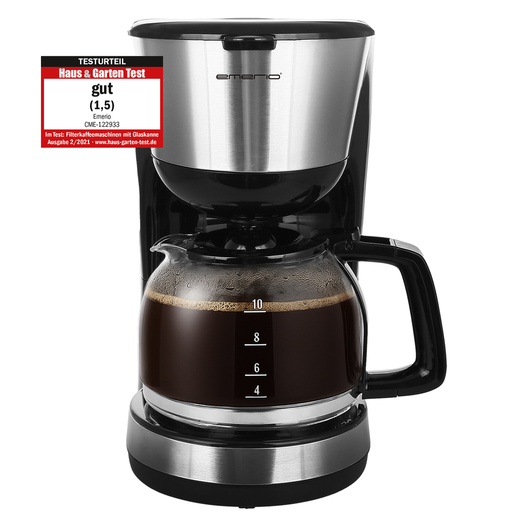 No image available
The stated capacity may suit a brew for several people in your group; compare the litres with the mugs you want to fill.
Capacity: 1,25 L; around 10 cups according to the product description. It has a reusable filter, drip stop and automatic switch-off.
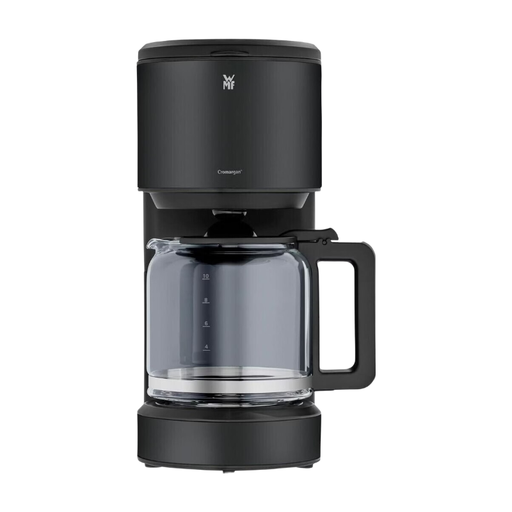 No image available
The product description states that it makes 10 cups at a time; check whether this amount suits the mugs your group uses.
The description lists a keep-warm function, water-level indicator and automatic switch-off.
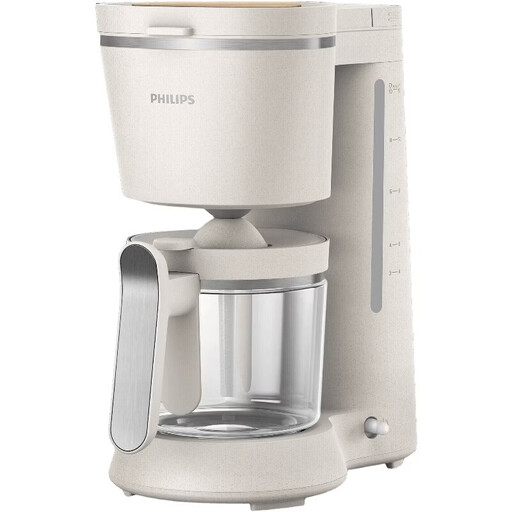 No image available
The stated capacity distinguishes between large and small cups; compare these sizes with the mugs your group uses.
Capacity: 1,2 L; up to 10 large or 15 small cups according to the product description. Dimensions: 32,2 × 17,3 × 34,6 cm. It has a drip stop and, according to the description, switches off automatically after 30 minutes.
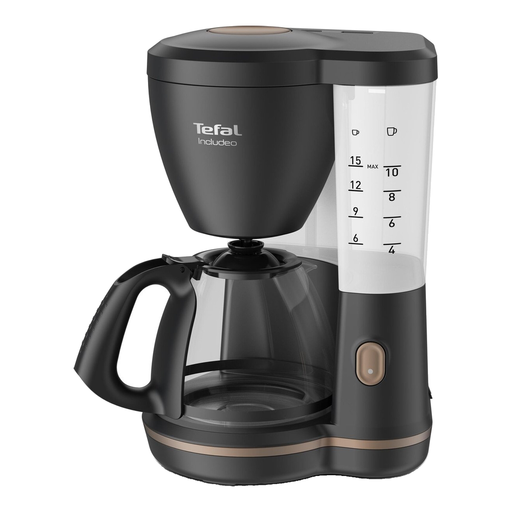 No image available
The stated capacity may work for brewing for a group; check what the listed 10 to 15 cups mean for your mugs.
Capacity: 1,25 L; 10 to 15 cups according to the product title. It has a permanent filter, adjustable quantity, drip stop and a filter holder with a double handle.
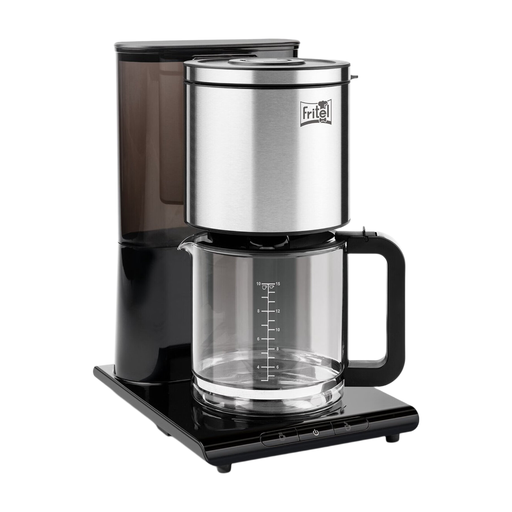 No image available
The product description states that it can make several cups per brew; compare its capacity with the mugs you want to fill at once.
Capacity: 1,5 L; 10 large or 15 small cups according to the product description. It has a removable filter insert, drip stop and a keep-warm function lasting up to 30 minutes. Dimensions: 350 × 290 × 227 mm.
Count the mugs you want to fill at once and compare their combined capacity with the amount in litres. Also check whether the manufacturer gives the capacity of the water tank or the jug; don’t rely on the stated number of cups alone.
Choose a stable, dry spot where you can reach the filter and water tank. The fire service advises leaving enough room around electrical appliances for heat to escape; you should also follow the placement instructions for your chosen model.
It varies by model. Tristar states that the CM-1281 has a removable permanent filter; Melitta states that the Easy Therm uses a size 1x4 filter and has a swing-out filter holder. Check the manual for your chosen model for cleaning and descaling instructions.
Check that the electrical appliance actually being offered has the required CE marking. The Dutch government lists this marking as a requirement for electrical appliances placed on the EU market; a brand name or similar product photo doesn’t confirm that the specific item being offered has the marking.