
Organiser of the group coffee break
You want to brew enough coffee for the group in one go. The Consumers’ Association points out that a filter coffee maker can brew larger quantities, so compare its capacity with the mugs you actually use.


First, work out how much coffee the group drinks during each break and compare that volume with the capacity of one jug. A glass jug is suitable when everyone drinks at roughly the same time; if people pour at different times, a thermal jug may be more practical. Also check how each model’s jug, filter and reservoir should be cleaned, and what product safety information applies to the specific item.
You want to brew enough coffee for the group in one go. The Consumers’ Association points out that a filter coffee maker can brew larger quantities, so compare its capacity with the mugs you actually use.
Participants pour their coffee at different times. You’re looking for a jug you can move around and serve from without leaving the warming plate switched on.
Several people use and clean the machine. Easy-to-access parts, a clear water-level indicator and maintenance suited to the model may all be worth considering.
| What to consider | What to look for when buying | Who should pay particular attention? |
|---|---|---|
| Amount brewed at a time | Count the number of coffee drinkers and compare the capacity of their mugs with the jug capacity in litres. Don’t rely solely on the stated number of cups. | When I’m brewing for the whole group, I want to avoid having to start another brew during the break. Around 36% of consumers say brewing enough coffee in one go is their main buying concern. |
| Keeping coffee available | Compare the type of jug, how long the coffee needs to stand before serving, and how the jug is moved and cleaned. | When people pour at different times, I want to be able to put the jug down without relying on a warming plate all the time. Around 29% of consumers prioritise keeping coffee available during staggered breaks. |
| Using and tidying away | Check access to the reservoir and filter holder, the drip stop, and the cleaning instructions for the jug and lid. | When several people use the machine, I want to be able to fill and clean its parts quickly after the workshop. Around 21% of consumers say easy shared use and tidying away are their main buying concerns. |
| Maintenance and replacement | Check the filter size, descaling instructions and whether a suitable replacement jug is available. | When the machine is used regularly in a shared kitchen, I want to know in advance what maintenance it needs and which parts are involved. Around 14% of consumers prioritise maintenance and replacement. |
Manufacturers may use different cup sizes. So the number on the packaging doesn’t necessarily tell you how many mugs you can actually fill.
First, work out how much coffee you need based on your mugs’ capacity, then compare that with the jug capacity in litres.
If the brew is too small, you may need to make more coffee during the break.
An extra serving jug doesn’t automatically increase the amount of coffee brewed at once. Melitta states that the Easy Therm with a second jug brews up to eight cups per cycle; Moccamaster describes the KBGT20 as having two separate brewing units.
Compare the number of brewing units with the number of jugs and the capacity per brew.
With just one brewing unit, making a second batch can take extra time.
Maintenance and ease of cleaning vary by model. A manufacturer’s warranty doesn’t replace any statutory rights you may have against the seller.
Check the maintenance instructions, filter size, compatible parts and who the seller is. The Dutch government explains your statutory rights if a product is faulty.
Remember to factor in filters and maintenance, and check whether a replacement jug is available for the exact model.
The Philips 3000 Series HD7460/40 is a glass-jug model worth comparing if you’re looking for a standard jug for a group.
The Easy Therm is worth comparing if you want to serve coffee without using a warming plate.
The TKA8013 is a glass-jug model to consider if a removable water reservoir is important in a shared kitchen.
The KBGT20 is a larger option to consider if one jug isn’t enough and the kitchen has sufficient space and a suitable power connection.
This selection includes filter coffee makers for serving coffee to groups, from models with a jug to a machine with a tap and a stated capacity of 15 litres.
 No image available
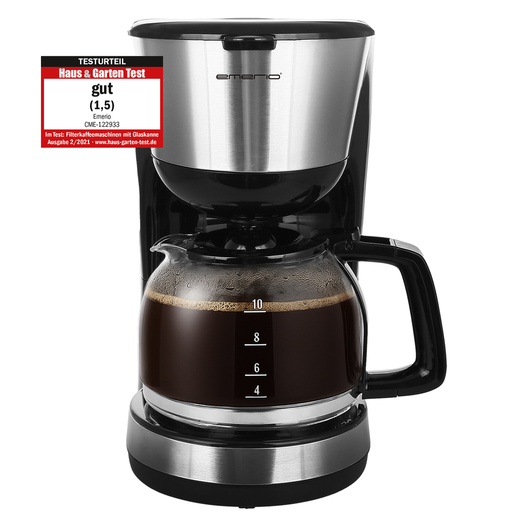
An option to compare if you want to brew and keep coffee warm in a jug.
The stated capacity is 1.25 litres. The description mentions a reusable removable filter, drip stop and automatic switch-off.
 No image available
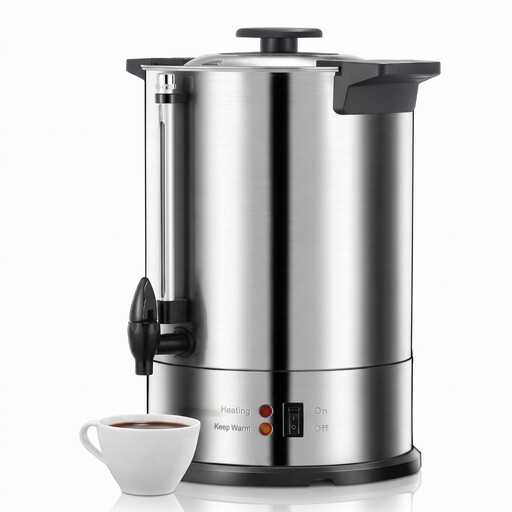
An option to compare if you want to brew a large quantity and serve coffee from a tap.
The product name lists a capacity of 15 litres, 1.500 W, a round filter and a keep-warm function. It also states a capacity of 150 cups; compare this with the actual capacity of your mugs.
 No image available
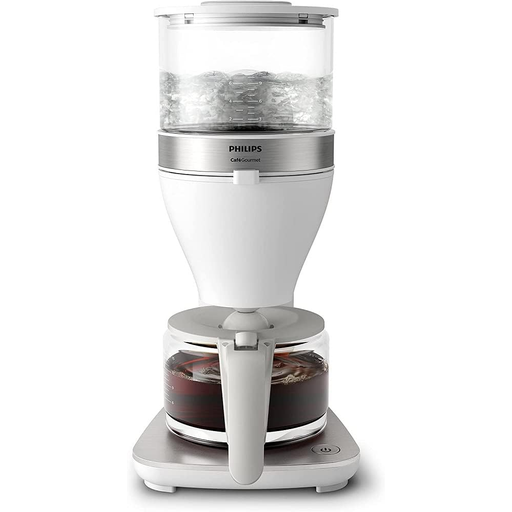
A glass-jug model to compare if you want to leave the coffee on a warming plate after brewing.
The stated capacity is 1.25 litres. The description mentions a drip stop and automatic switch-off.
 No image available
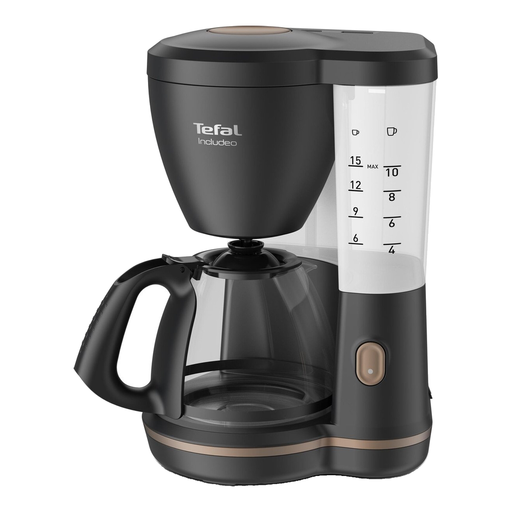
An option to compare if you’re looking for a jug for a group and want to factor in filter maintenance.
The product name lists a capacity of 1.25 litres and 10 to 15 cups. The description mentions a permanent, reusable filter and a glass jug with a warming plate.
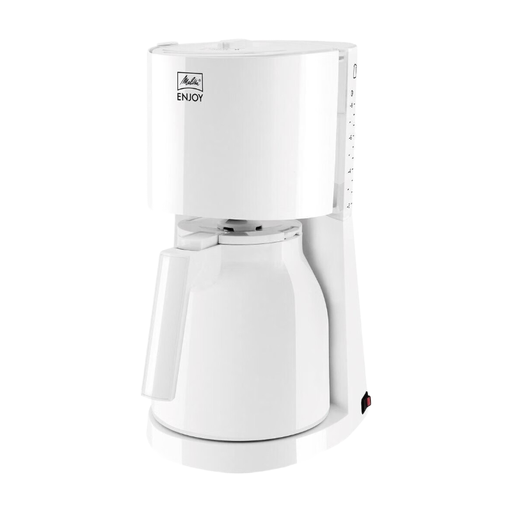 No image available
An option to compare if you want to serve coffee later or somewhere else.
The product information mentions a thermal jug, automatic switch-off and a drip stop. Check the capacity and cleaning instructions for the jug supplied with this version.
Multiply the number of coffee drinkers by the capacity of their mugs, then compare the result with the jug capacity. Don’t rely on the stated number of cups without checking the cup size it refers to. For example, Philips lists 1.2 litres for ten large or fifteen small cups for the HD7460/40.
A thermal jug may be a good choice if you need to move it off the worktop or pour the coffee later. Check its capacity, pouring lid and cleaning instructions. According to the Consumers’ Association, coffee can become more bitter over time if left on a warming plate.
Clean the jug and filter holder according to the manual for the exact model, and follow the relevant descaling instructions. Before buying, check which filter size you need and whether a suitable replacement jug is available.
For an online distance purchase from a business, you generally have a 14-day cooling-off period, subject to legal exceptions. If a product is faulty, the seller is responsible for addressing your statutory warranty rights. The Dutch government states that the Netherlands does not have a fixed general two-year warranty period.
Electrical equipment covered by the applicable low-voltage rules must meet the relevant EU safety requirements and CE marking obligations. The European Union and the Netherlands Food and Consumer Product Safety Authority explain the scope of these rules; check which requirements apply to the specific model. A CE marking is not, in itself, an independent quality mark.