
Host serving coffee to a group at once
Wants to pour several cups in quick succession, so compares litres per brew rather than relying only on the advertised number of cups.


Start by working out how much coffee you need for each serving round, then consider how long it needs to stay in the pot before guests pour themselves a cup. A thermal carafe suits staggered serving; a glass carafe with a warming plate may work well if the pot is likely to empty quickly. Compare the actual carafe capacity and how easy it is to clean, and check the CE mark and relevant product information for the specific appliance: the NVWA says CE marking is mandatory for electrical consumer products in the Netherlands.
Wants to pour several cups in quick succession, so compares litres per brew rather than relying only on the advertised number of cups.
Makes coffee before or during a meeting and wants to serve it later in another location; carafe capacity and type of thermal carafe are key considerations.
Needs to find space for the appliance, fill it and clean it afterwards, while making sure it will also work well for future use.
First, work out how much coffee you need per brew and how long the carafe needs to stand between servings. Then check that the appliance will fit in the space available and is easy to fill and clean.
| What to consider | What to look for | Who this matters to |
|---|---|---|
| Coffee per serving round | Compare the carafe capacity in litres with the cups you use; work out how many brews you can fit into the break. | If I’m serving several guests during a short break, I want to know how much coffee will be ready per brew. Around 36% of consumers put sufficient capacity first. |
| Keeping coffee warm between servings | Choose a carafe type to suit the expected waiting time and check when the warming plate switches off. | When guests pour themselves a cup at different times, I want the coffee to stay warm for an appropriate length of time. Around 29% of consumers prioritise heat retention. |
| Space and placement | Measure the space available for the appliance and allow room to reach the water reservoir and filter. | If workspace is limited and the appliance will be used elsewhere later, I want it to fit well there too. Around 21% of consumers prioritise space and practicality. |
| Filling and cleaning | Check whether the reservoir is removable, whether the filter holder is easy to reach and which parts can be cleaned according to the instructions. | When making several brews, I want to be able to fill and clear away the reservoir and filter without hassle. Around 14% of consumers prioritise ease of use and cleaning. |
The same appliance can make different numbers of servings depending on whether you use small or large cups. As a result, a carafe that looks big enough on paper may still not hold enough coffee for a serving round.
Use the capacity of the cups you’ll actually be using and compare it with the carafe capacity in litres.
You may need to make another brew, interrupting the coffee break.
A thermal carafe can work well for staggered serving, but it doesn’t change how much coffee the appliance makes per brew.
Consider the amount made per brew and heat retention as two separate requirements.
Switch-off times vary by model. Coffee in a glass carafe on a warming plate won’t necessarily stay available throughout the meeting.
Compare the switch-off time of the exact model with your planned serving schedule, and allow for the possibility of making another brew. The Consumentenbond notes that a thermal carafe uses no energy from a warming plate to keep coffee warm.
You may need to make another brew if the carafe doesn’t stay available for long enough.
The Enjoy Top Therm 1017-08 is a thermal-carafe option for anyone who wants to serve coffee in a different location.
According to the Dutch product specifications, the MyMoment TKA2M113 combines a glass carafe with a 1.4-litre reservoir.
The KBG Select has a glass carafe and settings for a half or full carafe; the KBGT has a thermal carafe.
The PurShine KF 1500 black is a glass-carafe option that Braun describes as suitable for 10 cups.
The Daily HD7461/20 is a glass-carafe option; the Dutch product information lists a capacity of 1.2 litres.
This selection includes filter coffee makers with a glass carafe and warming plate, as well as a model with a 15-litre capacity for larger serving rounds. Compare the amount you need per round with the capacity and space requirements of your chosen appliance. Also check the CE mark and relevant product information for the specific appliance, as required by the NVWA.
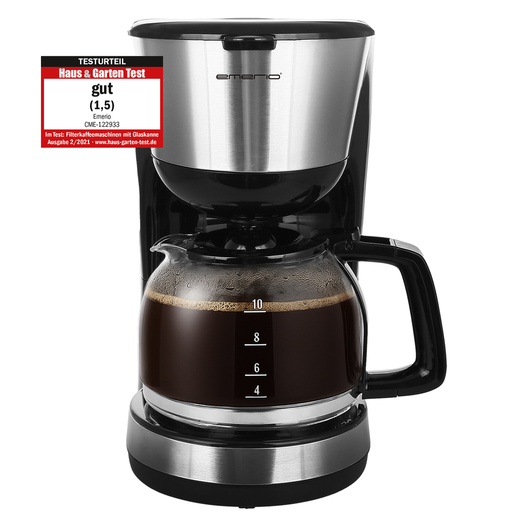 No image available
An option for making coffee for each serving round and topping up between servings.
1.25 l glass carafe and warming plate.
Removable reusable filter and drip stop.
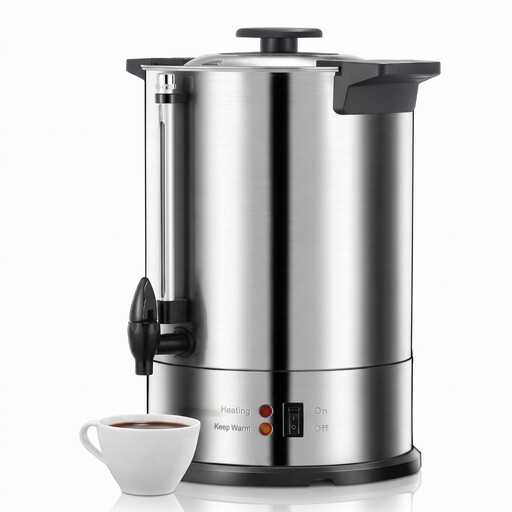 No image available
Its large capacity is designed for anyone who needs more coffee per serving round.
15 L capacity and 1500 W power.
Automatic keep-warm function and drip-free tap.
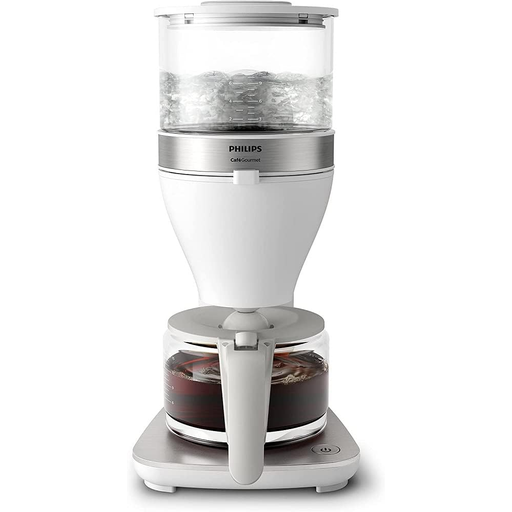 No image available
A glass-carafe option with a warming plate for coffee served shortly after brewing.
1.25 l glass carafe.
Aroma Twister spout and drip stop.
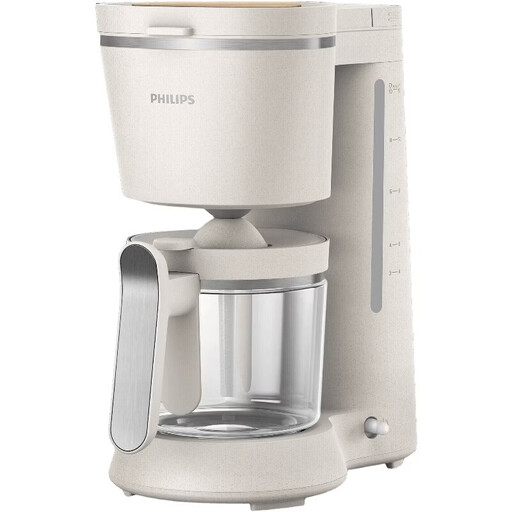 No image available
A glass-carafe option for anyone who serves coffee in rounds and wants to pour a cup in between.
1.2 l carafe capacity and warming plate.
Drip stop and automatic shut-off 30 minutes after brewing.
 No image available
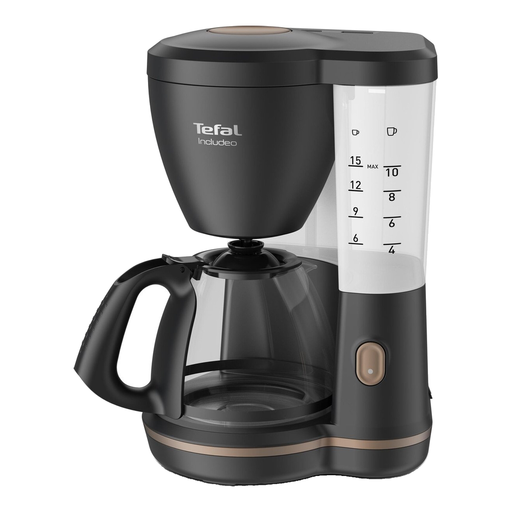
An option for anyone who values easy access to the filter holder when brewing repeatedly.
1.25 l capacity; listed as making 10 to 15 cups.
Removable filter holder with a double handle for left- and right-handed use.
Divide the amount of coffee you want for one serving round, in millilitres, by the usable amount per brew, then round up to the next whole brew. First, measure the cups you’ll be using, as the stated capacity for small and large cups can vary. Remember that the amount of coffee in the carafe may differ from the capacity of the water reservoir.
Check that you can easily reach the reservoir, filter holder and carafe, and follow the model’s instructions for cleaning and descaling. The Consumentenbond assesses these tasks separately because access to parts can vary between appliances.
Check whether a suitable replacement carafe is available, and contact the retailer if the product is faulty. According to ACM ConsuWijzer, a manufacturer’s warranty does not replace your statutory rights: if a product fails to meet expectations under normal use, the retailer is responsible for providing an appropriate solution. Don’t assume there is one fixed statutory warranty period for every appliance.
In the Netherlands, CE marking is mandatory for electrical consumer products. The NVWA advises checking the CE mark and relevant product information for the specific appliance; a brand name or product listing alone does not confirm that the mark is present on that particular item.
If food or drink is sold at a market or event, the NVWA says rules apply to preparing, selling and storing it safely and hygienically. The NVWA states that anyone who prepares and sells food several times a year must have an HACCP food safety plan. Whether these requirements apply to a particular event depends on how it is organised, including whether anything is sold.