
Organiser of a single coffee round
Usually makes coffee for members who are there at the same time and wants a jug suited to the amount they actually pour.


Choose according to how much coffee you drink each time: a glass jug suits a coffee round where members pour at roughly the same time, while a thermal jug can be handy if they arrive at different times. Compare the capacity with your own mugs and consider how the jug, filter holder and any keep-warm function fit into your shared kitchen. Also check the markings and instructions for the exact model.
Usually makes coffee for members who are there at the same time and wants a jug suited to the amount they actually pour.
Has coffee ready while members arrive in the kitchen at different times, so compares a thermal jug with a glass jug on a hotplate.
Considers cleaning, descaling, storage space and whether a suitable replacement jug is available if several people use the machine.
For a photography club using a shared kitchen, the choice mainly depends on how much coffee you make at a time, when members pour and how much maintenance is involved. Also check that the exact model has the applicable CE marking. According to the Netherlands Food and Consumer Product Safety Authority, this is compulsory for electrical products covered by the relevant rules. The marking is a declaration by the manufacturer and, by itself, is not proof of an independent assessment.
| What to consider | What to look for | Who is this most important for? |
|---|---|---|
| Capacity per brew | Compare the capacity of the water tank and jug in litres with the number of people drinking and the capacity of your own mugs. | If I want to make coffee for the members who are there in one go, I want to know whether the jug holds enough. Sufficient capacity per brew is the main priority for around 42% of consumers in this situation. |
| Keeping coffee warm | Choose between a thermal jug and a glass jug with a hotplate; if the machine has a keep-warm function, check how long it stays on. | When members arrive at different times, I want to be able to serve coffee without relying on a hotplate. Staggered serving is the main priority for around 33% of consumers in this situation. |
| Cleaning and maintenance | Check whether the filter holder is removable and follow the model-specific instructions for cleaning and descaling. Check the model number when buying a replacement jug. | In a kitchen shared by several members, I want to be able to clean the parts easily after use and know how to maintain the machine. Maintenance is the top priority for around 25% of consumers in this situation. |
A traditional filter coffee cup holds 125 ml, which may be less than the mugs you use. As a result, one jug may serve fewer people than you expect.
Compare the capacity in litres with the size of your own mugs and the number of people who want coffee at the same time.
A hotplate and a thermal jug keep coffee warm in different ways. The Dutch Consumers’ Association notes that coffee left on a hotplate can become more bitter over time.
Choose a thermal jug if members want to pour at different times without an active hotplate. Choose a glass jug with a keep-warm function if the coffee will be served soon after brewing, and check how long the hotplate stays on.
A brand may use different model numbers for its thermal jugs. A jug made for another model from the same brand will not necessarily fit.
Before ordering, compare the model number on the machine with the compatibility information for the replacement jug.
The Enjoy Therm is a thermal-jug option for a club where members pour at different times. Melitta describes this model as having a swing-out filter, drip stop and AromaSelector.
The Severin KA 4826 is a glass-jug model with a timer, which may be useful if the club meets at a set time.
The Philips Eco Conscious Edition HD5120/00 is a glass-jug option. The Dutch Consumers’ Association lists a capacity of 1.20 litres for this version.
Moccamaster describes the KBG Select as a model for several cups, with a setting for a full or half pot.
This selection includes filter coffee makers with a glass jug for a coffee round and a thermal jug for serving coffee at different times in a shared kitchen.
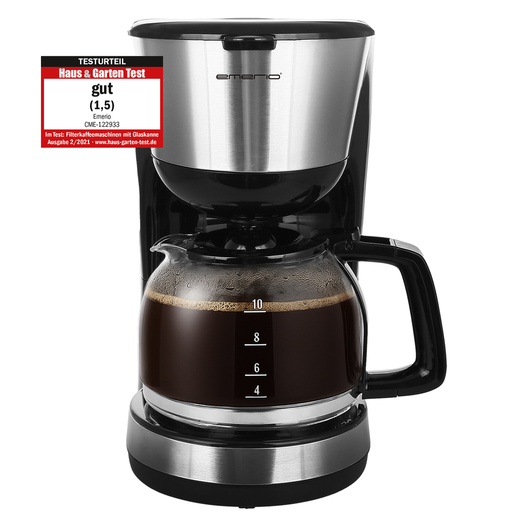 No image available
A glass-jug model for a coffee round where capacity and easy cleaning matter.
Capacity: 1.25 litres, around 10 cups. Includes a removable reusable filter, automatic switch-off and a hotplate.
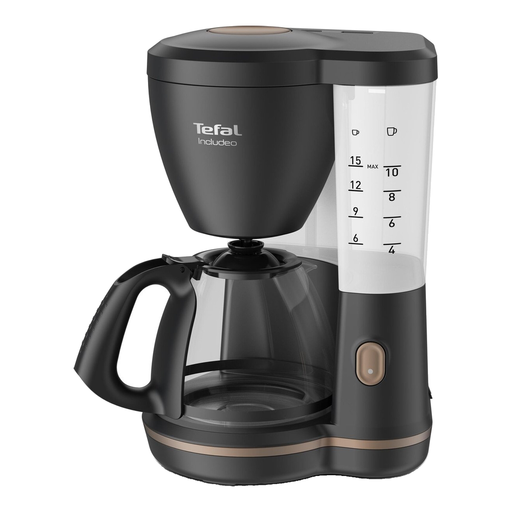 No image available
A model for a larger coffee round; according to the product description, the filter holder is designed for both left- and right-handed use.
Capacity: 1.25 litres, for 10 to 15 cups. Includes a permanent filter and automatic switch-off after 30 minutes.
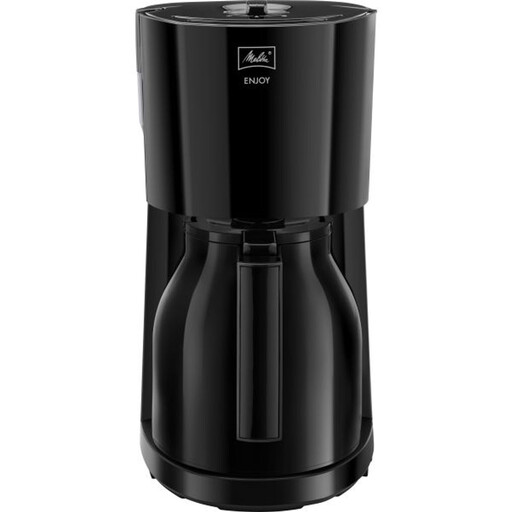 No image available
A thermal-jug model for members who pour at different times.
Capacity: 1 litre. Includes a removable swing-out filter, drip stop and automatic switch-off 15 minutes after brewing. According to the product description, the filter holder is dishwasher-safe.
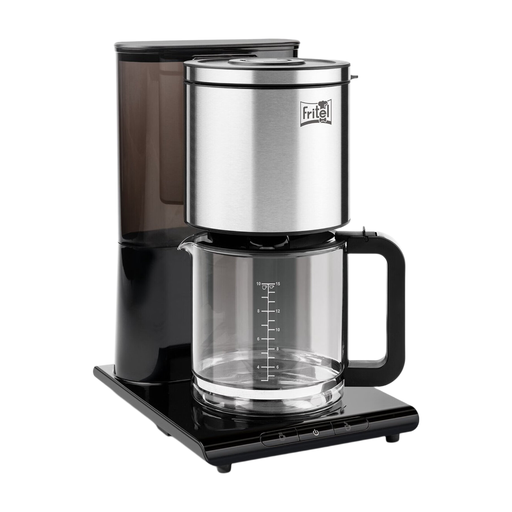 No image available
A glass-jug model for a larger coffee round, with a removable filter holder for easy cleaning.
Capacity: 1.5 litres, for up to 10 large or 15 small cups. Includes a drip stop, measuring marks on the jug and a keep-warm function for up to 30 minutes.
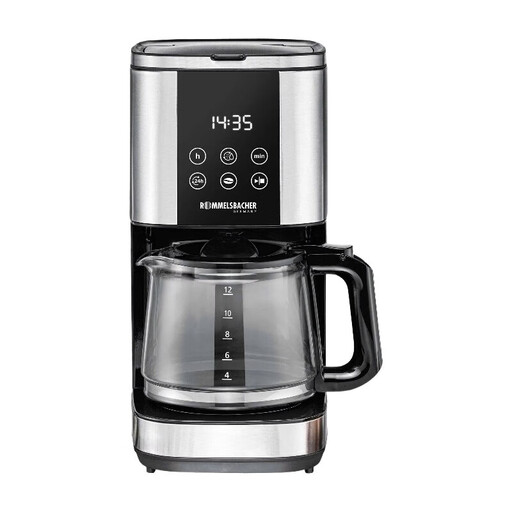 No image available
A glass-jug model for a larger brew, with removable parts for filling and cleaning.
Capacity: 1.5 litres, for up to 12 cups. Includes a timer, descaling programme, drip stop and a 30-minute keep-warm function.
Count how many people usually want coffee at the same time during a meeting, then compare the capacity of their mugs with the jug. The Dutch Consumers’ Association gives 125 ml as the capacity of a traditional filter coffee cup. Use your own mugs as a guide, and remember that not all the water in the tank ends up in the jug.
Rinse a new machine through with water first, and follow the instructions for the exact model when cleaning and descaling it. The Dutch Consumers’ Association advises rinsing a new coffee maker through with water before use.
First, check whether a replacement jug is available that fits your machine’s model number. For a faulty product used normally, the seller is responsible for the statutory guarantee, according to ACM ConsuWijzer; a manufacturer’s warranty does not affect this right.
For an online purchase in the Netherlands, you generally have a statutory cooling-off period that ends 14 days after the product is delivered, according to ACM ConsuWijzer. Check the terms for trying and returning the product in advance; the cooling-off period is separate from your statutory rights if the product is faulty.
Electrical products covered by the applicable Dutch rules must carry a CE marking. The Netherlands Food and Consumer Product Safety Authority explains that this is the manufacturer’s declaration that the product meets the relevant European requirements; it is not, by itself, proof of an independent assessment. Check the marking on the exact model.