
Host serving coffee throughout the evening
Wants to serve coffee during the meal and readings without leaving the jug on a hot plate.


First, work out how much coffee your guests will drink altogether, then compare that volume in litres with the jug’s capacity. The stated number of cups doesn’t necessarily tell you how large a cup on the table will be. A thermal jug is a good choice if you’ll be serving coffee at different times, while a glass jug with a hot plate makes more sense if everyone will drink soon after the coffee is brewed. Check how each model works and what maintenance it needs.
Wants to serve coffee during the meal and readings without leaving the jug on a hot plate.
Wants to brew enough for the guests who will actually drink coffee, so compares the capacity in litres with the size of the cups.
Wants to keep tasks to a minimum during the gathering and be able to clean the parts and maintain the machine afterwards.
Choose this option: if guests will have coffee at different times and you want to put the jug on the table.
Bear in mind: a thermal jug doesn’t increase the brewing capacity, so check that it holds enough for your group.
Choose this option: if the group will drink coffee at around the same time and you’ll serve it soon after brewing.
Bear in mind: the coffee sits on a hot plate, and the time before it switches off depends on the model you choose.
| What to consider | What should you check? | Who is this important for? |
|---|---|---|
| Keeping coffee available | Compare a thermal jug with a glass jug; check the capacity, ease of pouring and how the hot plate switches off. | If guests will want coffee at different times during the meal and readings, I don’t want to keep going back to the kitchen. Around 38% of consumers prioritise being able to serve coffee over time. |
| Enough for each brew | Work out the volume you need based on the number of coffee drinkers and the amount per cup, then compare it with the capacity in litres. | If I want to brew enough for one round of coffee for the group, I want to know how much will actually go into the cups. Around 31% of consumers prioritise having enough coffee in one brew. |
| Using and putting away the machine | Check whether a timer would be useful and how to clean the filter holder and jug; follow the maintenance instructions for the model. | As the organiser, I want to keep extra tasks to a minimum before and after the gathering. Around 23% of consumers prioritise ease of use and tidying up. |
| Purchase and ongoing maintenance | Check which filters fit and what cleaning or descaling instructions apply to the model. | If I use the machine regularly, I also want to factor in the supplies I’ll need over time. Around 8% of consumers prioritise purchase and running costs. |
Manufacturers may base their figures on smaller cups than the ones you’ll use at your gathering. The Consumers’ Association (Consumentenbond) uses 125 ml as the measure for a traditional filter coffee cup.
Count the coffee drinkers and decide how much you want to serve each person. Compare the total in millilitres with the capacity of the reservoir and jug.
If the machine brews too little, you may need to brew another pot and interrupt the gathering.
The Consumers’ Association warns that coffee can become more bitter when left on a hot plate. The time before the hot plate switches off varies by model.
For a short coffee break with everyone together, serve from a glass jug. If guests will have coffee at different times, consider a thermal jug and check its capacity.
Filter sizes and maintenance instructions vary by model. You’ll also need to think about buying filters and descaling the machine after purchase.
Check the filter size, the parts supplied and the instructions for cleaning and descaling the exact model.
The KZ818D is an option if you want to serve coffee over time and set it to start in advance.
The Enjoy Top Therm is worth considering if you’re looking for a thermal jug, a strength setting and a removable filter holder.
The 3000 Series Basic HD7460/40 is an example of a glass jug for serving coffee soon after brewing.
The KBG Select is a glass-jug option if you want to brew a full or half jug and value the availability of spare parts.
This selection includes filter coffee makers with a glass jug or hot plate, as well as models with a thermal jug for serving coffee during an evening together.
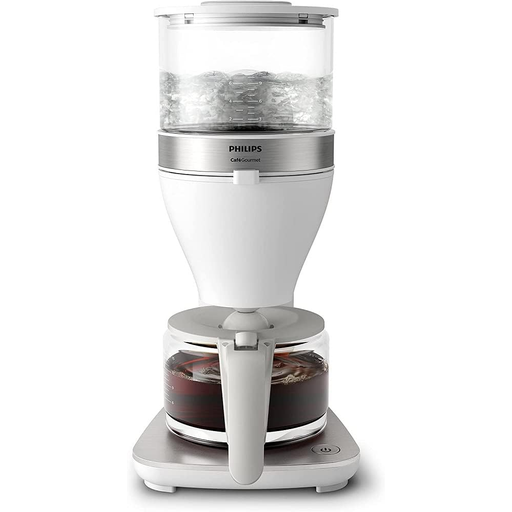 No image available
An option for a coffee round where you brew the coffee in advance into a glass jug.
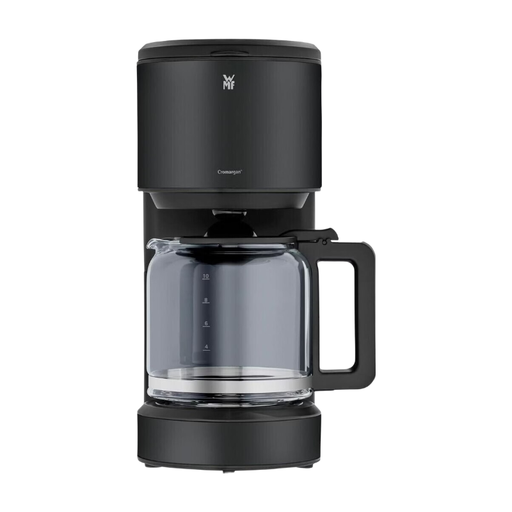 No image available
The product details list a glass jug, making it suitable for a coffee round where you’ll serve the coffee soon after brewing.
Power according to the product name: 1000 W.
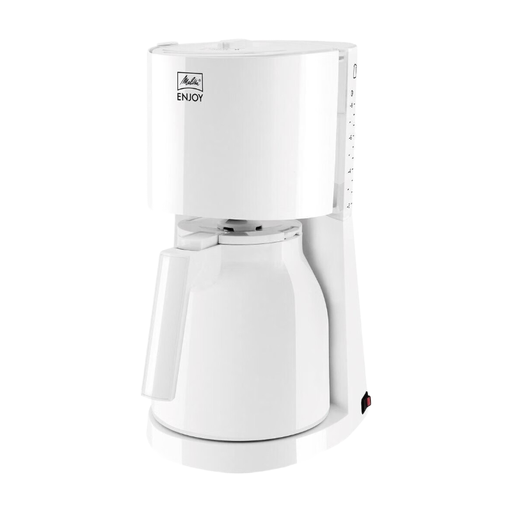 No image available
The thermal jug described is a good fit if you want to serve coffee as the evening goes on, rather than leave the jug on a hot plate.
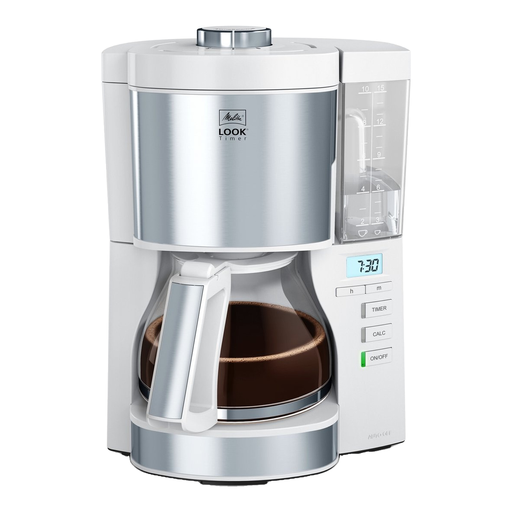 No image available
A glass-jug option for brewing coffee in advance for everyone to enjoy together.
The product details list a hot plate that can be set for up to 60 minutes; bear this in mind if guests will have coffee at different times.
 No image available
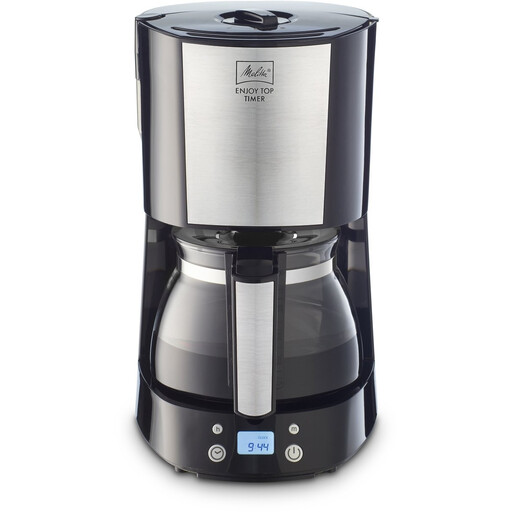
The timer may be useful if you want to have coffee ready in advance; the glass jug with hot plate is intended for a coffee round where you take the switch-off time into account.
The product details state that the hot plate keeps the coffee warm for up to 40 minutes.
Count how many guests will drink coffee, decide how much you’ll serve per cup and consider whether anyone might want a refill later. Compare the total volume in litres with both the reservoir and the jug; the stated number of cups alone isn’t enough. The Consumers’ Association (Consumentenbond) gives 125 ml as the measure for a traditional filter coffee cup.
Follow the instructions for your chosen model for first use, cleaning and descaling. Philips recommends descaling its coffee makers regularly; don’t assume the same advice applies to other brands.
No. Your statutory rights apply alongside any manufacturer’s or retailer’s guarantee. ACM ConsuWijzer explains that the retailer is responsible for providing an appropriate free remedy if a product breaks during normal use sooner than you could reasonably expect. In the Netherlands, there is no fixed guarantee period that applies to all coffee makers.
Electrical equipment within the scope of the Low Voltage Directive must meet safety requirements, including CE marking requirements. EU rules also apply to materials intended to come into contact with food. A product description alone doesn’t confirm that an individual appliance complies with these rules.
No. Don’t treat 40 minutes as a current, uniform purchasing requirement for every model. Regulation 801/2013, cited in older guidance on automatic switch-off, is no longer in force according to EUR-Lex; Regulation (EU) 2023/826 superseded it. Check the stated switch-off time for the model you choose.