
Host for a baking group
You’re making coffee for several guests. Work out how many litres you’ll need based on cup size and the number of rounds. The Consumentenbond says filter coffee makers are suitable for brewing larger quantities.


First, work out how much coffee you’ll need based on the number of people drinking it, the size of their cups and how many times you plan to serve it. Then choose a jug with enough capacity. A thermal jug suits guests who drink coffee at different times, while a glass jug with a warming plate is most practical when you’ll be serving coffee soon after brewing. A timer can help you plan when to brew, but you’ll still need to get the water, coffee and filter ready beforehand.
You’re making coffee for several guests. Work out how many litres you’ll need based on cup size and the number of rounds. The Consumentenbond says filter coffee makers are suitable for brewing larger quantities.
Your guests drink coffee at different times. Choosing between a thermal jug and a glass jug with a warming plate will determine how you keep the coffee between servings.
You want to get the coffee ready while you’re baking. A timer lets you set the start time in advance; Inventum lists this feature for the KZ818D.
First, compare the amount of coffee you need with the jug’s capacity. Then choose a jug and features to suit when you’ll be serving and how you’ll prepare the coffee.
| What to consider | What should you check? | Who is this important for? |
|---|---|---|
| Enough coffee per brew | Calculate the number of people drinking coffee × cups per person × millilitres per cup; compare the result in litres with the jug’s capacity. | If I’m brewing for several guests, I want to take their cup sizes and the number of rounds into account. Around 36% of consumers prioritise making enough coffee per brew. |
| Keeping coffee warm | Choose the type of jug based on the time between brewing and serving. | When guests drink coffee at different times, I want the jug to suit the way I serve it. Around 29% of consumers prioritise keeping coffee warm between servings. |
| Getting things ready while baking | Check whether the exact model has a timer and whether filling and cleaning it fit into your routine. | If my hands are full while I’m baking, I want to be able to set the start time in advance. This is the main concern for around 21% of consumers. |
| Care and replacement | Check the filter type, the model’s descaling instructions and whether a replacement jug, if needed, is compatible. | If I want to think about filters, cleaning and replacements after lunch, I want to compare these points beforehand. Around 14% of consumers prioritise maintenance and replaceability. |
A cup count doesn’t tell you how much coffee your mugs hold. As a result, the jug may not make enough for lunch.
Measure your cup size and compare the amount you’ve calculated with the capacity in litres.
If you need more than one brew can provide, you may have to make another pot during lunch.
According to the Consumentenbond, coffee left on a warming plate for longer can taste more bitter.
Serve it soon after brewing, or compare thermal jugs if your guests will be drinking at different times.
A jug may be compatible only with specific model numbers. For the Enjoy Top Therm, Melitta lists model 1017-08, among others.
Compare your appliance’s full model number with the jug’s compatibility information.
Inventum describes the KZ818D as a filter coffee maker with a 1.2-litre thermal jug and a timer.
Melitta describes the Enjoy Top Therm as having a thermal jug and AromaSelector, which lets you adjust the coffee strength.
The Philips 3000 Series HD7460/40 is worth comparing if a filter coffee maker with a glass jug for serving straight away suits the way you use it.
Moccamaster describes the KBGT as a filter coffee maker with a thermal jug for around 1.25 litres of coffee.
These Joybuy products are filter coffee makers for groups, including models with glass jugs and one with a tap. Compare the capacity with the number of servings you’re planning. The NVWA requires CE marking for electrical products sold in the Netherlands; before buying, check that the product being offered has the mark.
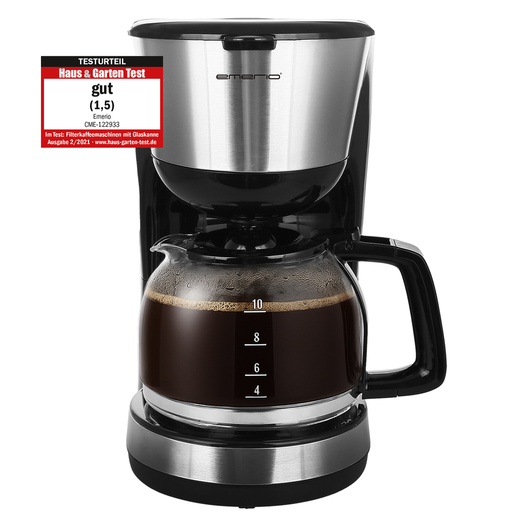 No image available
A glass jug with a warming plate is an option if you’ll be serving the coffee soon after brewing.
The description lists a capacity of 1.25 litres and around 10 cups, a reusable filter, drip-stop, automatic shut-off and a water level indicator.
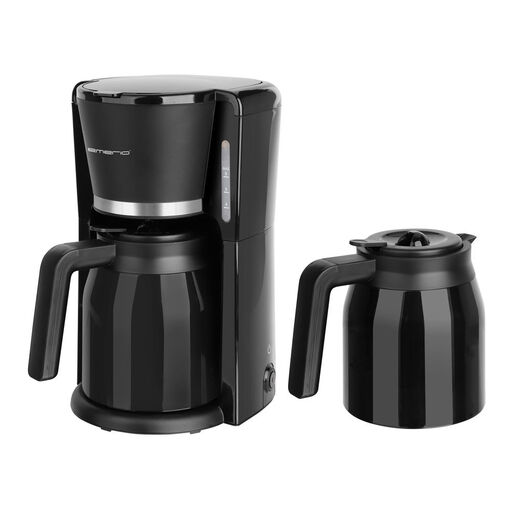 No image available
This model may suit you if you want to compare a removable, reusable filter with using paper filters.
The description lists a water level indicator, drip-stop and automatic shut-off. The jug’s capacity is not included in the product information available here, so check it before comparing it with the amount you need for your group.
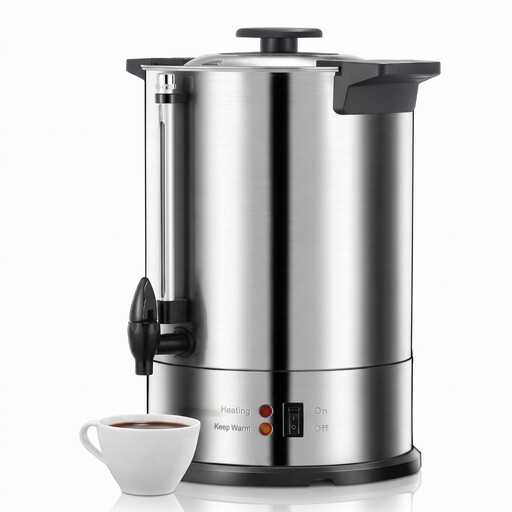 No image available
Compare this model with your planned quantity and serving style: the title lists a tap and a capacity of 15 litres.
The title also lists a round filter, 1500 W and an automatic keep-warm function. Its capacity may be more than you need for lunch, so work out in advance how much coffee you actually want to brew.
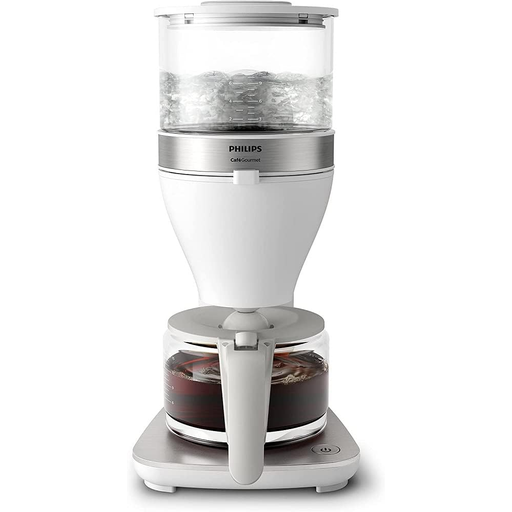 No image available
The glass jug with a warming plate is an option if you’ll be serving the coffee soon after brewing.
The product description lists a capacity of 1.25 litres and 10 cups, drip-stop, automatic shut-off, a water level indicator and Aroma Twister.
 No image available
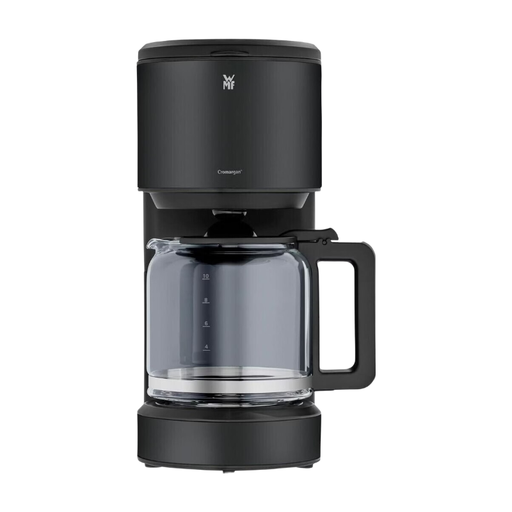
The glass jug and keep-warm function are an option if you’ll be serving the coffee soon after brewing.
The product description lists 10 cups, 1000 W, a water level indicator, automatic shut-off and a non-slip base. It also says the appliance is suitable for ground coffee.
Multiply the number of people drinking coffee by the expected number of cups per person and the capacity of the cups you’ll be using. Compare the result in litres with the jug’s capacity, and plan a second brew if you need more coffee.
Clean the filter and jug according to the instructions for your chosen model. Philips recommends descaling its coffee makers regularly; don’t assume the descaling instructions apply to an appliance from another brand without checking.
Report the fault to the seller. According to the Dutch government, there is no set statutory guarantee period in the Netherlands: what you can expect from a product depends, among other things, on the product and the information provided at the time of sale. A manufacturer’s guarantee is in addition to your statutory rights.
Yes. The NVWA states that CE marking is required for electrical products sold on the Dutch market. Check separately that the product being offered bears the mark.