
Volunteer during busy periods
Needs to serve several visitors in quick succession and wants to know in advance how many jugs and brewing cycles will be needed. Which? describes filter coffee as a way to brew larger quantities for a group.


For a busy repair café, a machine with larger jugs or a higher output is most suitable when there is enough worktop space and a suitable electrical connection. In a narrow kitchen, a slimmer model with a thermal jug may be more practical if volunteers can brew fresh coffee between rounds. Compare the capacity in litres and measure the space needed for filling and pouring, too. Which? and manufacturers highlight larger quantities as useful for groups, while specifications vary from model to model.
Needs to serve several visitors in quick succession and wants to know in advance how many jugs and brewing cycles will be needed. Which? describes filter coffee as a way to brew larger quantities for a group.
Has limited worktop space and needs to leave enough room to fill the machine, change the filter and pour the coffee. Dimensions and controls vary by manufacturer and model.
Wants coffee to be available between visitors and is looking for a jug and machine that volunteers can clean. Check the instructions for the exact machine and jug.
Best for: limited worktop width and time to brew more coffee between rounds. Melitta lists the Easy Therm as 173 mm wide, with up to 8 cups per brewing cycle.
Trade-off: you may need extra brewing cycles during a busy period; also check that the swing-out filter and water tank remain accessible.
Best for: visitors arriving at different times and a jug that can be placed away from the machine. Moccamaster lists the KBGT as brewing around 1.25 litres per cycle.
Trade-off: one larger jug is not the same as a second brewing unit for a simultaneous rush; the manufacturer specifies that the jug has a glass inner flask.
Best for: a high demand for coffee in a short time, provided there is enough space and a suitable connection. Bravilor Bonamat lists the Mondo as having two 1.7-litre jugs and a stated hourly capacity of 18 litres.
Trade-off: the Mondo is 406 mm deep and 446 mm high, with a connected load of 2140 W; its stated hourly capacity is not a measure of how quickly volunteers can serve coffee in practice.
| What to consider | What should you check? | Who is this most relevant to? |
|---|---|---|
| Enough coffee during a busy period | Compare the capacity of each jug in litres, the number of jugs, brewing time and the connected load of the exact model. | When several visitors are waiting at once, I want to know how much coffee will be ready per brewing cycle. Around 29% of consumers prioritise having enough coffee during a busy period. |
| Space for positioning and operation | Measure the available width, depth and height, and check there is room for the filter, water tank and jug. | With a narrow worktop, I want to be able to fill and operate the machine without making the coffee area awkward to use. Around 29% of consumers prioritise having enough space to operate the machine. |
| Keeping coffee available | Choose between a thermal jug and a glass jug with a warming plate; also check the cleaning and replacement options for the specific jug. | When visitors arrive at different times, I want coffee to be ready between visits. Around 24% of consumers prioritise keeping coffee available between visitors. |
| Maintenance and replaceable parts | Check which parts can be removed, which spare jug fits the exact model and what the maintenance instructions say. | When volunteers share a machine, I want cleaning and maintenance to fit into our routine. Around 18% of consumers prioritise easy maintenance and replaceable parts. |
The cup count does not tell you how much coffee will fit in the mugs used at your repair café. Misjudging the amount could mean needing another brewing cycle during a busy period.
Compare the jug capacity in litres with the amount you usually serve, and work out how many jugs you will need during a busy period.
Depth, height and room to move matter, too. For example, a swing-out filter needs enough space to open.
Measure the entire worktop and check that there is room to fill the machine, change the filter and pour the coffee where you plan to put it.
A thermal jug and a glass jug on a warming plate need different setups and handling. Cleaning and replacement instructions can also vary by model.
Choose the type of jug to suit how you serve coffee, and check the instructions and the correct spare jug for the exact model.
The manufacturer positions the Mondo as suitable for places such as clubs and societies; its specifications may be relevant if you need to make a lot of coffee.
According to the manufacturer, the Easy Therm is a slim domestic model with a thermal jug, designed for smaller brewing cycles.
According to Moccamaster, the KBGT combines a thermal jug with a capacity of around 1.25 litres per brewing cycle.
Philips includes the Café Gaia with thermal jug in its filter coffee range.
These Joybuy filter coffee machines are worth considering for a narrow setup, brewing coffee in rounds or keeping coffee available between visitors.
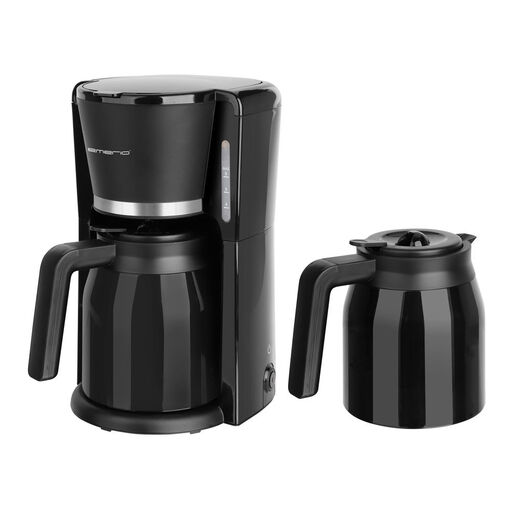 Image unavailable
An option to consider if worktop space is limited and you need a removable filter.
Dimensions listed as 24,5 × 21,4 × 34 cm. The reusable filter can be removed and rinsed; the product description also mentions a drip-stop function and automatic shut-off.
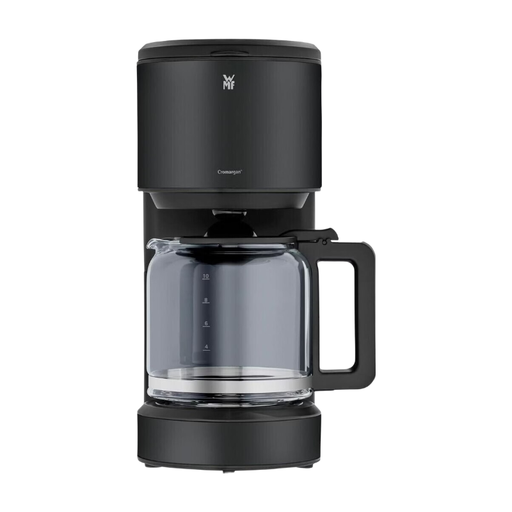 Image unavailable
An option to compare if you want to brew and keep coffee warm for several visitors at a time.
The product description lists 10 cups per brewing cycle, a keep-warm function, a water-level indicator and non-slip feet. The stated dimensions are 30 × 34 × 15,2 cm.
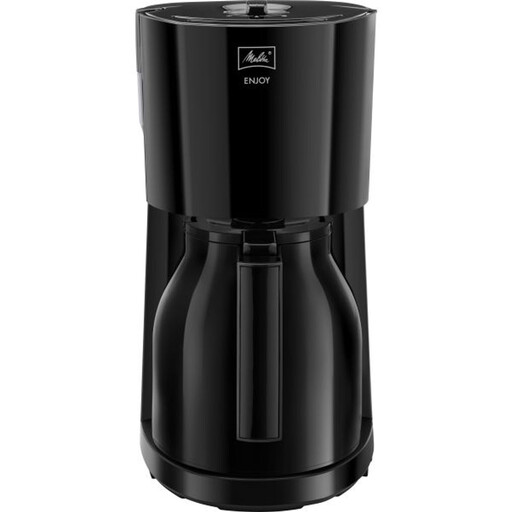 Image unavailable
A thermal jug may be a good choice if you want to keep coffee available between visitors without leaving the jug on the machine.
The product description lists a 1-litre thermal jug, up to 8 cups per brewing cycle and a width of 18,8 cm. The swing-out filter is removable and dishwasher-safe. The machine gets hot during use; place it on a stable, heat-resistant surface and do not touch hot surfaces.
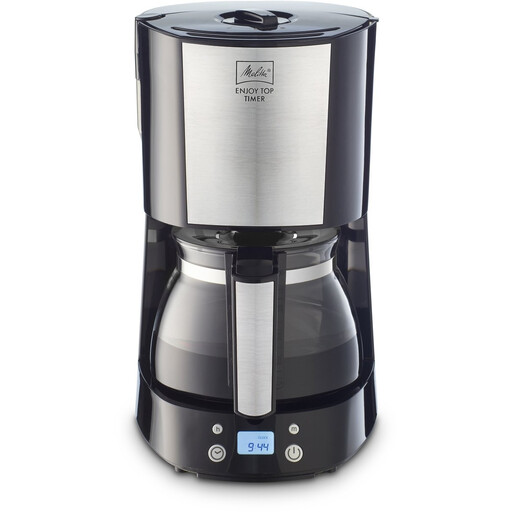 Image unavailable
An option to consider if you want to schedule brewing times and serve coffee in rounds.
The product information lists around 10 cups, a timer and a warming plate with a stated maximum operating time of 40 minutes. The filter holder is removable and dishwasher-safe; the stated width is 18,8 cm.
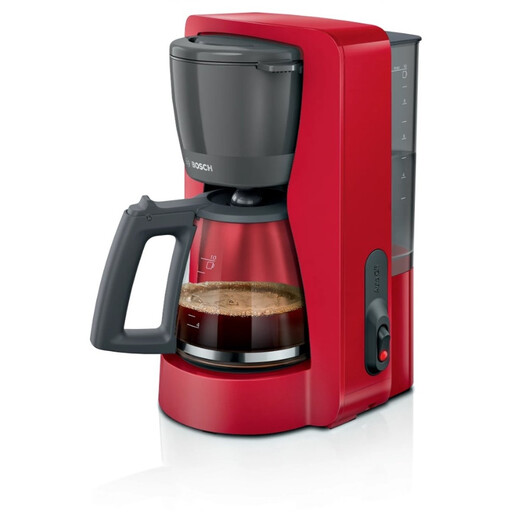 Image unavailable
An option to compare if you want a larger capacity per brewing cycle and a removable water tank.
The product description lists a capacity of 1,40 litres and up to 12 cups per brewing cycle, a keep-warm function, a removable water tank and a swing-out filter. The stated width is 23,2 cm.
Work it out using the jug capacity in litres and the size of the mugs you actually use, then calculate how many brewing cycles a busy round will require. Melitta lists up to 8 cups for the Easy Therm, while Moccamaster lists around 1.25 litres or 10 cups for the KBGT. These cup counts are not a standard measure for your mugs.
Allow room for filling and pouring, too, and check that the electrical connection is suitable for the model you choose. The Dutch Fire Service advises fully unwinding cable reels and plugging high-power appliances directly into a socket where possible. This is safety advice, not a generally applicable legal requirement for connecting coffee machines.
Follow the instructions for the model you choose. Moccamaster advises cleaning and descaling its machines after 100 brewing cycles, or more often in hard-water areas. Do not automatically apply this model-specific frequency to other machines.
That depends on who enters into the agreement and how the machine will mainly be used. ACM ConsuWijzer says that an agreement used mainly or solely for business purposes is not automatically covered by consumer protection. Before buying, make sure you establish who the contracting party is and which warranty and service terms apply to the purchase.
According to the Netherlands Food and Consumer Product Safety Authority, food safety rules apply when selling food or drink, including to individuals who do so occasionally. The NVWA says registration is required if you sell on multiple occasions each year, but not for a one-off sale each year. Whether this applies to your repair café depends on how the coffee is provided.