
Brunch host serving a small group
You make coffee for a few guests at a time and want to avoid a jug that’s too small or having lots left over.


Match the jug capacity to the number of millilitres your guests drink per brew; a stated cup count won’t necessarily tell you how many of your own mugs it can fill. A compact jug suits a small round, while a small-batch setting gives you flexibility when the group size varies. If guests are helping themselves at different times, compare a thermal jug with a glass jug on a hotplate: the Consumers' Association notes that coffee can become more bitter over time when left on a hotplate.
You make coffee for a few guests at a time and want to avoid a jug that’s too small or having lots left over.
You usually make a small amount of coffee but sometimes need more capacity; a small-batch setting could be useful.
Guests help themselves at different times, so choosing how to keep the coffee warm is a key consideration.
For a shared brunch where you’re making filter coffee in small batches, start by working out how much you need each time. Then consider when it will be served, how easy it is to clean and how much space the machine takes up.
| What to consider | What to look for | Who is this important for? |
|---|---|---|
| Amount per brew | Add up how much coffee you expect to need each time, then compare it with the jug capacity in millilitres. Treat the stated cup count as a guide to the cup size used by the manufacturer. | If I’m making coffee for a few guests at a time, I want to know whether one batch will be enough without leaving lots over. Around 36% of consumers give top priority to getting the right amount per brew. |
| When it will be served | Consider how long the coffee will be waiting, then compare the jug type, keep-warm function and automatic shut-off on the model. | When guests are helping themselves at different times, I look at how the coffee is kept warm and whether the jug suits the occasion. Around 29% of consumers prioritise when the coffee will be served. |
| Cleaning and maintenance | Check the filter size, which parts are removable and what maintenance the model requires. | When making several small batches, I want to know how much cleaning the filter and jug will need. Around 21% of consumers give ease of maintenance top priority. |
| Worktop space | Compare the machine’s dimensions with the space available, and check that the water reservoir and filter are easy to reach. | If worktop space is limited, I want a machine that fits without compromising on the amount I can make per batch. Around 14% of consumers choose mainly according to the space available. |
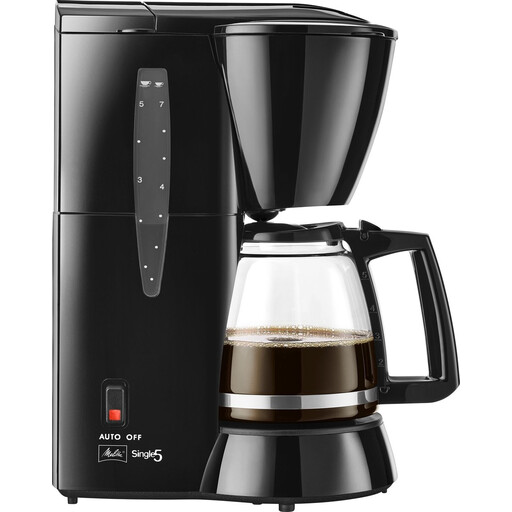
A stated cup count doesn’t tell you how many large mugs you can fill. For example, the Melitta Single 5 is described as making two to five cups, with a capacity of up to 650 ml.
Add up the amount in millilitres your own mugs hold, then compare it with the jug capacity.
If guests don’t pour their coffee at the same time, it may sit on the hotplate for longer. According to the Consumers' Association, coffee can become more bitter over time as a result.
Choose the jug type based on when the coffee will be drunk, and check that the machine suits the small batch you want to make.
Filter sizes and types vary between models. Check whether you can find a replacement jug for the exact model, too.
Before buying, check filter compatibility, cleaning requirements and which jug fits the full model number.
You’ll need to replace paper filters, and a damaged jug may need a model-specific replacement.
Melitta says the Single 5 is designed for two to five manufacturer-sized cups and offers a compact jug option for a small group.
Braun says the IDCollection KF 5120 combines a jug for ten cups with a setting for one to four cups.
Moccamaster says the KBG Select is designed for four to ten cups and has a half- or full-jug setting; the Cup-One makes a single mug.
Severin describes the KA 4808 as a filter coffee machine for four cups, with a stated capacity of 0,56 l.
The Daily Collection HD7461/20 is worth considering for brunches where you sometimes need to make a larger batch.
Joybuy filter coffee machines for shared brunches, from small batches to coffee served at different times.
 No image available
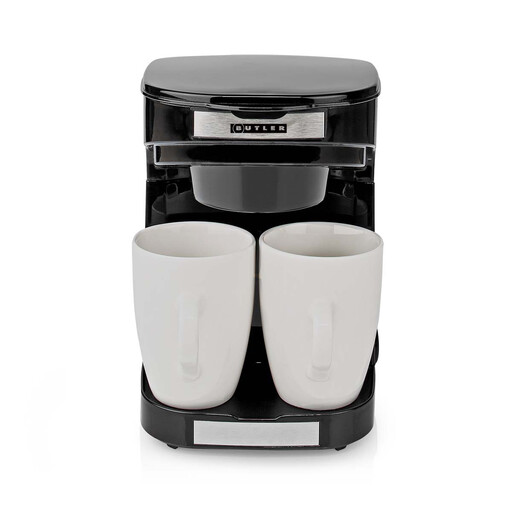
According to the product description, the 0,25 l brew is designed for two cups and suits a small group.
Includes two porcelain cups and a permanent nylon filter that can be rinsed clean. The machine switches off automatically after brewing.
 No image available
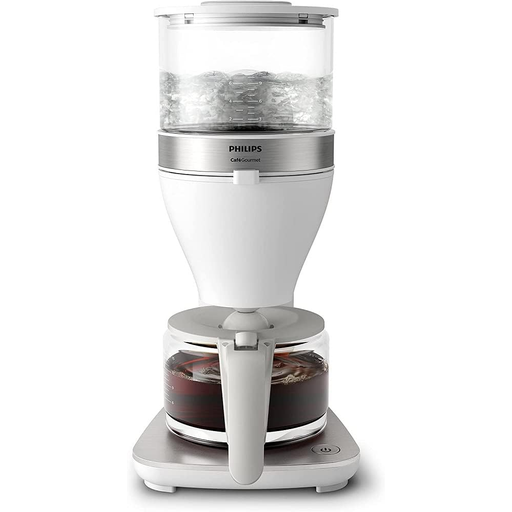
The stated 1,25 l capacity and ten-cup capacity make this model worth considering if you sometimes need to make a larger batch for brunch.
The product description lists a glass jug, hotplate and Aroma Twister.
 No image available
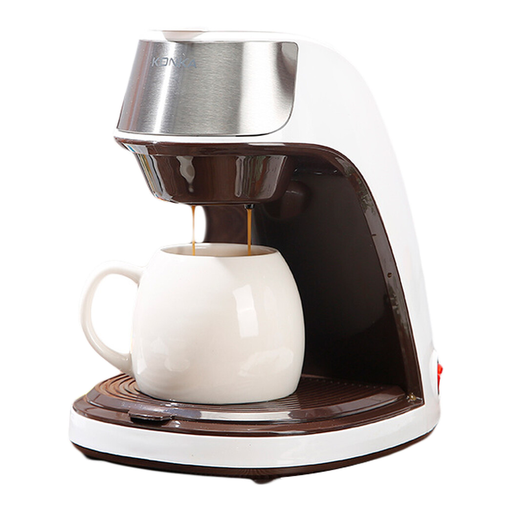
The product description lists a 300 ml water tank and an included ceramic cup for a small brew.
According to the product description, this model has a permanent filter and automatic shut-off.
 No image available
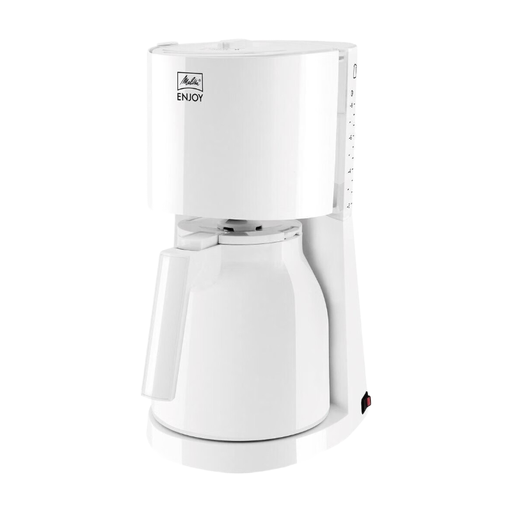
The thermal jug suits a brunch where guests help themselves at different times.
The product description lists a capacity of 1 l and up to ten cups; compare this with the volume of your own mugs.
 No image available
The stated capacity of up to 650 ml and two to five cups suits a small shared brew; match the capacity to your mugs.
The product description lists a removable filter holder, drip stop and hotplate with automatic shut-off after 40 minutes.
Add up the volume of your own cups or mugs for each batch and compare it with the capacity in millilitres. For example, the Melitta Single 5 is listed as holding up to 650 ml and making two to five cups; that doesn’t automatically mean it will fill five large mugs.
Clean the jug and filter parts according to the instructions for your exact model. The Consumers' Association recommends descaling regularly and lists a decline in taste or visible limescale as signs to look out for; check the manual for the method and frequency.
Check the full model number and jug compatibility before choosing a replacement. Melitta lists replacement jugs for the Single 5 as separately available; for other models, check that the jug is compatible with the exact machine, too.
No. According to the Dutch government, there is no fixed statutory guarantee period in the Netherlands; what you can expect from a product depends on factors including the product itself and the circumstances. A manufacturer's warranty is an additional benefit, and you should contact the retailer if a product is faulty.
The Dutch government states that electrical appliances offered for sale in the EU must carry a CE mark. Check the marking and instructions for the specific product; the brand name or product description alone doesn’t confirm that an individual item meets all requirements.