
Volunteer brewing coffee for a group
You want to make enough coffee in one go for visitors arriving at around the same time, without having to start again straight away.


Choose a machine based on how much coffee you usually serve at once: a smaller machine takes up less space, but may mean brewing several times when you have a group. Also measure the space you need to fill the water reservoir and remove the jug. A glass jug is handy for serving coffee straight away, while a thermal jug may be more practical if visitors help themselves at different times.
You want to make enough coffee in one go for visitors arriving at around the same time, without having to start again straight away.
You need to fit the machine between other items, while leaving enough room to fill it with water and take out the jug.
Visitors help themselves to coffee at different times during the event, so you’ll want to consider how the brewed coffee is kept and served.
First, work out how many visitors you want to serve with one brew. Then compare the space needed to position and use the machine, and decide how you’ll keep the coffee during the event.
| What to consider | What to look for | Who is this important for? |
|---|---|---|
| Amount brewed at a time | Compare the jug capacity in litres and consider how many visitors usually want coffee at the same time. The number of cups shown may be interpreted differently from one product to another. | If I want to serve several visitors during a busy spell, I don’t want to keep brewing another pot. That’s why around 33% of consumers prioritise making enough coffee in one go. |
| Space to position and use the machine | Measure the available width and depth, and check that you can easily reach the reservoir, filter and jug where you plan to put the machine. | On a small worktop, I want to be able to fill and use the machine without having to move things each time. That’s why around 33% of consumers prioritise the space required. |
| Serving coffee during a drop-in | Compare a glass jug with a hotplate against a thermal jug. Also check the capacity and whether the machine switches off automatically. | If visitors help themselves to coffee at different times, I want to be able to position and pour from a jug that suits the way they use it. That’s why around 17% of consumers prioritise serving coffee over a longer period. |
| Use and care | Check which parts can be removed, which filter size you need, and what the manual says about cleaning and descaling. | When several volunteers use the machine, I want filling and cleaning to be straightforward for everyone. That’s why around 17% of consumers prioritise easy maintenance. |
A machine may fit on the worktop but still be awkward to fill or clean if the reservoir, filter or jug is difficult to reach.
Check the exact model to make sure you can top up the water, open the filter and remove the jug where you plan to use it.
The Melitta Aromaboy model reviewed makes up to two cups; Philips lists a capacity of 1.2 litres for the HD7460/40. A smaller jug may mean extra brews during a busy spell.
Choose a machine that can handle the busiest typical coffee round you want to serve in one go.
With a small capacity, you may need to brew more often and spend extra time during a busy drop-in.
How coffee is kept and served varies by jug type. Manufacturers’ claims about keeping coffee warm apply to their own models and the stated conditions.
Choose based on when visitors will pour their coffee, and check the jug, automatic shut-off and cleaning instructions for the exact model.
The Aromaboy is designed for a small coffee corner and smaller brews.
The KA 4808 and KA 9306 are different models for smaller rounds and larger brews.
The 3000 Series HD7460/40 has a glass jug for brewing a larger amount at once.
According to WMF, the KITCHENminis 412270011 has a glass jug and is designed to make one to five cups.
The KBGT is a thermal-jug option for larger brews that can be served throughout an event.
Joybuy’s selection of filter coffee machines for repair cafés with limited worktop space.
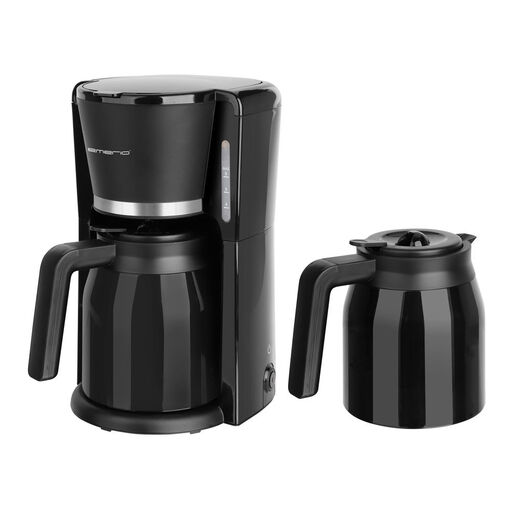 No image available
The description highlights a space-saving design for a small coffee corner.
Dimensions: 24,5 × 21,4 × 34 cm. The machine has a removable, reusable filter and an anti-drip function. It switches off automatically after brewing.
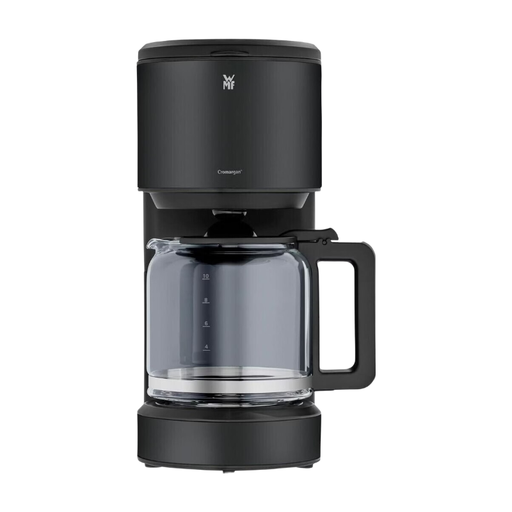 No image available
The stated capacity of 10 cups may suit a round where several visitors want coffee at the same time.
Dimensions: 30 × 34 × 15,2 cm. The product title specifies a glass jug; the description mentions a keep-warm function and automatic shut-off.
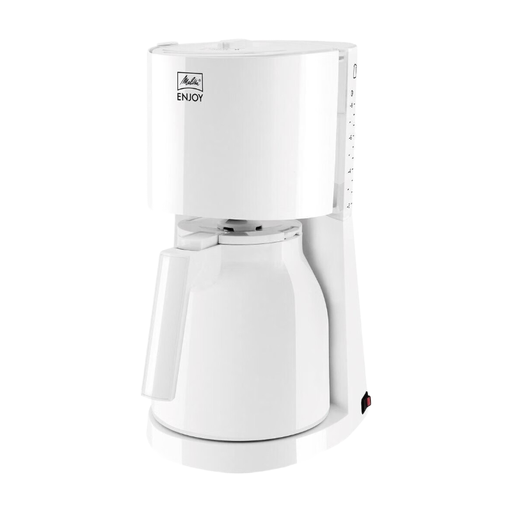 No image available
The thermal-jug version may suit an event where visitors pour themselves a coffee at different times.
Capacity: 1 litre, listed as 10 cups. Dimensions: 20,5 × 39 × 26,5 cm. The description mentions automatic shut-off.
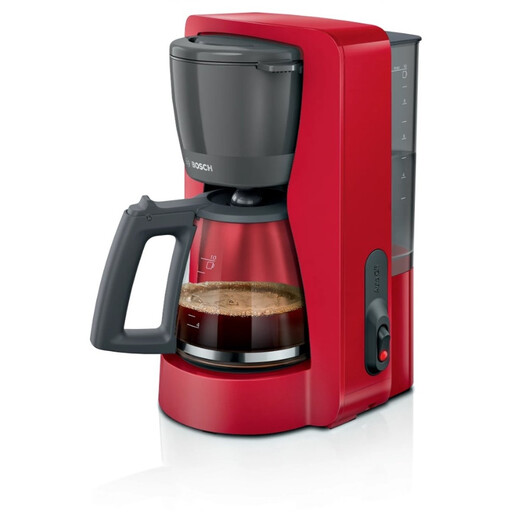 No image available
The stated capacity may be useful if you want to brew enough for a larger group in one go.
Capacity: 1,40 litres, up to 12 cups per brew. The description mentions a keep-warm function, removable water reservoir and swing-out filter. Dimensions: 34,7 × 29,5 × 23,2 cm.
 No image available
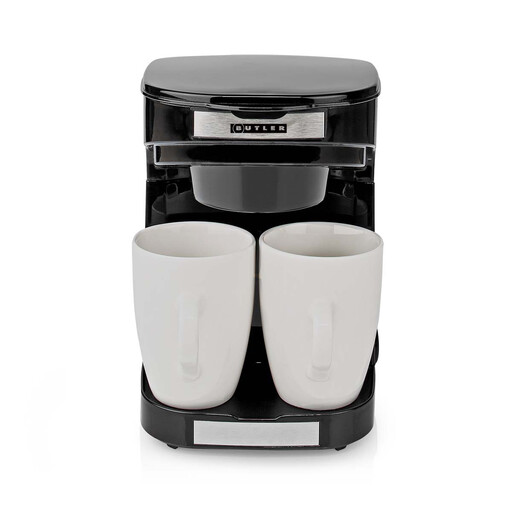
This small model may be a good fit if two cups at a time are enough; its limited capacity may mean extra brews for a larger group.
Capacity: 0,25 litres, listed as two cups. Power: 450 W. The description mentions a reusable filter and automatic shut-off.
Compare the jug capacity in litres with the amount of coffee you actually want to serve each round. Philips lists a capacity of 1.2 litres and 10 cups for the HD7460/40; Moccamaster lists approximately 1.25 litres and 10 cups for the KBGT. Don’t assume that a cup measurement means the same amount for every product without checking.
Measure the available width and depth, and also check that you can fill the reservoir, reach the filter and remove the jug. The machine’s external dimensions alone won’t tell you whether there’ll be enough room to use it where you plan to put it.
A thermal jug may be a good choice if visitors pour their coffee at different times during the event; a glass jug is an option if you’ll mainly be serving coffee straight after it’s brewed. Check how the exact model keeps the coffee warm, and how to clean the jug and other parts.
Check the manual for your chosen model for instructions on cleaning the jug and filter holder, and descaling the machine. Milieu Centraal recommends descaling coffee machines regularly. Don’t assume that instructions about dishwasher-safe parts apply to other models.
This depends, among other things, on how the repair café provides food or drink. The NVWA says registration is required if you sell food to consumers several times a year, and notes an exemption from registration if you sell food once a year. The NVWA’s information about sales doesn’t specify how free coffee at a particular repair café is treated. Check the activity and how often it takes place against the applicable NVWA rules before reaching a conclusion.