
If you want to make one batch
You want to have enough coffee ready for everyone before serving, so you compare the capacity in litres with the cups you’ll be using.


Start by working out how much coffee you want to serve each time, then compare the capacity in litres with the size of your own cups. Next, measure not only the appliance’s width, but also the space needed to open the filter and refill the water. A glass jug is handy for serving straight away; if you’ll be pouring coffee at different times, a thermal jug may be more practical, even if it has a smaller capacity.
You want to have enough coffee ready for everyone before serving, so you compare the capacity in litres with the cups you’ll be using.
You want to leave room for baking, so you consider both the appliance’s dimensions and the space needed to reach the filter and water reservoir.
You want to serve coffee while baking, so you compare a thermal jug with a glass jug and warming plate.
First, compare the amount brewed each time with the size of your cups. Then check that the machine and the space needed to use it will fit on your worktop.
| What to consider | What should you check? | Who is this important for? |
|---|---|---|
| Capacity per brew | Compare the capacity in litres with the number of guests and the size of their cups; the stated number of cups may not match the number of mugs you can fill. | If I want to make enough coffee in one batch, I compare the capacity in litres with our cups. Around 29% of consumers say sufficient capacity is their top priority. |
| Space on and around the worktop | Measure the width and depth, and leave room to open the filter and refill the water. | If I want to be able to bake alongside the machine, I also consider the space needed to operate and fill it. Around 29% of consumers say available worktop space is their top priority. |
| Serving at different times | Compare a thermal jug with a glass jug and, if the machine has a warming plate, check when the chosen model switches off. | If I want to serve coffee at different times while baking, I compare how well each jug suits that use. Around 24% of consumers prioritise serving coffee over a longer period. |
| Cleaning and brewing another batch | Check whether the filter holder and reservoir can be removed, and follow the model’s instructions for descaling. | If I want to tidy up quickly and make more coffee after a batch, I check how easy the parts are to reach. Around 18% of consumers say easy filling and maintenance are their top priority. |
A stated cup capacity doesn’t automatically tell you how many mugs you can fill for your group.
Count how many cups you want to serve each time, then compare their actual capacity with the jug or reservoir capacity in litres.
A swing-out filter needs room to open, while a fixed water reservoir must remain accessible where the machine is positioned.
Measure the depth too, and check that you can use the filter and refill the water without moving other things.
For the Tristar CM-1283, the product description mentions a heating function, while the specifications table says there is no keep-warm function.
If active heating matters to you, check the details of this model’s exact version. A jug’s insulation is not the same as an switched-on warming plate.
Melitta describes the EasyTop 1023-04 as a glass-jug option for anyone who needs a narrow machine.
Tristar describes the CM-1283 as combining a narrow body with a 1-litre thermal jug.
Inventum describes the KZ818D as a thermal-jug option with a timer, suited to anyone who needs a larger batch or a preset start time.
Bosch describes the MyMoment TKA2M113 as a glass-jug option with a removable reservoir.
The HD7461/20 is a glass-jug option with a capacity of 1.2 litres, according to the Dutch Joybuy product listing.
These products are worth comparing if you’re making filter coffee for a group and need to make the most of limited worktop space.
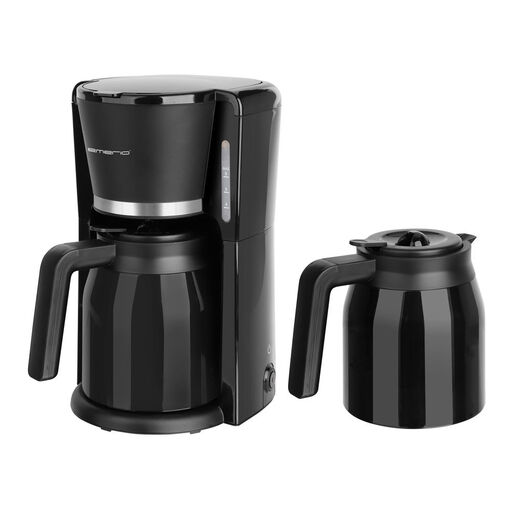 No image available
An option to compare if you have limited worktop space. Check that its dimensions and access to the filter and water reservoir suit your set-up.
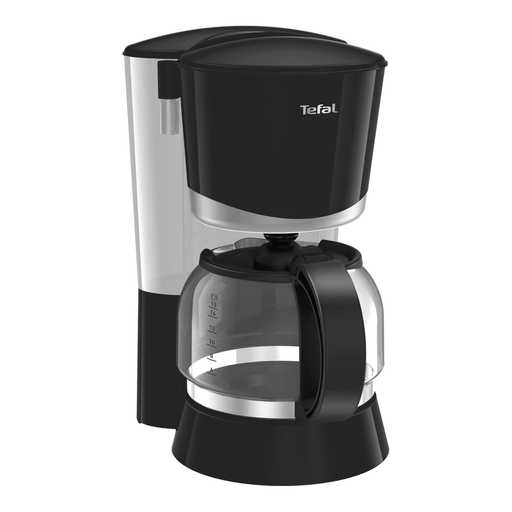 No image available
A glass-jug option to compare if you’re looking for a narrow set-up. Check the dimensions and make sure you can easily reach the reservoir and filter holder where you plan to put it.
The product description mentions a fragile glass jug and automatic shut-off after around 30 minutes of keeping the coffee warm.
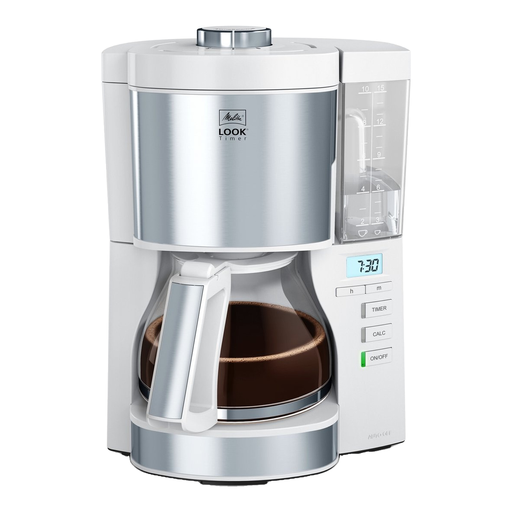 No image available
Compare this version if a timer or adjustable keep-warm function is important to you; check the settings for the exact model.
According to the product description, the machine switches off automatically after 40 minutes if the keep-warm function has not been activated.
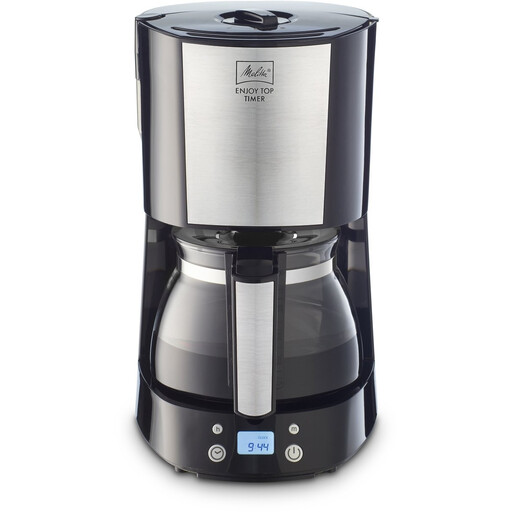 No image available
An option to compare if you want a timer and a glass jug. Check that there’s enough room for the machine and the space needed to use it.
According to the product description, the warming plate keeps the coffee warm for up to 40 minutes.
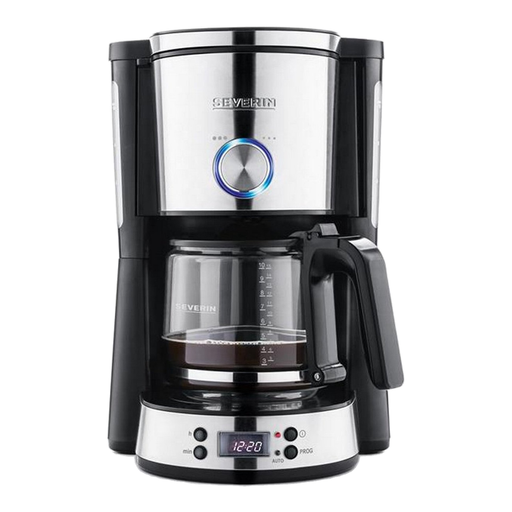 No image available
Compare this version if you’re brewing for a group and easy maintenance matters; check that its dimensions and controls suit your kitchen.
According to the product description, the machine is not suitable for children under 8. Older children may use it only under supervision.
Count how many cups you want to serve each time, then compare their actual capacity with the jug or reservoir capacity in litres. Without knowing the size of the cups used, a stated cup capacity won’t tell you how many mugs you can fill.
Measure the available width and depth, and check that you can remove the jug, open the filter and refill the water. A swing-out filter may need space at the side; you’ll need to be able to fill a fixed reservoir where the machine is positioned.
Before using a new machine, run water through it. Remove coffee grounds from the jug and filter holder, and descale the machine according to the instructions for your model. The Dutch Consumers’ Association recommends descaling regularly.
Contact the retailer. The Dutch Government explains that consumers may be entitled to a free repair or replacement for a faulty product; this depends on the purchase and the fault. A manufacturer’s warranty does not replace your consumer rights.
According to the Dutch Government, electrical appliances placed on the market in the EU must meet the relevant safety requirements and carry a CE mark. Check the mark and product information for the item you’re buying.