
Hosting a shared coffee break
You want to brew enough coffee in one go for family members taking a break at the same time. The Consumers’ Association describes filter coffee machines as a way to brew larger quantities of coffee.


Choose the capacity based on how many people want coffee at the same time and how much you pour into each cup, rather than relying only on the stated cup count. A glass jug with a warming plate may suit one shared break. If guests will be pouring at different times during the workshop, compare thermal jugs and check their capacity, how easy they are to fill and how simple they are to clean. The Consumers’ Association (Consumentenbond) notes that coffee can become more bitter over time when left on a warming plate.
You want to brew enough coffee in one go for family members taking a break at the same time. The Consumers’ Association describes filter coffee machines as a way to brew larger quantities of coffee.
Family members pour themselves a cup while the cooking workshop is under way. Choosing between a thermal jug and a warming plate affects how you keep the coffee available throughout.
You want to be able to refill the water, pour coffee and tidy up afterwards while you cook. So compare the water tank, filter holder and jug on the exact model you’re considering.
| What to consider | What should you check? | Who is this important for? |
|---|---|---|
| Enough coffee per brew | Count how many people will be drinking at the same time, estimate the amount per cup in millilitres and compare the total with the brewing capacity in litres. For example, six 200 ml cups require 1.2 l, with no extra for top-ups. | When the family takes a break together, I don’t want to have to brew another pot halfway through; around 36% of consumers prioritise making enough coffee in one go. |
| Coffee for staggered breaks | Work out how much time will pass between brewing and the last pour. Check the type of jug, the automatic switch-off and any conditions attached to claims about keeping coffee warm. | When guests pour themselves a cup at different times during the workshop, I want to keep coffee available without brewing another pot; around 29% of consumers prioritise serving coffee over a longer period. |
| Easy filling and tidying up | For each model, compare the water tank, drip-stop, access to the filter holder and cleaning instructions. Don’t assume a feature is included just because it’s available on another model in the range. | While I’m cooking, I want to be able to fill the machine and pour coffee without unnecessary steps; around 21% of consumers prioritise ease of use while cooking. |
| Maintenance and replacement | Check whether the filter is reusable, which descaling method the manual recommends and whether a compatible jug is available for the exact model number. | With regular use, I want to know how much cleaning the filter needs and whether I can replace the jug with a compatible one; around 14% of consumers prioritise maintenance and replacement. |
Manufacturers may state both the capacity in litres and the number of cups, but the actual number of servings depends on how much you pour. As a result, a jug may fill fewer mugs than you expect.
Calculate the total using the capacity of your own cups in millilitres, then compare it with the brewing capacity in litres.
A replacement jug may need to be bought separately and must be compatible with the model.
The Philips HD7460/40 is a filter coffee machine with a glass jug, suited to a shared coffee break.
According to Inventum, the KZ818D combines a thermal jug with a timer, making it a good option if guests will be pouring coffee at different times during a workshop.
The MyMoment TKA2M113 has a glass jug and is designed for a shared coffee break where easy filling is important.
The KBGT is a thermal jug model designed for larger brews and pouring coffee at different times.
The Enjoy Top Therm is a thermal jug model with a strength selector. The separate AromaFresh X range is designed for anyone looking for an integrated grinder.
This selection includes models with a glass jug and warming plate for a shared break, as well as a thermal jug model for pouring coffee at different times. Check each model’s jug capacity and features to make sure they suit the way you’ll be serving coffee.
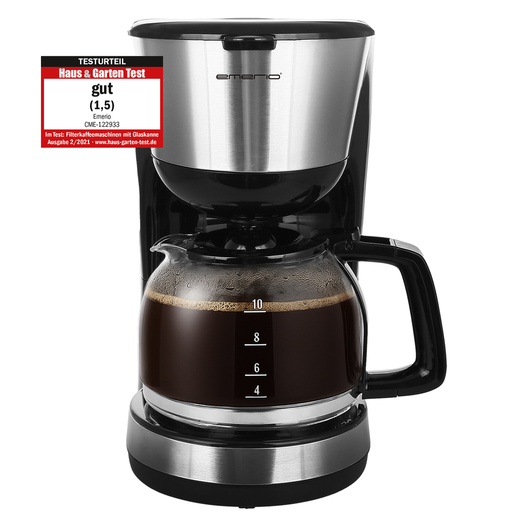 No image available
The glass jug and warming plate are designed for serving coffee during a shared break.
Capacity: 1,25 l. This model has a reusable, removable filter, a water-level indicator and a drip-stop.
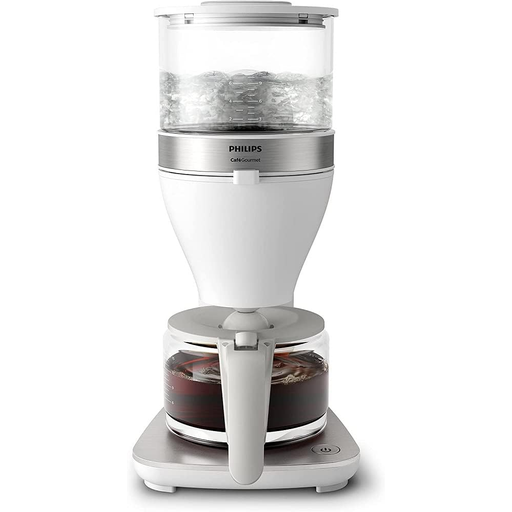 No image available
The glass jug and keep-warm function suit a coffee break where the coffee is poured after brewing.
The water tank has a capacity of 1,25 l. The description lists a water-level indicator, a 10-cup marking and an Aroma Twister.
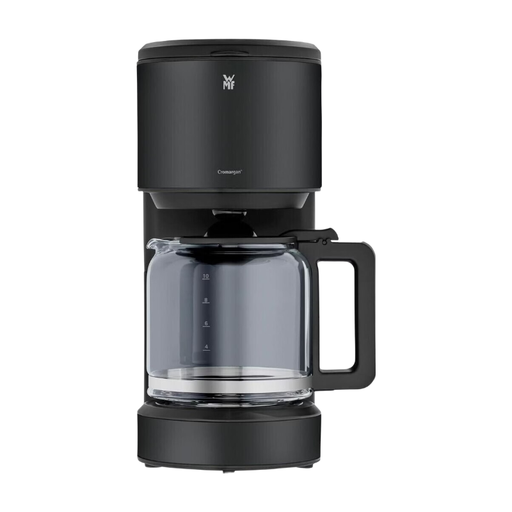 No image available
This filter coffee machine with a glass jug and keep-warm function is designed for a shared coffee break.
The description lists a capacity of 10 cups, a water-level indicator and automatic switch-off. Power: 1000 W.
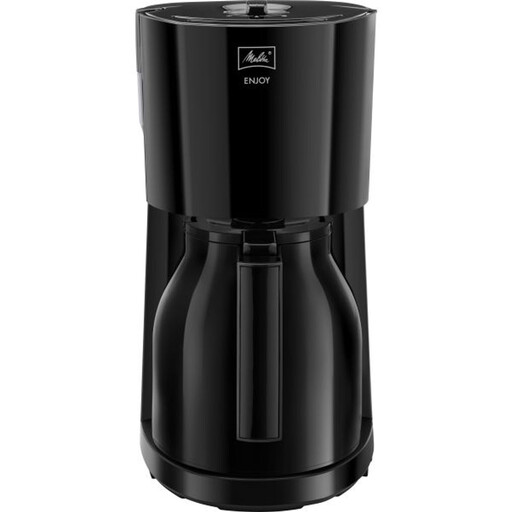 No image available
The thermal jug is designed for coffee that will be poured at different times during the workshop.
The description lists an AromaSelector, a drip-stop and a removable filter holder that is dishwasher-safe.
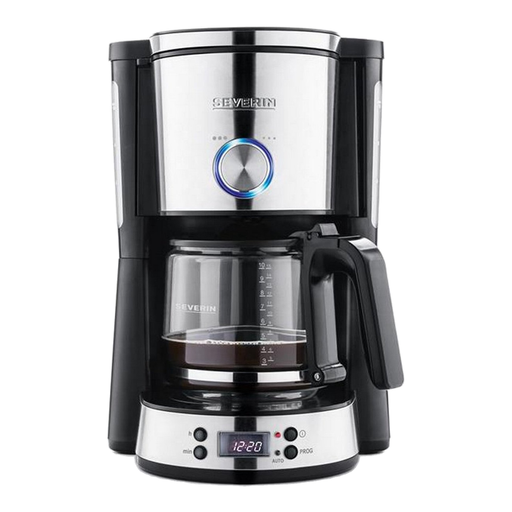 No image available
The capacity and water-level indicator make it easier to brew coffee for several guests.
Capacity: 1,25 l, for up to 10 cups. The description lists a drip-stop, automatic switch-off and an automatic rinsing and descaling programme.
Multiply the number of people who want coffee at the same time by the amount you pour into each cup, then compare the total in litres with the brewing capacity. The stated cup count can’t replace this calculation unless everyone uses cups of the same size.
The Consumers’ Association recommends flushing a new machine with water before use, keeping the jug and filter holder clean, and descaling regularly. Follow the manual for the exact model to find out which descaling product to use and how often.
You don’t need extra cover to benefit from your statutory rights; these apply alongside any retailer’s or manufacturer’s warranty. ACM ConsuWijzer explains that the retailer is responsible for offering a suitable solution if a product breaks during normal use sooner than you could reasonably expect. There is no single fixed general period for statutory guarantees in the Netherlands.
For electrical appliances covered by the regulations, the parties responsible must meet the applicable safety requirements. According to information from the Dutch government, the manufacturer must assess conformity, draw up an EU declaration of conformity and apply the required CE marking. The Low Voltage Directive applies to appliances with a rated AC voltage of 50 to 1.000 V; a CE mark alone does not prove that an individual item has been independently tested.