
The organiser brewing for the group
Wants to make enough coffee in one go, so compares the capacity in litres with the number of cups or mugs used during the workshop.


Start by choosing a jug capacity to suit the number of coffee drinkers and the size of the mugs they actually use. A thermal jug is a good choice if you’ll be pouring at different times without leaving a hotplate on; a glass jug with a hotplate may work well if you’ll be serving shortly after brewing. Before you buy, also check that the specific appliance has a CE mark: the NVWA says this is compulsory for electrical products.
Wants to make enough coffee in one go, so compares the capacity in litres with the number of cups or mugs used during the workshop.
Wants to have coffee ready while participants take breaks and pour at different times; the choice between a thermal jug and a hotplate is an important consideration.
Wants to fill, clean and put the machine away quickly, and know which replacement part fits the model if the jug breaks.
A good fit when: participants pour coffee at different times and you need to keep the jug available without leaving a hotplate on.
Things to consider: check how to clean the jug and lid, and whether a replacement jug is available for the exact model.
A good fit when: you’ll be pouring shortly after brewing and want to keep an eye on how much coffee is left in the jug.
Things to consider: for the machines it reviewed, the Consumentenbond gives an automatic shut-off time of up to 40 minutes; check the shut-off time for the exact model.
| What to consider | What to look for | Who should prioritise it? |
|---|---|---|
| Enough coffee per brew | Count the coffee drinkers and the servings you’ll need, measure one of the cups or mugs in use, then compare the total in litres with the stated capacity. | If I’m brewing for a group, I want to avoid finding that the jug is too small for the mugs used during the class. Around 36% of consumers say having enough coffee per brew is their main concern. |
| Serving at different times | Compare a thermal jug with a glass jug on a hotplate; if you choose a glass jug, check the model’s automatic shut-off time. | When participants take breaks at different times, I want to be able to pour coffee without everyone having to queue at once. Around 29% of consumers prioritise serving at different times. |
| Filling and cleaning | Check whether the water reservoir is removable and how to clean the filter holder and other parts, as described in the manual. | In a shared kitchen, I want to be able to fill the machine quickly between cooking activities and leave it clean afterwards. Around 21% of consumers say ease of filling and cleaning is their main concern. |
| Replacement parts and regular use | Check the full model number before choosing a replacement jug, and find out which filter type and maintenance the machine requires. | If the machine is used often, I want to know whether I can replace the jug without having to replace the whole machine. Around 14% of consumers prioritise running and replacement costs. |
A cup count doesn’t necessarily tell you how many larger mugs you can fill. If the brew is too small, you may need to make more coffee, leaving participants waiting longer.
Calculate the volume of the mugs your group actually uses, then compare it in litres with the jug capacity.
If there isn’t enough coffee, you may need to brew another batch, adding to the workshop’s waiting time.
Hotplates have a limited operating time, and coffee can become more bitter if it’s left on one for too long. For the machines it reviewed, the Consumentenbond gives an automatic shut-off time of up to 40 minutes.
Check the shut-off time for the exact model. If you’ll be pouring at different times, also consider a thermal jug.
Melitta lists replacement jugs for specific model numbers, so a jug from the same brand won’t necessarily fit every machine.
Compare the full model number on the machine with the replacement jug’s compatibility information.
A jug that doesn’t fit could mean extra work to find or replace it with a suitable part.
The KZ818D is a filter coffee machine with a thermal jug and timer. Inventum states that it has a capacity of 1.2 litres.
The MyMoment TKA2M113 has a glass jug and, according to Bosch, a removable 1.4-litre reservoir.
The Enjoy Top Therm range offers a thermal jug option; Melitta lists an AromaSelector and drip-stop for the Enjoy Top Therm.
The KBG Select has a glass jug and, according to Moccamaster, lets you choose between a half or full pot.
These product choices cover filter coffee machines with glass jugs, as well as one model with a stated capacity of 15 litres. Compare the capacity with the mugs your group uses and when you’ll be serving the coffee. The NVWA says a CE mark is compulsory for electrical products, so check the mark on the specific appliance.
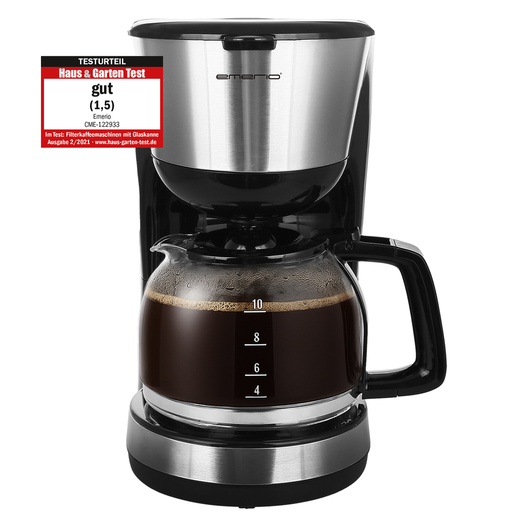 No image available
A glass-jug option to compare if you’ll be pouring coffee for the group shortly after brewing.
Stated capacity: 1.25 litres. Glass jug; black.
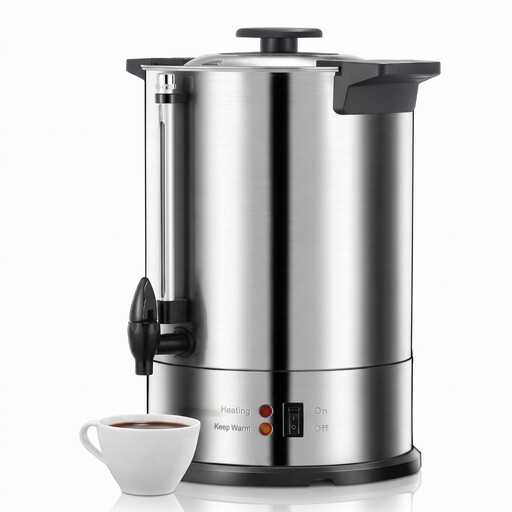 No image available
Compare this model with the size of your group and the amount of coffee you want to make in one brew.
Stated capacity: 15 L; power: 1500 W; for 150 cups. The title describes a stainless steel model with a round filter, hotplate and tap.
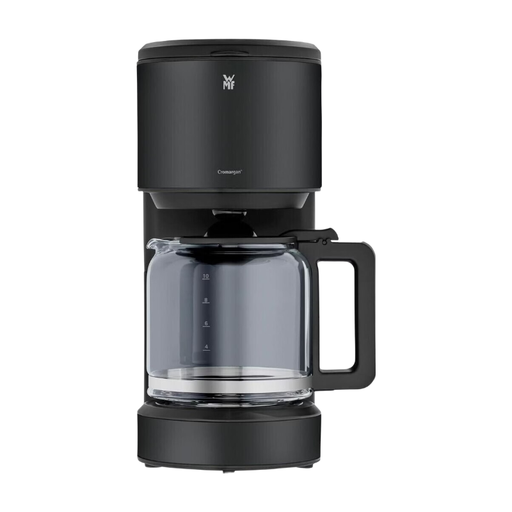 No image available
The version with a glass jug is worth comparing if you want to serve coffee shortly after brewing.
Power: 1000 W. Colour: matt black.
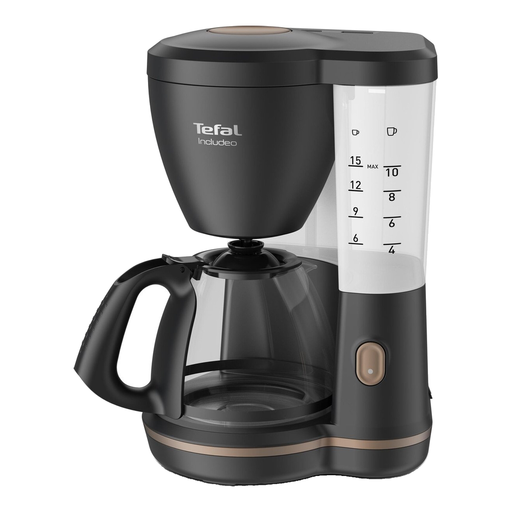 No image available
The title mentions a dual handle for left- and right-handed use, which may be useful if several people will be operating the machine.
Stated capacity: 1.25 litres; 10 to 15 cups.
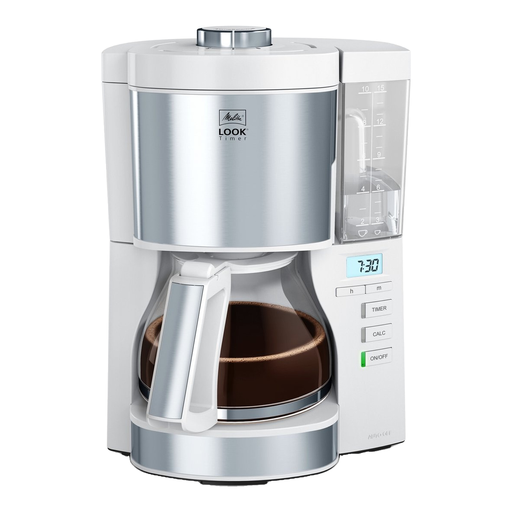 No image available
A filter coffee machine to compare; match the jug capacity and how it keeps coffee warm to the needs of your workshop.
Colour stated in the product name: white.
Work out the total amount you’ll need based on the number of coffee drinkers, the actual size of their cups or mugs and whether they’ll want a second serving. Compare that volume in litres with the machine’s capacity; cup counts aren’t directly comparable between models.
The Consumentenbond recommends flushing a new machine with water before its first use, using fresh water and keeping the coffee jug and filter holder clean. Descale the machine according to the manual.
No. According to the Government of the Netherlands, there is no fixed period for the statutory guarantee: the product must do what you can reasonably expect it to do. A manufacturer’s warranty is an additional benefit; if a product is faulty, the retailer is your point of contact.
The NVWA says a CE mark is compulsory for electrical products. Check the mark on the specific appliance; the general requirement doesn’t automatically confirm that an individual item bears the mark.
It depends on how the workshop is organised. The NVWA says that food safety rules also apply when a business or private individual occasionally sells food or drink. For preparing or selling food in the professional contexts described, the NVWA specifies a HACCP food safety plan or an applicable hygiene code; businesses offering food must also provide information about any allergens present. These requirements don’t automatically apply to a private class where nothing is sold.