
Break organiser
You need to prepare coffee for a group during a short break. Compare the jug capacity with the number of people expected, and allow for any additional brewing cycles.


First, work out how many litres of coffee you need and how many brewing cycles will fit into the break. Use the capacity of the cups or mugs you actually use. Then measure the space for the machine, as well as the room needed to refill it and remove the jug. A thermal jug suits staggered serving, a glass jug is ideal for serving straight away, and a twin-brewing machine can handle demand at the same time, provided you have enough worktop space.
You need to prepare coffee for a group during a short break. Compare the jug capacity with the number of people expected, and allow for any additional brewing cycles.
You want to be able to position, fill and clean the machine without blocking your limited worktop space. Measure not just the footprint, but also the room needed to use its parts.
You want coffee to be readily available throughout the break. The choice between a thermal jug and a glass jug partly depends on when and where you’ll be serving it.
Start by working out how much coffee you need and how many brewing cycles you’ll require. Then measure the space needed to use the machine, and choose a jug type to suit when you’ll be serving.
| Consideration | What to look for when buying | Who is this important to? |
|---|---|---|
| Enough coffee, ready on time | Estimate the number of people expected and the capacity of their cups or mugs. Compare the litres you need with the jug capacity and the number of brewing cycles available. | I want enough coffee ready for the group before or during the short break; around 33% of consumers put quantity and timing first. |
| Fits in the kitchen | Measure the width, depth and height, and check that you can reach the water tank, filter and jug. | If the kitchen is cramped, I want to be able to fill the machine and serve coffee without blocking the worktop; around 27% of consumers put available space at the top of their list. |
| Keeping coffee available | Choose a thermal or glass jug to suit when you’ll be serving. If there’s an extra jug, check whether it’s just for a subsequent brew or part of a second brewing system. | I want to make coffee in advance and serve it easily during the break; around 27% of consumers prioritise keeping coffee available. |
| Cleaning and parts | Check the manual to see which parts can be cleaned, and look for replacement parts using the exact model number. | For regular rehearsals, I want to be able to clean the machine and replace a suitable part if necessary; around 13% of consumers put maintenance and parts first. |
The Netherlands Nutrition Centre uses 125 ml as the serving size for a cup of coffee in its guidance. For your own calculation, use the actual capacity of the cups or mugs used during the choir break.
A second jug included with a machine doesn’t automatically mean it can brew into two jugs at once. Severin describes the KA 9309 as having one brewing system and the KA 9315 as having two simultaneous brewing systems; their stated widths are 24 cm and 39,5 cm respectively.
An extra jug may be intended for serving coffee from a subsequent brew. That alone doesn’t mean the machine can brew into two jugs at once.
Check how many separate brewing systems the model has, not just how many jugs are included.
If the machine has just one brewing system, an extra brew during the break could mean a wait.
A machine may fit on the worktop but still be awkward to fill or use if you can’t easily reach the water tank, filter or jug.
Measure the depth and height too, and check that you can refill the machine and remove the filter holder and jug where you plan to put it.
The number of cups doesn’t tell you how many large mugs one brew will fill, as cup sizes vary.
Work out the quantity you need in litres based on the mugs you’ll actually use.
The Easy Therm range is worth considering if you want a thermal jug with a single brewing station; there’s also a version with a second jug.
The KA 9309 and KA 9315 show two different ways to brew for a group: a model with an extra jug and one with two simultaneous brewing systems.
The Daily Collection HD7461/20 is a glass-jug option if serving straight away matters more to you than having a thermal jug included.
The KBG Select is a glass-jug option for anyone considering repeat brewing and model-specific parts.
These filter coffee machines are options to compare for a group break and a compact kitchen. Compare the stated jug capacity with the size of your own cups, and measure the space needed for filling and serving. According to the Netherlands Food and Consumer Product Safety Authority, CE marking is mandatory for electrical consumer products placed on the market in the Netherlands; check the marking on the specific appliance. CE marking is not an independent quality assessment.
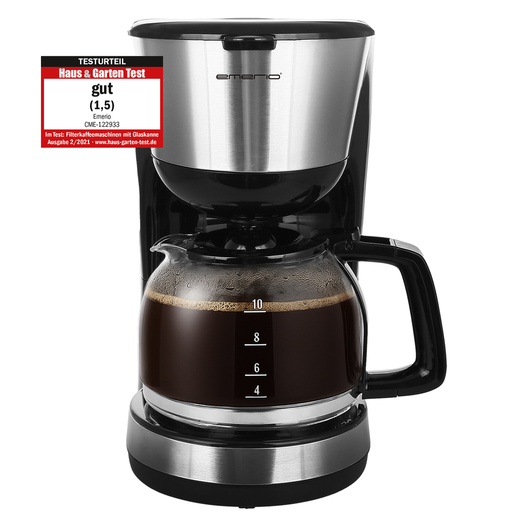 No image available
An option to compare if you want a glass jug; match the capacity to the mugs used during the break.
Measure the available space, including room to refill the machine and remove the jug.
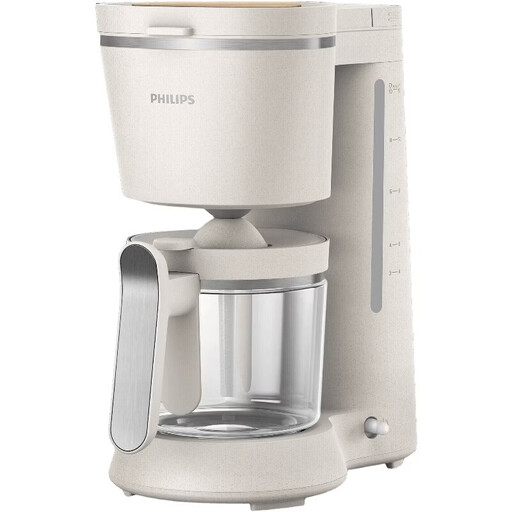 No image available
The product information lists a glass jug; compare its capacity with the mugs you use and the number of brews you need.
The product description says the machine switches off automatically after 30 minutes. Bear this in mind if you need coffee to stay available later in the break.
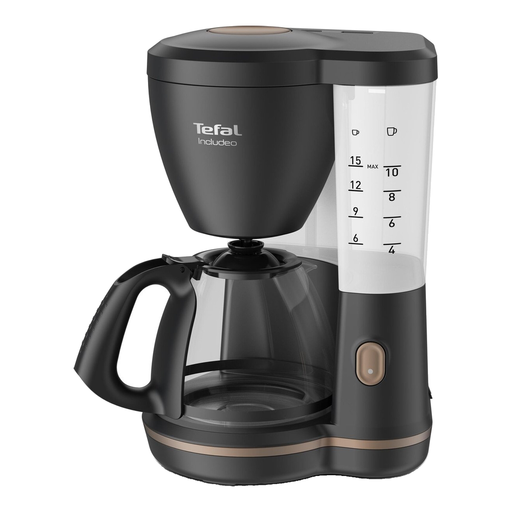 No image available
Compare the stated capacity with the size of the mugs you use for the group.
The product description doesn’t mention a hot plate, so factor in when you’ll be serving the coffee if it won’t be poured straight away.
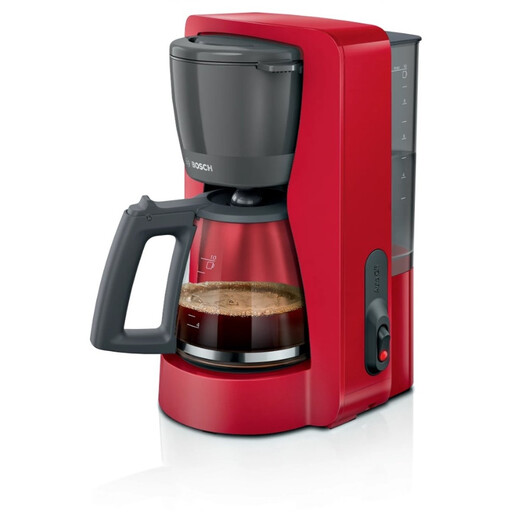 No image available
Compare the stated jug capacity with the size of your cups, and measure the space for the machine and serving.
Check that you can easily reach the water tank, filter and jug where you plan to put it.
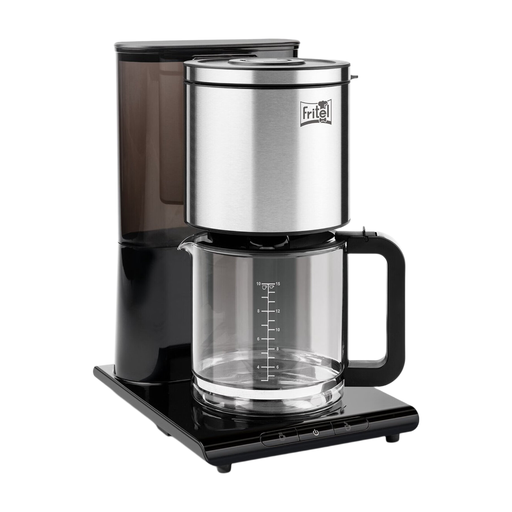 No image available
Compare the stated jug capacity with the mugs used during the break, and measure the available worktop space.
The product description lists a keep-warm function for up to 30 minutes; bear this in mind if you’ll be serving coffee over a longer period.
Multiply the number of coffee drinkers expected by the capacity of the cup or mug you’ll actually use, then compare the result in litres with the jug capacity. The Netherlands Nutrition Centre uses 125 ml per cup in its coffee guidance; larger mugs need a calculation of their own. Also work out how many brewing cycles will fit into the break.
Clean the filter holder and jug according to the manual for the exact model. Check which parts are dishwasher-safe and which replacement parts fit the model. The Consumers’ Association treats cleaning and descaling as separate aspects of ease of use.
No. According to the Dutch Government, the Netherlands has no fixed statutory guarantee period. You’re entitled to a product that meets what you can reasonably expect, and the retailer is your point of contact if something goes wrong. If the choir association, rather than an individual, is the buyer, you’ll need to establish separately which consumer rights apply to that purchase.
Yes. The Netherlands Food and Consumer Product Safety Authority states that CE marking is mandatory for electrical consumer products covered by the relevant product rules. It’s a product requirement, not an independent assessment of coffee quality or confirmation that a specific item meets every requirement.