
Choir member making coffee for the group
You want to have enough coffee ready before a short break together. So compare the amount made per brew with the number of people drinking and the capacity of their cups.


First, work out how much coffee you need and compare that volume with how much the machine makes per brew, rather than relying only on the stated number of cups. An insulated carafe is useful if you’re taking the coffee elsewhere or serving it later; for a larger group, a bigger batch or planned follow-up batches may matter more than a timer. Also consider the space available for brewing and the maintenance involved.
You want to have enough coffee ready before a short break together. So compare the amount made per brew with the number of people drinking and the capacity of their cups.
If you brew in one place and serve the coffee somewhere else, the carafe and ease of pouring are important considerations. The Consumentenbond describes an insulated carafe as an option for keeping coffee warm without a hotplate.
A programmable brew time may suit you if the break is at a set time and you can prepare the machine in advance. Cleaning up afterwards is also part of using it.
Start by working out how much coffee you need. Then consider whether you’ll be taking the carafe elsewhere and whether a timer or easy maintenance would make a difference during your break.
| What to consider | What should you look for? | Who is this most relevant to? |
|---|---|---|
| Enough coffee per brew | Work out the volume of the cups and compare it with the amount made per batch. Allow extra time if you need to brew multiple batches. | If I want to serve everyone coffee at the same time, I need to know how much the first batch will actually make. Around 40% of consumers prioritise having enough coffee per batch. |
| Taking coffee elsewhere and serving it | Check whether an insulated carafe suits the journey between the brewing area and the break room, and check its capacity. | If I want to serve the coffee somewhere else, I look for a carafe that suits the way I’ll use it. Around 30% of consumers prioritise portability and keeping coffee warm. |
| Preparation and operation | A timer is only useful if you can prepare the machine in advance. Check how to set the brew time and how long it takes to pour the coffee. | If the break is at a set time, I want to be able to plan the preparation around it. Around 20% of consumers choose mainly on the basis of preparation and operation. |
| Cleaning and maintenance | Check how to clean the carafe and filter holder, which filters are needed and what maintenance instructions apply to the model. | If the machine is used regularly for gatherings, I want to be able to clean and maintain it easily afterwards. Around 10% of consumers make cleaning and maintenance their main priority. |
The Consumentenbond gives 125 ml as the capacity of a traditional cup. Mugs may be larger, so the amount of coffee made per brew may differ from what you expect based on the number of cups stated.
Calculate the amount you need based on the number of people drinking and the size of the cups your choir actually uses. Compare the result in litres with the batch capacity.
Brewing another batch takes time and may interrupt a short break.
The number of carafes included doesn’t tell you how much coffee the machine makes per brew. For example, Severin lists the KA 9307 as having a capacity of 1.0 litre per brew, even though two carafes are included.
Check the number of carafes, the water tank capacity and the amount the machine makes per brew separately.
You’ll need to allow extra brewing time for consecutive batches.
The carafe and filter holder need attention after use too. A replacement carafe must also be compatible with the exact model version.
Check the cleaning and descaling instructions, and find out which filters are needed. If you need a replacement carafe, check the model number.
Allow for maintenance and the filters you’ll need; replacement carafes are model-specific.
The KBGT and CDT Grand come in different capacities and have an insulated carafe, so you can match the batch size to the number of people drinking.
According to Melitta, the Look V Therm Timer combines an insulated carafe with a programmable brew time.
According to Bosch, the Styline TKA8A683 combines an insulated carafe with a removable water tank.
The KA 9307 is a filter coffee machine with two insulated carafes, for anyone who wants to keep a follow-up batch separate.
This selection includes filter coffee machines with a glass carafe for serving coffee where it’s brewed, and an insulated carafe for coffee you want to take elsewhere or serve later.
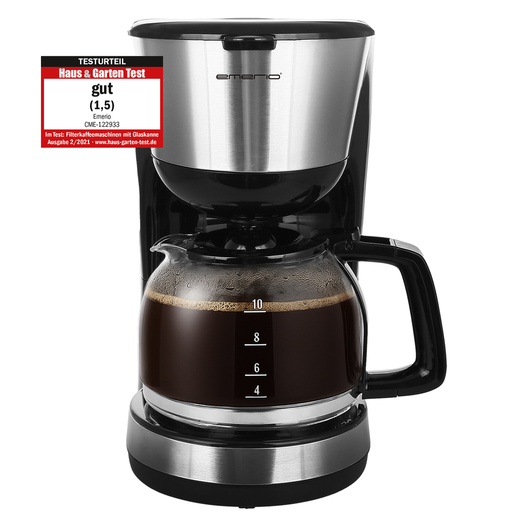 No image available
Suited to brewing and serving coffee in the same place, with a glass carafe and hotplate.
Capacity: 1.25 litres. The reusable filter is removable. The product description advises against using it outdoors or in damp conditions.
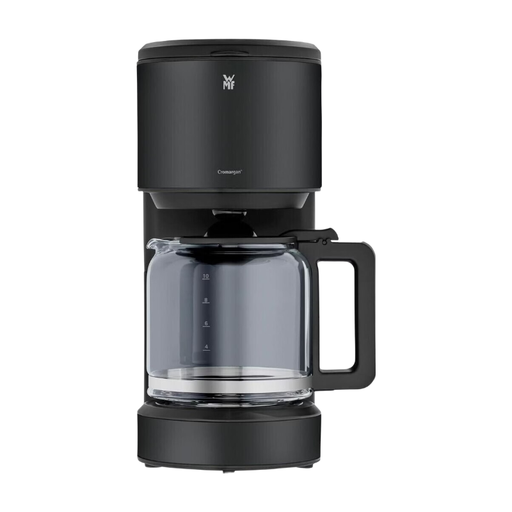 No image available
An option for filter coffee served where it’s brewed, with a glass carafe and keep-warm function.
Stated capacity: up to 10 cups per brew. Power: 1000 W.
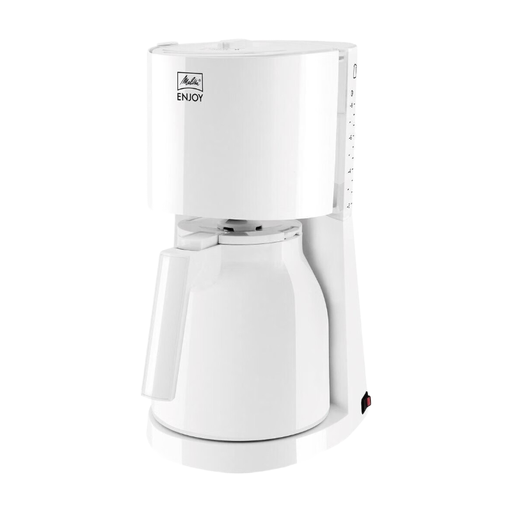 No image available
Suited to coffee you want to take elsewhere after brewing or serve later; this model has an insulated carafe.
Capacity: 1 litre. Stated capacity: up to 10 cups per brew.
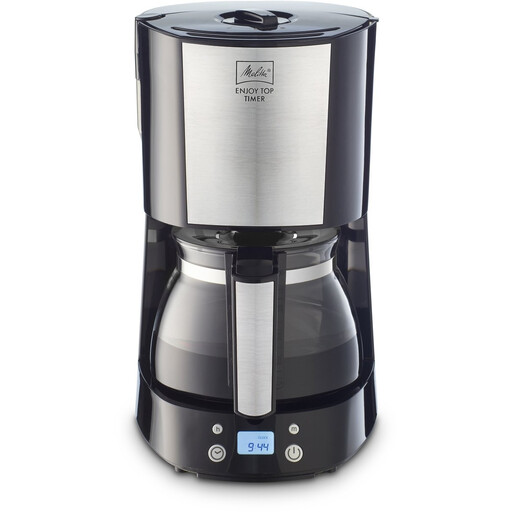 No image available
Worth considering if the brewing time is set in advance and you’ll be serving the coffee where it’s brewed; the product description mentions a programmable timer.
Glass carafe with hotplate. The description states that it makes around 10 cups and has a removable filter holder.
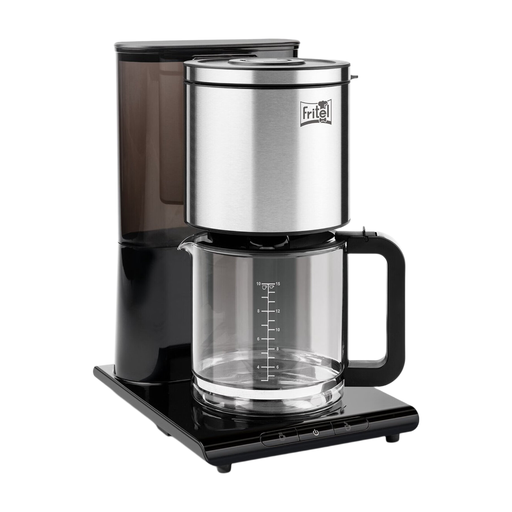 No image available
A glass carafe and keep-warm function make it suited to brewing and serving coffee in the same place.
Capacity: 1.5 litres. The description states that it makes 10 large or 15 small cups and has a keep-warm function for up to 30 minutes.
Multiply the number of people drinking coffee by the capacity of their cups, then compare the result in litres with the amount made per brew. For example, twelve 150 ml cups add up to 1.8 litres, without allowing for top-ups. The Consumentenbond gives 125 ml as the capacity of a traditional filter coffee cup; use the cups your choir uses for your calculation.
Clean the carafe and filter holder, and descale the machine according to the instructions for your chosen model. The Consumentenbond advises removing coffee residue, as it can leave a bitter aftertaste. Follow the manufacturer’s instructions for first use and ongoing maintenance.
No. Any manufacturer’s warranty is in addition to your statutory rights. The Dutch government explains that when you buy a product, you’re entitled to one that works properly; check the terms of any additional warranty separately. If you need a replacement carafe, use the exact model number.