First, choose a capacity that suits the amount of coffee you expect to need per round. Then consider how long visitors are likely to keep arriving after the coffee has been brewed. A glass carafe with a hot plate suits rounds served shortly after brewing, while a thermal carafe is more practical when visitors arrive at different times. Also compare filling, cleaning and timer features with the volunteers’ tasks.
Who is this buying guide for?
Coffee-round volunteer
You make coffee for several visitors at once and want to match the amount in each carafe to the usual turnout. The Consumers’ Association describes filter coffee machines as suitable for larger quantities; capacity varies by model.
Host welcoming visitors throughout the day
You want to be able to serve coffee to visitors who arrive later, without leaving the carafe on a hot plate for too long. So compare a thermal carafe with a glass one.
Volunteer responsible for tidying up
You fill and clean the machine afterwards, so parts that are easy to reach are especially useful. The Consumers’ Association assesses filling, the filter holder, controls, cleaning and descaling as separate parts of its test method.
What should you look for when buying?
Glass carafe with hot plate
Best when: you make a round of coffee after returning and serve most visitors shortly afterwards.
Bear in mind: the hot plate uses energy while keeping the coffee warm, and a glass carafe needs careful handling.
Filter coffee machine with thermal carafe
Best when: visitors arrive over a longer period or you want to carry the carafe to the serving table.
Bear in mind: check the capacity and how easy the specific carafe is to pour from; a thermal carafe does not need an electric hot plate.
| What to consider |
What to look for |
Who it matters most to |
| Amount per brew |
Compare the capacity in litres, the stated number of cups and the cup size you use. |
When I make a round of coffee for several visitors, I want to know how many cups one carafe will actually serve. Around 36% of consumers prioritise getting enough coffee per brew. |
| Serving coffee to visitors arriving at different times |
Compare the type of carafe, how long the hot plate stays on and how easy the carafe is to move. |
When visitors arrive at different times, I want to be able to serve coffee later too. Around 29% of consumers put this first. |
| Filling and cleaning |
Check access to the water tank and filter holder, and follow the model’s cleaning instructions. |
When volunteers fill and clean the machine repeatedly, I want those parts to be easy to reach. Around 21% of consumers say easy maintenance is their main concern. |
| Planning a brew in advance |
Check whether the specific model has a timer and decide who will prepare the water, coffee and filter in advance. |
When someone can prepare the machine beforehand, I want to schedule brewing for around the expected time of return. Around 14% of consumers prioritise this option. |
Common pitfalls
-
Assuming the stated number of cups equals the number of visitors
Manufacturers often give capacity in both litres and cups. The size of the cups you actually use determines how many visitors one carafe can serve.
Compare the capacity in litres with the cups you use and the number of people you expect for a coffee round.
Larger cups may mean you need to brew an extra batch, leaving visitors waiting longer.
-
Assuming a hot plate and a thermal carafe work in the same way
A glass carafe stays warm on a switched-on hot plate; a thermal carafe keeps coffee warm in a different way. The Consumers’ Association states in its test method that machines with a thermal carafe do not use energy to keep the coffee warm.
Choose based on how spread out visitors’ arrival times are, and check how long the hot plate stays on for each model.
A hot plate uses energy for as long as it keeps the coffee warm.
-
Choosing a replacement carafe by brand name alone
Replacement carafes may be designed for specific models. A carafe that does not fit your machine is no use.
Before ordering, compare the machine’s full model number with the list of compatible models.
Choosing the wrong one can mean extra time spent searching and returning it.
Brands to compare
Inventum
The KZ812D is an example of a filter coffee machine with a larger glass carafe and a timer.
- Inventum lists a capacity of 1.5 litres and up to 12 cups for the KZ812D. The manufacturer also mentions adjustable coffee strength, a reusable filter and automatic shut-off after 40 minutes.
- According to Inventum, the water tank is not removable. A glass carafe keeps coffee warm differently from a thermal carafe.
Melitta
According to Melitta, the LOOK V Therm Timer combines a thermal carafe, timer and removable water tank.
- This combination may suit advance preparation and visitors arriving at different times.
- These details come from the manufacturer. Check the capacity of the specific model and whether any replacement carafe is compatible; other Melitta models may have different features.
Moccamaster
The KBGT is the version with a thermal carafe; the KBG Select is a separate product range with a glass carafe.
- Moccamaster lists a capacity of around 1.25 litres and 10 cups for the KBGT. A glass replacement carafe is specifically described as suitable for the KBG Select.
- The KBGT’s capacity does not automatically apply to the KBG Select. Claims about keeping coffee warm and its flavour on brand pages are made by the manufacturer.
Philips
The 3000 Series Basic HD7460/40 is an example of a filter coffee machine with a glass carafe.
- For this model, Philips specifies a capacity of 1.2 litres, 10 cups, a drip-stop feature and automatic shut-off.
- These details apply to the HD7460/40; do not assume they apply to another HD7460 variant or a model with a thermal carafe.
Krups
According to Krups, the F3090810 is a filter coffee machine with a glass carafe and a capacity of 1.25 litres.
- Krups states that this model keeps coffee warm for 30 minutes before switching off automatically.
- Compare this keep-warm time with the expected arrival times of your visitors. The manufacturer’s description is not an independent performance test.
Filter coffee machines at Joybuy
This selection focuses on filter coffee machines with a glass carafe and a keep-warm function, for serving a round of coffee after a visit to the market. The Dutch government states that electrical products in the EU must carry a CE mark; check the specific machine you are considering.
 No image available
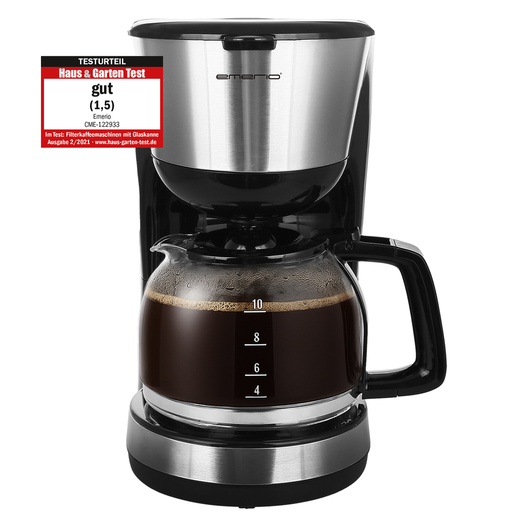
Emerio CME-122933 filter coffee machine
The glass carafe and hot plate suit a round of coffee served shortly after brewing.
Capacity: 1.25 litres, around 10 cups. Reusable removable filter, drip-stop feature and automatic shut-off.
View at Joybuy
 No image available
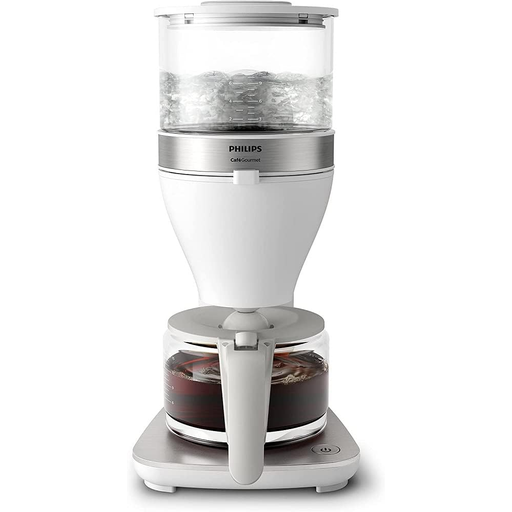
Philips HD5416/00 Cafè Gourmet White
The glass carafe and hot plate are designed for serving coffee after brewing.
Capacity: 1.25 litres, 10 cups. The description lists an Aroma Twister, drip-stop feature and automatic shut-off.
View at Joybuy
 No image available
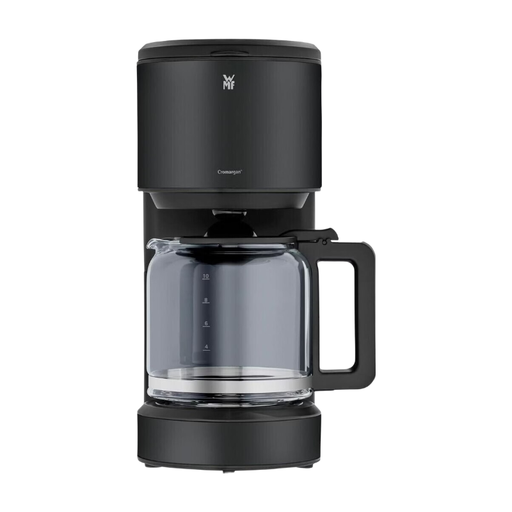
WMF Stelio Aroma filter coffee machine, 1000 W
The glass carafe and keep-warm function suit a coffee round where you want to serve the coffee after brewing.
The description lists a capacity of 10 cups, a water-level indicator, automatic shut-off and a non-slip base.
View at Joybuy
 No image available
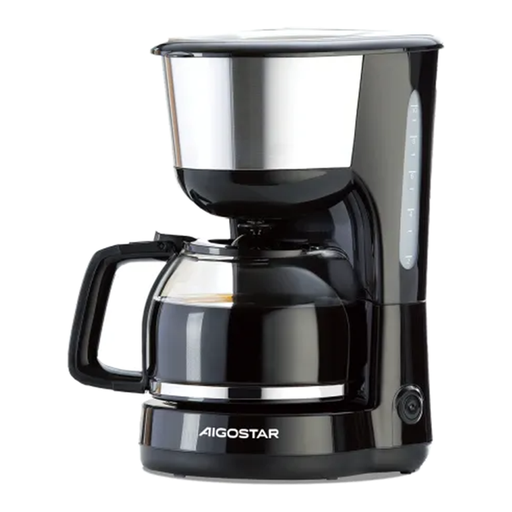
Aigostar filter coffee machine, 1.25 litres
The glass carafe and keep-warm function are suited to making coffee for several visitors.
Capacity: 1.25 litres, up to 10 servings. The description mentions one-button operation and automatic shut-off after keeping the coffee warm for up to 40 minutes. Not intended for use with an external timer.
View at Joybuy
 No image available
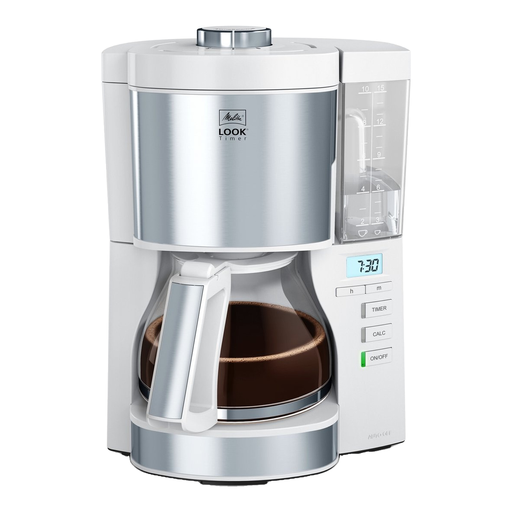
Melitta 6766590 filter coffee machine, white
The glass carafe and timer may suit a coffee round that has been prepared in advance.
Capacity: 1.25 litres. The description lists a removable water tank, AromaSelector, removable filter holder with drip-stop feature and programmable start time.
View at Joybuy
Frequently asked questions
How can you tell whether one carafe will be enough for your visitors?
Compare the number of people in one coffee round and the size of the cups you use with the capacity in litres. The Consumers’ Association uses 125 ml as the size of a traditional filter coffee cup; the stated number of cups varies by manufacturer and model.
What does the machine need after use?
Follow the chosen model’s instructions for cleaning and descaling. Check in advance that the filter holder, water tank and carafe are easy to reach; the Consumers’ Association assesses cleaning and descaling separately in its test method.
Who can help if a machine bought by an individual turns out to be faulty?
According to the Dutch government, under the statutory guarantee the retailer must provide a solution, not the manufacturer. The Netherlands does not have one fixed statutory guarantee period for all products. Whether the same consumer rules apply when an organisation buys the machine for business use depends on the buyer and the purchase agreement.
Which product marking is relevant for a new electrical appliance?
The Dutch government states that electrical products in the EU must carry a CE mark. Check that the specific version you want to buy has this marking.


