
Vandaag of morgen in huis

Kwaliteit gegarandeerd

Welkomstaanbiedingen ontgrendelen: GRATIS bezorging | Tot 80% korting | Gratis 30 dagen JoyPlus-proefperiode
Download de app
A filter coffee machine seems simple: add water, put ground coffee in the filter and press the button. However, models can vary considerably in capacity, controls, maintenance and energy consumption. The wrong choice often becomes apparent only after a few weeks: the jug is too small, the coffee stays hot for too long or cleaning turns out to be a chore.
Joybuy Product Recommendation Officer helps you assess the key differences in practical terms. This makes it easier to choose a coffee machine that suits your household, office, student accommodation or travel needs.
Manufacturers do not always use the same cup size. A machine advertised as making “10 cups” may, for example, have a reservoir of around 1.25 litres, while another model may list 10 large or 15 small cups. Always check the capacity in litres as well as the measurements marked on the water jug.
For a one- or two-person household, a compact coffee machine with a capacity of 250 to 600 ml may be more practical. Families and offices will usually benefit more from a coffee machine holding 1.25 to 1.5 litres.
A coffee machine with a glass jug often uses a warming plate. This keeps the coffee warm for a limited period, but heating it for too long can alter the flavour. Check the stated duration, such as 30 or 40 minutes, and see whether the machine switches off automatically afterwards.
A thermal jug usually prevents the coffee from sitting on a hot plate, but the models in this selection mainly use glass jugs. With a glass jug, also look for a sturdy handle, clear measurement markings and secure positioning on the warming plate.
A timer, aroma setting or display can be useful, but only if you will actually use those features. A coffee machine with a timer is particularly practical if you want coffee to brew at a set time. For occasional use, a simple model with a single on/off button may be cheaper and easier to maintain.
Also pay attention to terms such as “intense aroma” or “optimal extraction”. According to a brand’s own information, such claims describe the product’s intended operation; they do not guarantee that every user will experience the same flavour.
Measure the available worktop space before ordering. A large filter coffee machine may brew more coffee, but it also takes up more depth and height. Pay particular attention to the space above the machine when the water reservoir or filter opens upwards.
Practical guidelines:
A standard coffee machine for ground coffee usually uses paper filters in size 1x4 or number 4. Check this before buying. A permanent filter saves on paper filters, but it must be rinsed after every use.
A removable filter holder makes cleaning easier. A coffee machine with drip-stop allows you to briefly remove the jug during brewing to pour a cup. Return the jug promptly to prevent the machine from overflowing.
As well as checking the wattage, look at the automatic shut-off function. A higher wattage does not automatically mean a better cup of coffee; it mainly indicates how much electrical power the machine uses while heating.
Check the following points:
Clean the machine according to the instructions and descale it regularly, particularly in areas with relatively hard tap water. Always unplug the machine before cleaning and allow the jug and warming plate to cool down.
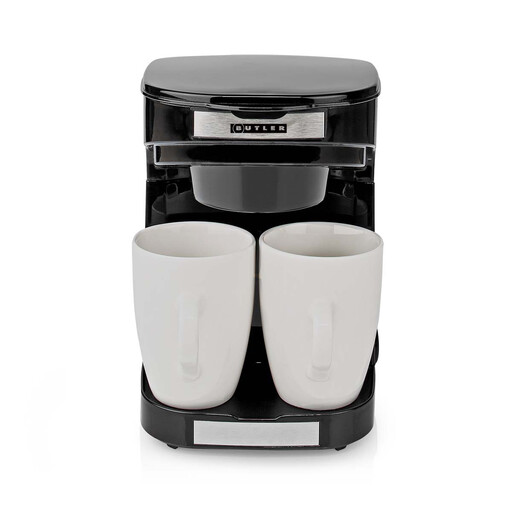
Why it suits this profile: This compact model brews 0.25 litres of coffee, around two cups, and takes up very little space on a small worktop, in student accommodation or in a campervan.
The capacity is clearly designed for two cups, so you are less likely to buy a machine that is too large. There is no keep-warm function to heat the coffee unnecessarily for too long.
450 W, permanent nylon filter, automatic shut-off and two porcelain cups included.
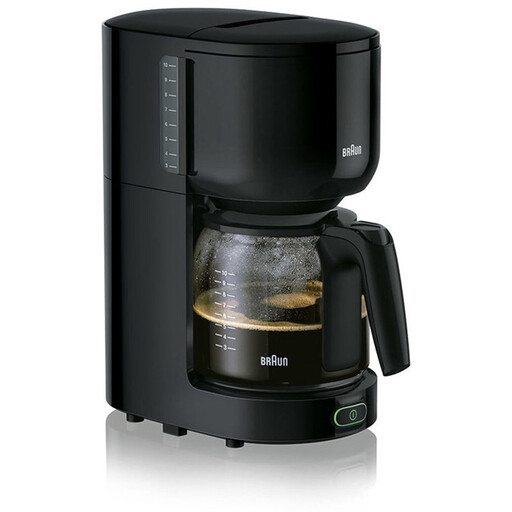
Why it suits this profile: The 1.25-litre AromaCarafe and simple on/off operation are well suited to everyday use in a household or small office.
The specifications state that it has a drip-stop and switches off automatically after 40 minutes. This means you do not need to keep checking the jug or the machine.
1,000 W power, 10-cup jug, water filtration system according to the product description and automatic shut-off after 40 minutes.
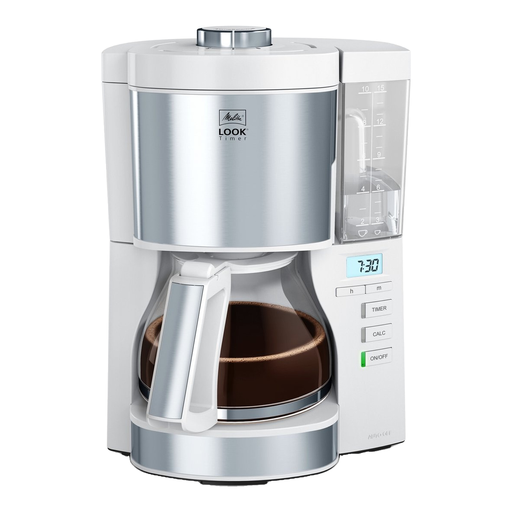
Why it suits this profile: If you brew several jugs of coffee at set times, you may find the timer, AromaSelector and adjustable keep-warm duration particularly useful.
According to the product information, the keep-warm function can be set to between 20 and 60 minutes. The filter holder and glass jug are also removable for cleaning.
Timer, AromaSelector, drip-stop, descaling indicator and 1.25-litre capacity for ground coffee.
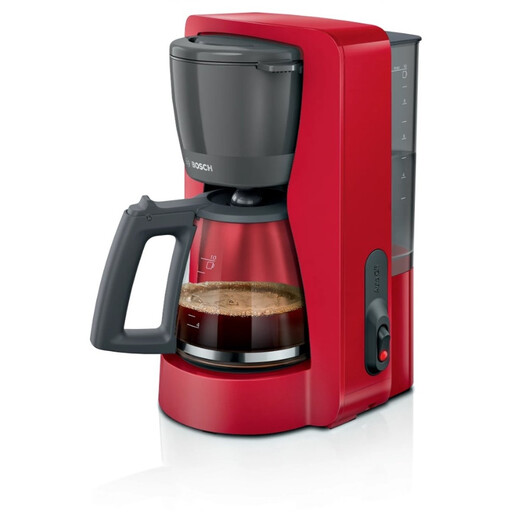
Why it suits this profile: The 1.4-litre capacity and stated maximum of 12 cups make it suitable for serving several coffee drinkers one after another.
The capacity is stated both in litres and in cups. The removable water reservoir makes refilling easier with regular use.
1.4 litres, 1,200 W, swing filter, keep-warm function, automatic shut-off and BPA-free material according to the product information.
We have put together a complete, up-to-date list of products that fully meet these strict selection criteria and the applicable European safety regulations.
A French press works without electricity and is suitable for smaller quantities. The Bodum KENYA, for example, has a capacity of 0.5 litres and uses a metal plunger filter. This is a good option for users who value control over the brewing process and do not want to use paper filters.
A portable espresso maker is another category. The STARESSO works manually and, according to the product information, is designed for ground coffee, one to two cups and use on the go. It does not brew a traditional jug of filter coffee, but it can be useful for travelling, camping or use in an office without a fixed coffee machine.
It depends on the stated capacity. For one or two people, 0.25 to 0.6 litres is often enough. For families or offices, a capacity of 1.25 to 1.5 litres is generally more suitable. Always check whether the cup count is based on small or large cups.
The lifespan depends on how often it is used, whether it is descaled and how carefully the glass jug is handled. A model with removable components is usually easier to keep clean. Follow the manufacturer’s maintenance instructions and do not use the machine without enough water.
While brewing, a machine typically uses a few hundred watts up to around 1,200 watts, depending on the model. The warming plate may continue to use electricity afterwards. Automatic shut-off after, for example, 30 or 40 minutes limits how long it runs. You should also switch the machine off after use if the automatic function is not active.
