
Brunch hosts who pour together
You want to brew enough coffee in one go and serve it shortly afterwards. Carafe capacity and ease of use come first; the Consumentenbond describes filter coffee as a practical way to brew larger quantities.


Match the carafe’s capacity in litres to the mugs you use; the stated number of cups isn’t a fixed measure. If everyone pours a cup shortly after brewing, a glass carafe with a keep-warm plate may suit you. For a longer brunch, it’s worth comparing a thermal carafe too. And if you’ll use the machine on ordinary days, check whether the exact model is suitable for brewing smaller amounts.
You want to brew enough coffee in one go and serve it shortly afterwards. Carafe capacity and ease of use come first; the Consumentenbond describes filter coffee as a practical way to brew larger quantities.
You pour coffee throughout brunch and may want to keep the carafe on the table. The Consumentenbond outlines the choice between a thermal carafe and a keep-warm plate; Melitta lists a thermal carafe for specific models.
You sometimes use the machine when only one or two people at home want coffee. Check that your chosen model is specifically suitable for brewing smaller amounts; Moccamaster and Braun list settings for this on specific models.
Best for: pouring coffee together when most guests will have a cup soon after it’s brewed.
Keep in mind: according to the Consumentenbond, coffee can become more bitter over time on a keep-warm plate; the time before automatic shut-off varies by model.
Best for: a brunch where people at home have coffee at different times.
Keep in mind: check the usable capacity, how easy it is to pour, and whether a compatible replacement carafe is available.
Best for: anyone who wants to use the same machine for smaller groups outside brunch too.
Keep in mind: this setting depends on the specific model: Moccamaster lists a half or full carafe setting for the KBG Select, while Braun lists a 1–4 cup setting for the KF 7125.
| What to consider | What should you check? | Who should pay particular attention? |
|---|---|---|
| Amount brewed at a time | Compare the capacity in litres with your mugs; the number of cups can refer to larger or smaller cups, depending on the model. Bosch lists both a 1.4-litre capacity and different numbers of large and small cups for the TKA2M113. | If we want to pour coffee at the same time, I want enough for our mugs without having to brew another pot. Around 31% of consumers therefore give having enough coffee per brew the highest priority. |
| Pouring coffee over time | Compare a thermal carafe with a glass one, and check the model-specific keep-warm and shut-off times for a glass carafe. The Consumentenbond warns that coffee can become bitter over time on a keep-warm plate. | If not everyone wants coffee at the same time, I want to be able to keep pouring easily from the carafe throughout brunch. Around 31% of consumers put keeping coffee warm for different coffee breaks first. |
| Smaller brews | Check that the exact model has a setting for smaller amounts; don’t assume it does based only on the carafe’s maximum capacity. Moccamaster lists a half or full carafe setting for the KBG Select. | If there are only a few of us having coffee on an ordinary day, I want to be able to brew the right amount then too. Around 23% of consumers give smaller brews the highest priority. |
| Pre-programming | Check whether the complete model version has a programmable start function. Melitta lists this feature for the LOOK V Therm Timer. | If I want fewer things to do while preparing brunch, it’s handy to be able to set a start time in advance. Around 8% of consumers give planning ahead the highest priority. |
| Cleaning and maintenance | Check whether the water tank and filter holder are easy to reach or remove, and follow the model’s manual for descaling. | If several people at home use the machine, I want to be able to empty and clean the parts easily. Around 7% of consumers give easy maintenance the highest priority. |
A manufacturer may count large and small cups separately. So the stated capacity doesn’t automatically tell you how many of your mugs you can fill.
Compare the capacity in litres with the mugs you usually use and the number of people who want coffee at the same time.
If you brew too little, you may have to make another pot.
According to the Consumentenbond, coffee can become bitter over time on a keep-warm plate.
If people will be pouring at different times, compare a thermal carafe. For a glass carafe, check the shut-off time for the specific model.
A timer or setting for smaller amounts may be available on one model, but not across the whole product range.
Check the full model number and version before you buy. For example, Melitta lists a programmable start for the LOOK V Therm Timer.
The 3000 Series HD7460/40 is a glass-carafe option with a stated capacity of 1.2 litres.
The LOOK Therm is a thermal-carafe option; the LOOK V Therm Timer is a separate version with a programmable start.
Bosch describes the MyMoment TKA2M113 as a glass-carafe model with a 1.4-litre water tank.
Moccamaster says the KBG Select is designed for 4–10 cups and has a switch for brewing half or a full carafe.
The Vita CM171810 is a glass-carafe option with a stated capacity of 1.25 litres, according to Tefal.
These Joybuy products are filter coffee machines with a glass carafe, for anyone who wants to brew coffee for brunch in one go and keep it warm while serving.
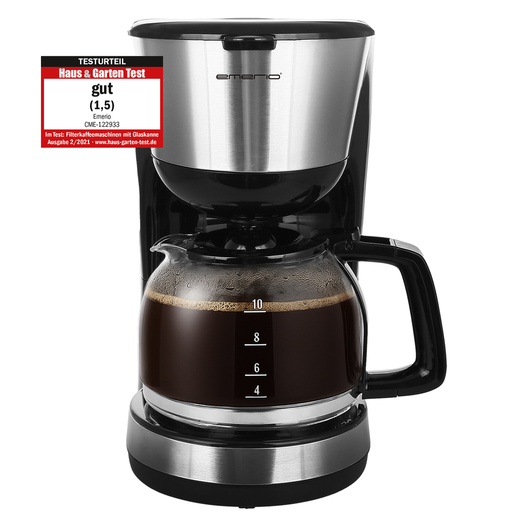 Image unavailable
The glass carafe and keep-warm plate are well suited to brewing coffee for a brunch where everyone pours together.
Capacity: 1.25 litres; the description says it makes around 10 cups. The product information also lists a reusable filter, anti-drip function and automatic shut-off.
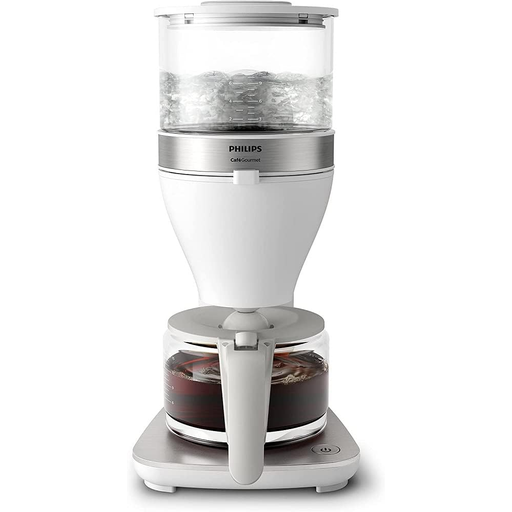 Image unavailable
The glass carafe and keep-warm plate are designed to keep coffee warm while everyone pours together.
Capacity: 1.25 litres; the product specifications state that it makes 10 cups. The product information also lists an Aroma Twister and automatic shut-off, but doesn’t specify how long it takes to switch off.
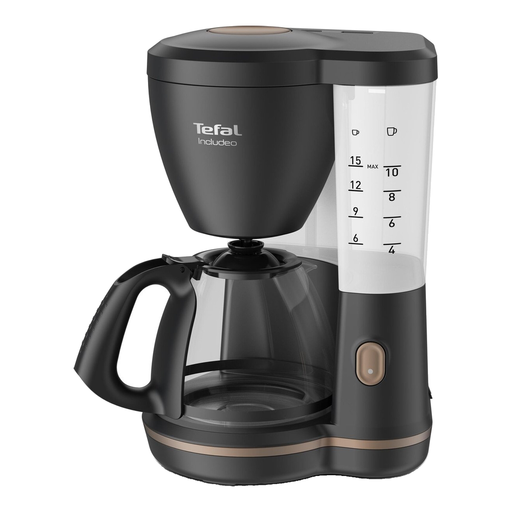 Image unavailable
This glass-carafe model is an option for brewing coffee for several brunch guests in one go.
The title states 1.25 litres and 10–15 cups; compare the capacity with your own mugs. The product information lists a permanent filter, adjustable coffee volume, anti-drip function and automatic shut-off after 30 minutes.
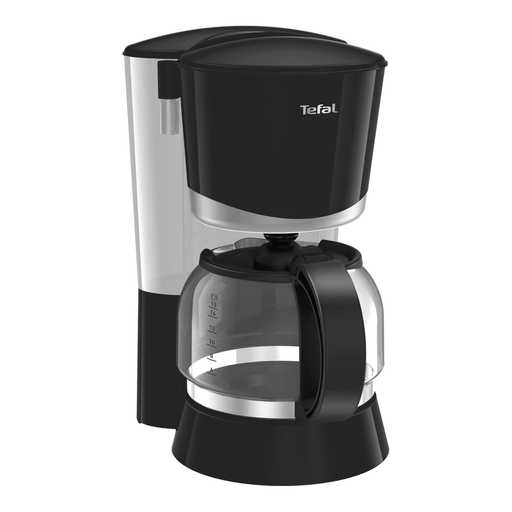 Image unavailable
The glass carafe and keep-warm plate are suited to brewing a pot for everyone to pour from throughout brunch.
Capacity: 1.25 litres; the product information says it makes up to 15 cups, which isn’t the same as 15 of your own mugs. It also lists an anti-drip function and automatic shut-off after around 30 minutes of keeping warm.
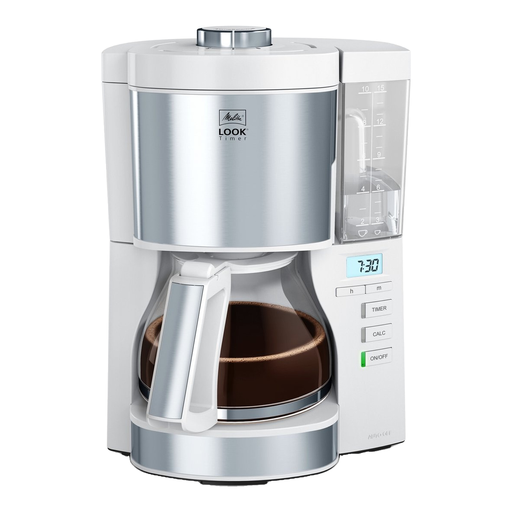 Image unavailable
The timer may suit you if you want to schedule brewing ahead of brunch; the glass carafe has a keep-warm function.
Capacity: 1.25 litres. The product information also lists adjustable coffee strength and a removable filter holder.
No. Also compare the capacity in litres with your own mugs and the number of people who want coffee at the same time. A manufacturer may count large and small cups separately, as Bosch does for the TKA2M113.
Rinse a new machine thoroughly with water before using it, and keep the carafe and filter holder clean. Remove coffee residue and descale the machine according to the manual for your chosen model; the Consumentenbond lists these steps as tips for using the machine.
Report the fault to the retailer. ACM ConsuWijzer explains that, when a product is used normally, you’re entitled to a product that meets what you could reasonably expect. If it develops a fault too soon, the retailer must offer a solution under the terms of the legal guarantee; a manufacturer’s guarantee doesn’t replace this right.
For many ordinary online purchases from a business, you have a 14-day cooling-off period. The Dutch government explains this right; check the applicable terms, as it doesn’t necessarily apply to purchases from a private seller.
According to the European Commission, electrical equipment within the applicable voltage limits of 50–1,000 V AC is covered by the European Low Voltage Directive. The Dutch government explains that products for which CE marking is mandatory must meet the applicable requirements; check the model identity and relevant safety information for the specific machine.