
Teacher with a small coffee corner
You make coffee in a classroom where both the machine’s width and the space needed to refill it matter. Compare the dimensions and filling method; Melitta, SEVERIN and Tefal provide model details that can help.


Start by considering how many people drink coffee during each break, the size of their mugs and how much space you have for the machine, jug and refilling. A slim machine with a small jug is a better fit if you’re brewing for a few people at a time. A larger jug means fewer repeat brews, while a thermal jug can be useful if people pour their coffee at different times. Measure the space available and check how the water tank is filled: a machine described as compact won’t necessarily fit every coffee corner.
You make coffee in a classroom where both the machine’s width and the space needed to refill it matter. Compare the dimensions and filling method; Melitta, SEVERIN and Tefal provide model details that can help.
You want to serve several people in one brewing cycle. Compare the capacity in litres with the mugs the class actually uses; Philips and Inventum provide capacity details for the models mentioned.
You want people to be able to pour a coffee at different times during the lesson. A thermal jug is a different option from a glass jug on a hot plate; Melitta describes the Easy Therm as a model with a thermal jug.
| What to consider | What to look for when buying | Who is this important for? |
|---|---|---|
| Space and positioning | Measure the width, depth and height, and leave room to open and fill the water tank and remove the jug. SEVERIN gives the KA 4808’s width as 19,5 cm; Melitta lists the Aromaboy’s width as 168 mm. | If I have a small coffee corner, I want the machine to fit and be easy to fill. Around 33% of consumers say positioning is their top priority. |
| Capacity per brew | Count the coffee drinkers and compare the capacity in litres with the mugs they use. Tefal lists a capacity of 0,6 litres for the Dialog CM3408; Philips lists 1,2 litres for the HD7461/20, and Inventum 1,25 litres for the KZ612. The Consumers’ Association uses 125 ml as the volume of a traditional cup of filter coffee. | If I want to make coffee for the whole class at once, I compare the jug capacity with how much we actually drink. Around 33% of consumers prioritise making enough coffee per round. |
| Pouring at different times | Choose between a thermal jug and a glass jug with a hot plate; if you opt for a hot plate, check when it switches off automatically. Melitta lists a thermal jug and a maximum of eight cups for the Easy Therm. Philips says the HD7461/20 switches off after 30 minutes; Inventum lists 40 minutes for the KZ612. | If learners have coffee at different times during the lesson, I want pouring to be practical without relying on a hot plate. Around 20% of consumers say serving coffee at different times is their top priority. |
| Using and cleaning | Check whether the filter holder is removable, which filter size is needed and what the manual says about cleaning. Inventum lists a removable filter holder for the KZ612; Philips says the jug and filter holder of the HD7461/20 are dishwasher-safe. | If several people use the machine, I want filling and cleaning to be straightforward. Around 14% of consumers prioritise ease of shared use. |
An advertised cup count doesn’t automatically tell you how many mugs your class can fill. The Consumers’ Association uses 125 ml as the volume of a traditional cup of filter coffee; larger mugs need more coffee per person.
Measure your mugs and work out how much coffee you need at once. Then compare that volume with the jug’s capacity in litres.
Even if the dimensions work, you may need extra space to fill the water tank, open the filter holder and remove the jug.
Measure the space and check the filling direction and clearance needed to use the model you’re considering.
A glass jug on a hot plate and a thermal jug work differently when people pour their coffee at different times. Milieu Centraal says a filter coffee machine with a thermal jug uses less energy than one with a hot plate.
Choose based on when the class drinks coffee, and check the jug and any automatic shut-off time for the specific model.
For a consumer purchase in the Netherlands, the seller is the point of contact for statutory guarantee rights, according to the Dutch Government. There is no fixed statutory time limit.
Keep your proof of purchase and contact the seller if a fault develops. If you’re buying for an organisation or educational establishment, first check whether it counts as a consumer purchase.
Melitta describes the Aromaboy as a model for up to two cups and the Easy Therm as a thermal-jug model for up to eight cups.
SEVERIN describes the KA 4808 as a slim filter coffee machine with a glass jug and a capacity of 0,56 litres.
Tefal lists a capacity of 0,6 litres and a maximum of six cups for the Dialog CM3408.
Inventum lists a jug capacity of 1,25 litres and a removable filter holder for the KZ612.
Philips lists a glass jug with a capacity of up to 1,2 litres for the Daily HD7461/20.
This selection of Joybuy products includes filter coffee machines for a small coffee corner, brewing a larger batch for a group or serving coffee at different times.
 No image available
An option to consider if you’re looking for a filter machine with stated dimensions and a removable reusable filter.
Dimensions: 24,5 × 21,4 × 34 cm. The product details also mention a drip-stop feature and automatic shut-off.
 No image available
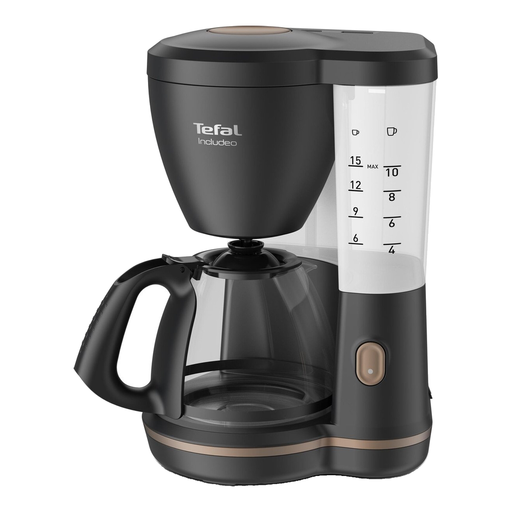
A larger jug could be a good fit if you want to make coffee for several people at once and have enough worktop space for the machine.
The stated capacity is 1,25 litres. The product details list a width of 22,7 cm and a depth of 23,2 cm, a permanent filter and automatic shut-off after 30 minutes.
 No image available
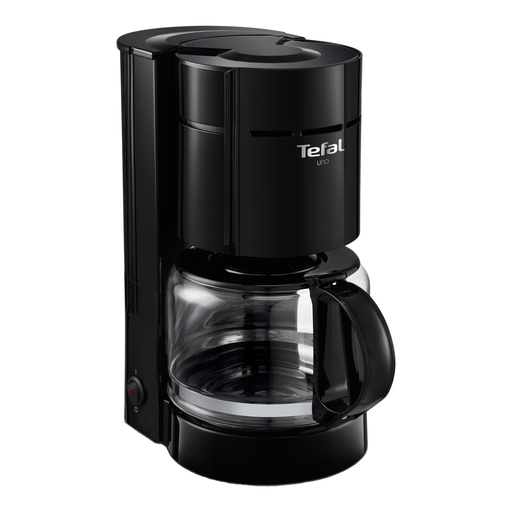
A 1,1-litre glass jug is worth considering if you’re planning to brew a batch for the whole group.
The product details list up to 12 cups, a removable filter and a keep-warm function. Don’t remove the glass jug while brewing: the product instructions warn of a risk of burns.
 No image available
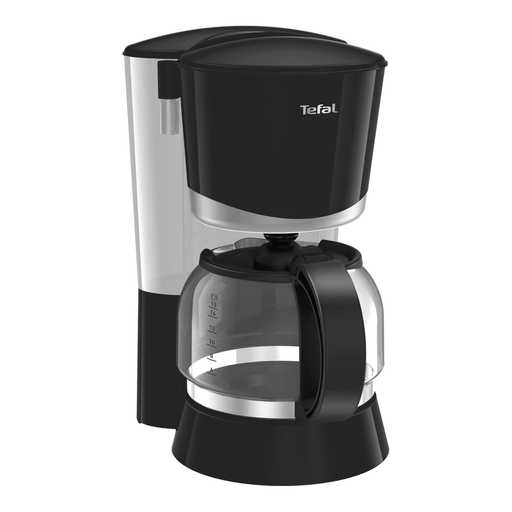
Its stated width of 17,90 cm could be useful if worktop space is limited; remember to measure the extra room you’ll need around it.
The product details list a capacity of 1,25 litres, up to 15 cups and automatic shut-off after around 30 minutes.
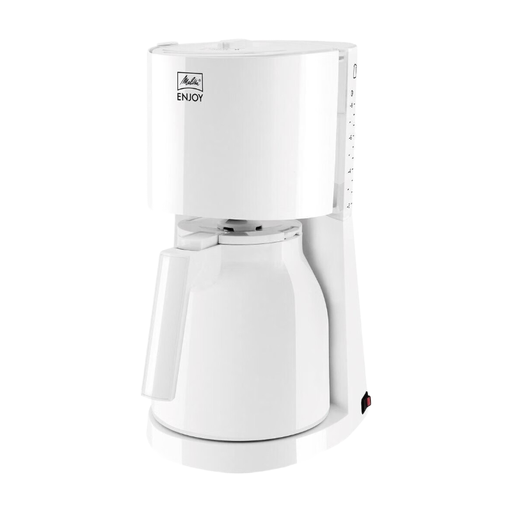 No image available
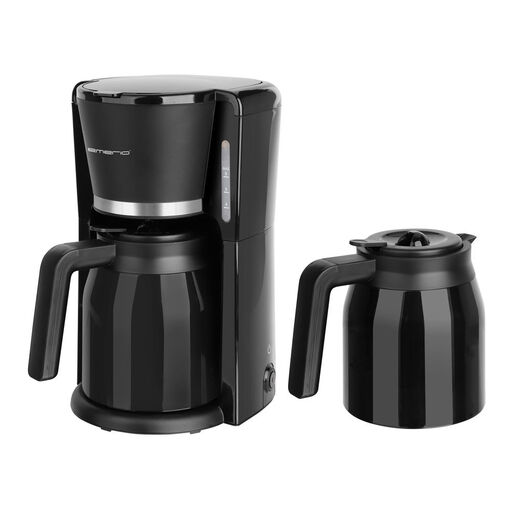
A thermal jug could be a good choice if people pour their coffee at different times during the lesson.
The product details list a capacity of 1 litre and dimensions of 20,5 × 39 × 26,5 cm. Check that the machine and jug will both fit in the space available.
Compare the capacity of your mugs with the amount of coffee you need at once. Tefal lists up to six cups from 0,6 litres for the Dialog CM3408; larger mugs may mean you can serve fewer people. So work it out in litres and use your usual portion sizes.
Follow the instructions for your chosen model. The Inventum KZ612 manual says to use it indoors on a flat, even surface; those instructions don’t automatically apply to other models. When choosing where to put it, also allow room to fill it and remove the jug.
Descale the machine according to its manual, taking your local water hardness into account. Milieu Centraal recommends descaling regularly; check the user manual for the right method for your model.
For a consumer purchase in the Netherlands, the seller is responsible for statutory guarantee rights; according to the Dutch Government, there is no fixed statutory time limit. If a fault wasn’t caused by misuse or normal wear and tear, repair, replacement or a refund may be possible. If you’re buying for an organisation or educational establishment, first check whether it counts as a consumer purchase.
No. The Dutch Government describes CE marking as an indication that a product meets the relevant legal product requirements, not as a quality mark for coffee taste. Assess claims about flavour separately and check the information for the specific machine.