
Organiser of small coffee rounds
Wants to match the amount brewed each time to the number of coffee drinkers present, rather than automatically opting for a large jug.


First, work out how much coffee you need per brew, based on the mugs used during the choir break; the number of ‘cups’ quoted varies between machines. A compact glass jug is ideal for serving straight away, while a thermal carafe can be more convenient when choir members get their coffee at different times. Also check how to clean the filter and whether suitable replacement parts are available.
Wants to match the amount brewed each time to the number of coffee drinkers present, rather than automatically opting for a large jug.
Brews the coffee in advance and serves it later during the break, for example because choir members don’t all get their coffee at the same time.
Looks for an easy-to-clean filter holder, suitable filters and parts that can be replaced if needed.
A good fit if: you need roughly one small jug per round and serve the coffee straight away.
Trade-off: depending on the model, the coffee sits on a hotplate; check when it switches off, and brew a fresh batch if you expect a long wait.
A good fit if: you brew the coffee in advance and choir members serve themselves at different times.
Trade-off: a larger thermal carafe may hold more than you need for a very small round; check the capacity of the specific model.
Work out the volume you need based on the number of people per round and the capacity of their usual mugs. Compare this amount with the jug capacity, not just the stated number of ‘cups’.
| What to consider | What to look for | Who should prioritise this? |
|---|---|---|
| Amount per brew | Multiply the number of drinkers by the capacity of each mug to calculate the amount in litres. Compare this with the jug capacity. | I want to brew enough coffee for the choir members present each round, without basing the amount on a larger jug. Around 36% of consumers prioritise a suitable amount per brew. |
| Serving coffee later | Compare a thermal carafe with a glass jug and hotplate. Check the switch-off time for the specific model. | If not everyone gets coffee at the same time, I want the rest to be available later. For around 29% of consumers, keeping coffee warm while it is being served is their main concern. |
| Cleaning after use | Check which parts are removable and which can go in the dishwasher, according to the manual. Also check how to clean the permanent filter. | After repeated use, I want to clean the jug and filter holder without any unnecessary hassle. Around 21% of consumers prioritise ease of cleaning. |
| Parts and aftercare | Search for replacement parts using the full model number and check which parts are available for that model. | If the jug is damaged or the machine develops a fault, I want to know whether I can replace the relevant part. For around 14% of consumers, parts and aftercare matter most. |
Tefal and Tristar list six cups for certain models with a jug capacity of 0.6 litres. The stated cup size may not match the size of your mug.
Measure the mugs used during the break and compare the total amount in millilitres with the jug capacity in litres.
If you need more, you may have to brew an extra batch during the break.
With a glass jug, the coffee sits on a hotplate; a thermal carafe keeps coffee warm without one. How long a hotplate stays on varies by model.
Choose based on when the coffee is brewed and served, and check the switch-off time for the exact machine.
Melitta lists specific model numbers for Aromaboy replacement jugs. So a jug from the same brand won’t necessarily fit every model.
Compare the full model number on the machine with the compatibility information for the replacement jug.
Choosing the wrong one could mean you still have to search for a suitable replacement part.
The manufacturer describes the Dialog CM3408 as a compact filter coffee machine with a 0.6-litre jug and a drip-stop function.
Tristar describes the CM-1246 as having a 0.6-litre glass jug and the CM-1283 as having a 1-litre thermal carafe.
Melitta says the Aromaboy is designed for up to two cups. The Easy Therm is a separate filter coffee range with a thermal carafe.
Severin describes the KA 4808 as a compact model with a glass jug, a capacity of 0.56 litres and a permanent filter.
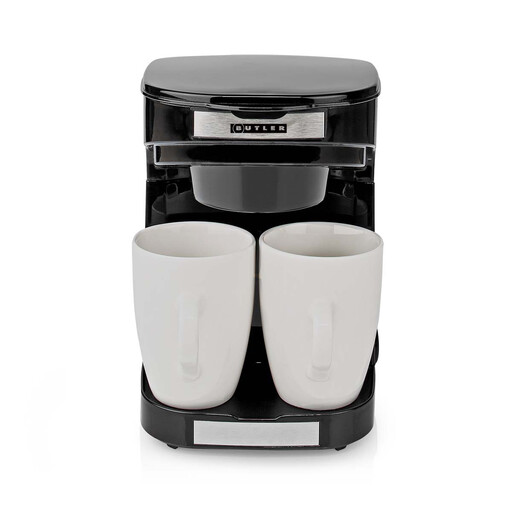
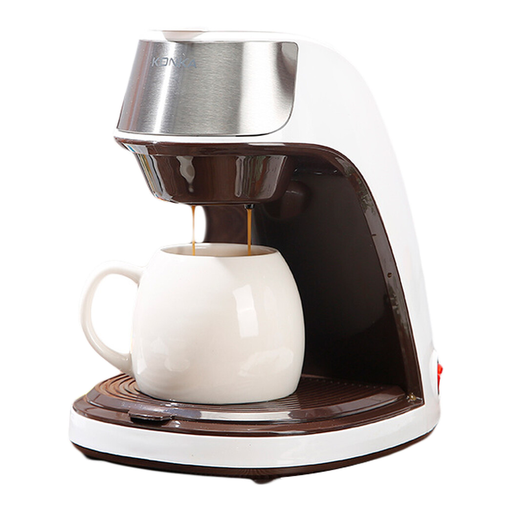
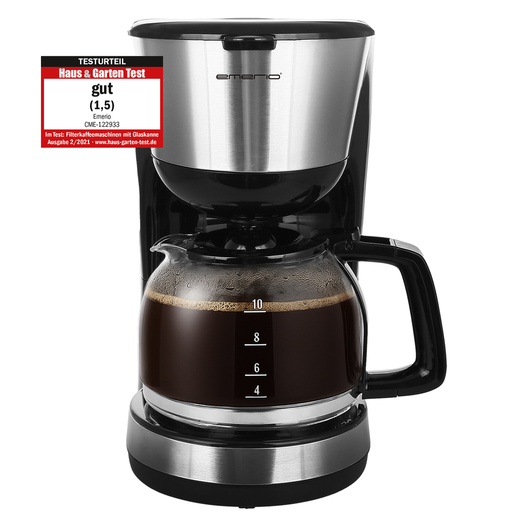
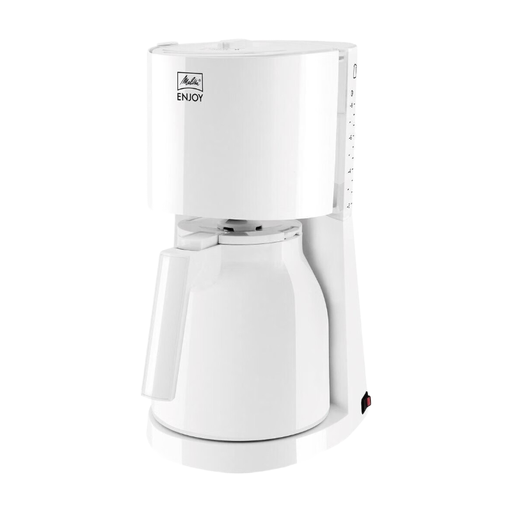
The products below are suited to small brews or to serving coffee at different times during the choir break. Compare the stated capacity with the mugs you actually use.
 No image available
The stated capacity of 0.25 litres, or two cups, is suited to a small brew.
Joybuy lists a power rating of 450 W and automatic switch-off. The product details also describe a reusable, rinse-clean nylon permanent filter.
 No image available
The stated capacity of 300 ml is worth comparing if you only need a small amount of coffee per round.
The product details list a permanent filter and automatic switch-off after brewing.
 No image available
The glass jug is worth comparing if you serve straight from the jug; 1.25 litres may be more than you need for a small round.
Joybuy lists a removable reusable filter, an anti-drip system and a water-level indicator.
 No image available
The thermal carafe is a good fit for a break where choir members serve themselves at different times.
Joybuy lists a capacity of 1 litre, an anti-drip function and automatic switch-off.
 No image available
The product details list an adjustable coffee quantity, making this model worth comparing if you want to measure out each brew.
Joybuy lists a 1.25-litre glass jug, a built-in grinder and a water-level indicator.
Multiply the number of people who want coffee in one round by the capacity of their cup or mug in millilitres. Compare the result in litres with the jug capacity: a 0.6-litre jug will theoretically serve four 150 ml portions, not six 150 ml portions.
Rinse a new machine through with water first, keep the jug and filter holder clean, and follow the manual for your chosen model for how often and how to descale it.
No. For a consumer purchase in the Netherlands, there is no fixed time limit for the statutory guarantee; it depends on what you can reasonably expect from the product under normal use. The retailer is your point of contact. Check the terms separately if a club or other organisation is buying for business purposes.
Electric kitchen appliances placed on the market in the Netherlands must meet the applicable European product safety requirements. According to the Dutch government, manufacturers must affix the CE marking and draw up an EU declaration of conformity when they comply with the relevant requirements. The CE marking alone does not prove that a specific appliance is suitable for every location or use.
Not necessarily: consider how long you’ll actually be serving coffee and check the switch-off time for the exact model. Tristar lists a 40-minute switch-off time for the CM-1246. A thermal carafe is an alternative if you’ll be serving coffee over a longer period.