
Organiser of a busy choir break
Wants to know how much coffee can be brewed and served during the break. Jug capacity and the number of brews you can fit in are key considerations.


Start by working out how many people drink coffee, how much you’ll serve each person and how much time you have. That will show you whether one brew is enough. A larger glass jug is handy for serving quickly near a plug socket; a thermal jug is better if people will be drinking at different times or you need to take the coffee elsewhere. Check each model’s capacity, controls and keep-warm function.
Wants to know how much coffee can be brewed and served during the break. Jug capacity and the number of brews you can fit in are key considerations.
Doesn’t serve all the cups at once, or serves coffee somewhere else. A thermal jug and a glass jug on a hot plate offer different ways to serve.
Wants to keep tasks to a minimum during the break. Check for a timer and anti-drip function, the water level and the type of filter.
Best when: lots of people will be drinking coffee at roughly the same time and you’ll be serving near a plug socket.
Bear in mind: the hot plate only keeps coffee warm for a set time. For the Inventum KZ812D, the manufacturer specifies 40 minutes, after which the machine switches off.
Best when: people will be having coffee at different times or you want to take the jug to the lunch table.
Bear in mind: capacity, pouring time and heat retention vary by model. Manufacturers’ claims about heat retention are not independent comparisons.
| What to consider | What should you check? | Who should pay particular attention? |
|---|---|---|
| Having the coffee ready in time | Compare the amount brewed each time with the volume you plan to serve, and allow for any extra brews. | If I’m serving a group, I want to know whether there’ll be enough coffee before the break ends. Around 36% of consumers prioritise making enough coffee in each brew. |
| Serving hot coffee | Check the type of jug and, for a glass jug, when the hot plate switches off. | If people will be having coffee at different times, I don’t want to leave it on a hot plate for too long. Around 29% of consumers prioritise serving hot coffee during the break. |
| Preparation and ease of use | Check whether the model has a timer and anti-drip function, and how to clean the jug and filter holder. | If I’m organising lunch too, I want to get things ready in advance and keep tasks to a minimum during the break. Around 21% of consumers prioritise easy preparation and operation. |
| Care and replacement parts | Check which filter size fits, read the descaling instructions and make sure any replacement jug is compatible with the full model number. | If the machine will be used at gatherings more often, I want to know how to care for it and what I can replace if the jug gets damaged. Around 14% of consumers base their choice mainly on care and replacement parts. |
The manufacturer’s cup measure may be smaller than the mugs you use at lunch. What’s more, not all the water in the reservoir ends up in the coffee jug.
Work out how much you serve each person and check whether any extra brews will fit into the break.
Extra brews may mean you need a second jug or have to wait longer.
A glass jug sits on a hot plate; a thermal jug can be moved around without needing power to keep the coffee warm. Keeping coffee on a hot plate for too long can make it taste more bitter.
Choose based on where and how long you’ll be serving, and check when the hot plate switches off on the specific model.
Products with very similar names may be different versions, with different jugs or specifications.
Compare the full model number and product specifications before choosing a version.
Replacement jugs are available for some models, but the connection must fit the exact machine.
First, search for a compatible replacement jug using the full model number.
A compatible replacement jug could save you from replacing the whole machine unnecessarily.
The KZ812D and KZ818D both have a timer, but differ in jug capacity and type.
According to Moccamaster, the KBGT is a filter coffee machine with a thermal jug and a capacity of around 1.25 litres per brew.
The HD7460/40 is a glass-jug option with a stated capacity of 1.2 litres.
According to Melitta, the Enjoy Top Therm range combines a thermal jug with an anti-drip function and AromaSelector.
WMF describes the Lono Aroma Coffee Maker Thermo as a model with a thermal jug for eight cups.
These filter coffee machines are a selection to compare for making coffee during a group break. Check each model’s capacity and the features that matter for the way you’ll be serving.
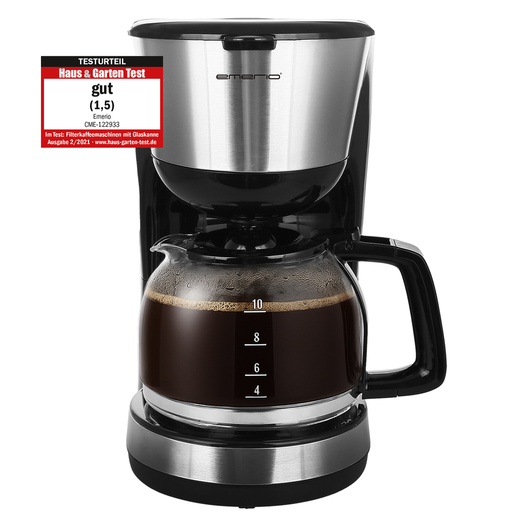 No image available
An option to compare if you want to brew filter coffee in a glass jug.
The product name states a capacity of 1.25 litres.
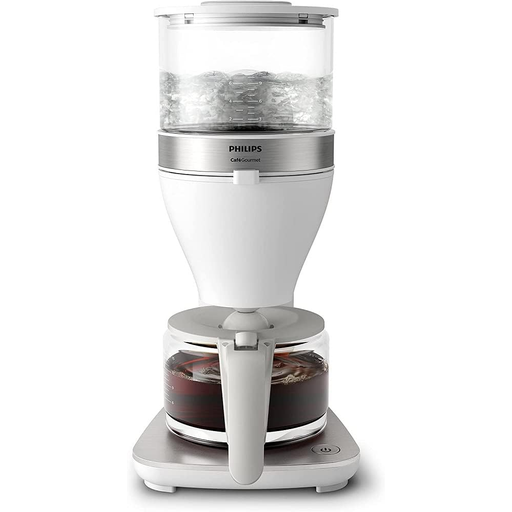 No image available
A model to include in your comparison of filter coffee machines for a group break.
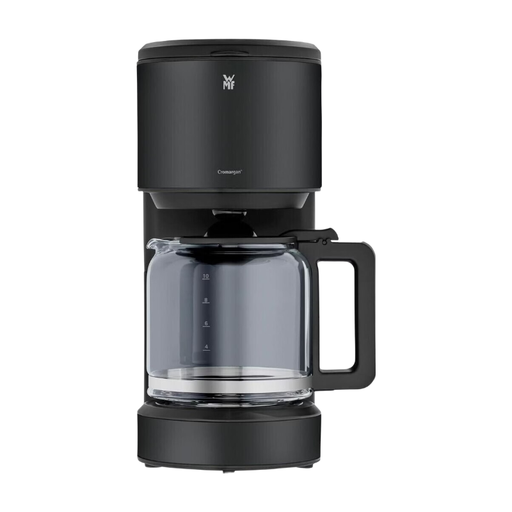 No image available
A model to compare if you want to serve filter coffee beside the machine.
The product name states a power output of 1000 W.
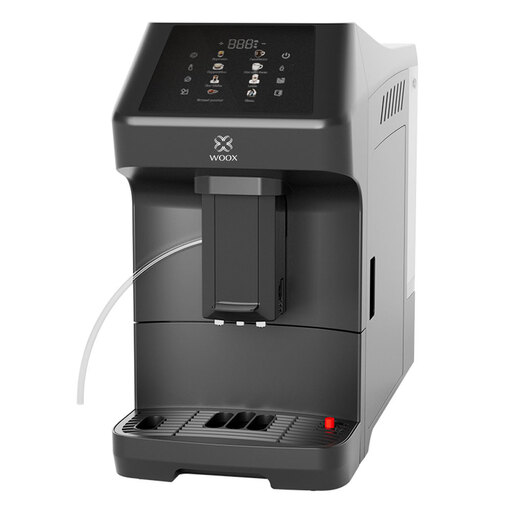 No image available
The product name lists classic filter coffee as one of the brewing options.
The product name states a capacity of 1.5 litres and a power output of 1450 W.
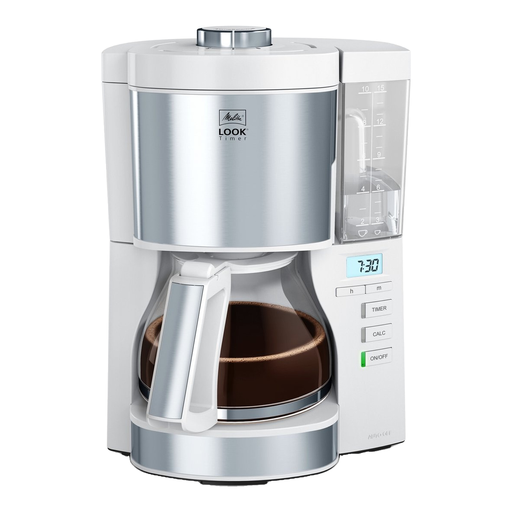 No image available
A model to compare if you want to schedule the brewing in advance.
Multiply the number of coffee drinkers by the amount you want to serve each person, then compare the total in litres with the capacity of each brew. The Consumentenbond uses 125 ml per cup for traditional filter coffee; mugs may hold more. Also bear in mind that not all the water in the reservoir ends up in the coffee jug.
A thermal jug is useful if you want to move the coffee or serve it at different times; a glass jug on a hot plate is a good fit for serving beside the machine. Check the capacity of each model and, for a glass jug, when the hot plate switches off.
Rinse a new machine through with water first, keep the jug and filter holder clean, and descale it according to the model’s instructions. How often you need to descale depends partly on how often you use it and the hardness of your water.
The Netherlands Food and Consumer Product Safety Authority states that CE marking is required for the relevant electrical consumer products. Equipment within the applicable scope must also meet the safety requirements of the Low Voltage Directive. Check the marking and product information for the specific item; a brand name alone doesn’t show that a particular product meets the requirements.
No. According to the Dutch government, if a product is faulty, the retailer is your point of contact for a solution; there is no fixed time limit for the statutory guarantee in the Netherlands. A manufacturer’s warranty is an additional cover with its own terms and conditions.