
Collector showing fine print details
You want to fill the frame with a postage stamp or a small feature. So, look at the magnification and working distance of the lens you plan to use with the camera.


If you want to fill the frame with a single postage stamp or fine print detail, assess the camera alongside a suitable macro lens: the stated magnifications apply to specific lenses, not every camera body or kit lens. If you mainly film yourself, your hands and your collecting table, a compact camera may be enough. Check the framing in advance and test your own lights for flicker and colour.
You want to fill the frame with a postage stamp or a small feature. So, look at the magnification and working distance of the lens you plan to use with the camera.
You regularly film at the same table and want to control the lighting and colour rendering. Test the lights with your camera settings.
You mainly film explanations, your hands and the table. A compact camera may suit you, as long as your chosen close-up is sharp and large enough in the frame from your filming distance.
Choose this option if: you want to fill the frame with a postage stamp or small print detail and can use a suitable interchangeable lens.
Bear in mind: magnification depends on the lens you choose; a short working distance can leave less room for lights and hands.
Choose this option if: you mainly film a wide view of the table, your hands or yourself, and want a compact setup.
Bear in mind: a stated focusing distance doesn’t prove that a small postage stamp will be legible when filling the frame.
| What to consider | What should you check? | Who is this important for? |
|---|---|---|
| Macro detail | Check the lens’s magnification, mount and working distance. Sony lists 1:1 magnification for the E 30mm F3.5 Macro and a working distance of 2.4 cm from the front of the lens at the closest focusing distance; Nikon lists 1:1 for the NIKKOR Z MC 50mm f/2.8; Canon lists a maximum of 1:2 for the RF 35mm F1.8 Macro. These are specifications for individual lenses. | If I want to fill the frame with small print details, I check that both the magnification and distance work for my table; around 36% of consumers prioritise macro detail. |
| Flicker and colour | Record a test video with your own lights and check both flicker and white balance. The Nikon Z50II manual lists 1/100, 1/50 or 1/25 second as possible shutter speeds for 50 Hz; this isn’t a guarantee for every light or camera. | If I want to assess postage stamp colours under my usual lighting, I test the complete light-and-camera setup; around 29% of consumers prioritise consistent lighting and colour. |
| Filming from the table | Check the framing and focus from the distance you’ll actually be filming at. DJI specifies a focusing range starting at 0.2 m for the Osmo Pocket 3; this alone doesn’t tell you how large a postage stamp will appear in the frame. | If I mainly want to film explanations, hands and the collecting table, I choose a setup that’s easy to use from where I’m sitting; around 21% of consumers prioritise a practical tabletop presentation. |
| Complete kit | Check which lens and accessories are actually included with the version you’ve chosen. Don’t assume that the macro features of a separate lens apply to every camera body or kit. | If I want to put together a complete set for filming, I look at what I still need in addition to the body; around 14% of consumers prioritise the complete kit. |
A camera body’s video specifications don’t tell you how much magnification the lens you choose offers. As a result, a postage stamp may appear smaller in the frame than you want for your guide.
First work out the framing you want, then check the lens’s magnification, mount and working distance.
With a mirrorless camera, you may need a suitable lens for the macro shots you want.
A focusing range doesn’t automatically tell you how large a postage stamp will appear in the video frame.
Check the magnification or the framing you want from your filming distance; don’t assume a compact camera will take the same macro shots as a dedicated macro lens.
A flicker-reduction setting may not give you the results you want with your lighting. White balance also affects how colours appear in the recording.
Record a test video with the lights and settings you plan to use, and assess flicker and colour together.
You may need to spend extra time adjusting the settings or lighting setup.
The EOS R50 is a mirrorless camera with an RF mount, for anyone who wants to use an interchangeable lens.
The ZV-E10 II is a mirrorless camera with an E mount and video features; assess a suitable macro lens separately.
The Z50II can be paired with a separate Z macro lens for close-ups.
The Osmo Pocket 3 is a compact camera with a fixed lens, suited to a wider view of the table or a presentation on the move.
These cameras are options to consider for recording a tabletop guide; check that the features and included items of each version suit the close-up you want.
 No image available
The title names an Osmo Pocket camera; check that a postage stamp is sharp and large enough in the frame from your filming distance.
 No image available
The title names a camera with a clip; check that the attachment suits the position where you want to film above or beside the collecting table.
The product title lists 4K video, a 140° field of view, a 1.54-inch display, app control, LED light and a 1200 mAh battery.
 No image available
The title lists a camera with a separate LED video light; check that the included light suits your filming setup and test it for flicker and colour.
The product title lists the Ulanzi VL49 RGB LED Video Light as part of this bundle.
 No image available
The product title names a pocket gimbal camera; check that the postage stamp you want to film is sharp and large enough in the frame from your filming distance.
The title lists 4K video, 2× lossless zoom, 3-axis stabilisation, 107 GB of built-in storage and a handle with a 1/4″ thread.
 No image available
The product title names a camera with zoom; check that the position and framing you want work with your tabletop setup.
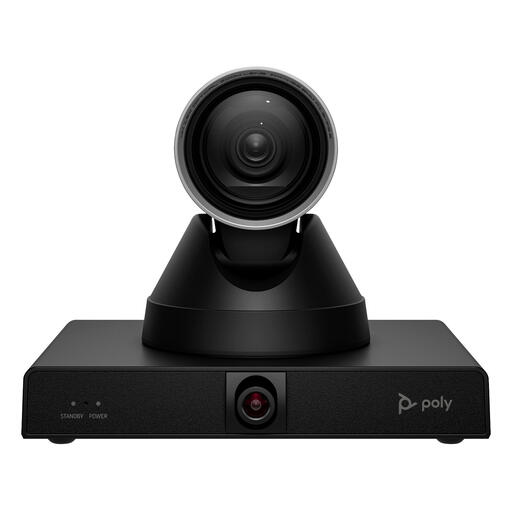
The title lists 4K MPTZ and 12× optical zoom.
A suitable macro lens is a sensible choice if you want to fill the frame with an individual postage stamp. Check the magnification, lens mount and working distance; a stated magnification alone doesn’t show you what the finished video will look like.
Record a test video with exactly the lights and settings you plan to use, then review the footage. For a 50 Hz situation, the Nikon Z50II manual lists 1/100, 1/50 or 1/25 second as possible shutter speeds when flicker reduction isn’t enough; check the settings for your specific camera model.
First check whether the lens you need is included with the version you’re considering. According to ACM ConsuWijzer, regular online consumer purchases generally come with a 14-day cooling-off period after delivery, subject to legal exceptions. Statutory guarantees also apply alongside any commercial guarantee. If a product doesn’t meet what you could reasonably expect under normal use, the seller is responsible for providing a solution.
If you film identifiable people and record or publish the footage on behalf of a business or organisation, the Dutch Data Protection Authority says you need a lawful basis under the GDPR. Consent is one example, but it isn’t the only option; what applies to your guide depends on what you record and how you publish it.