
Teacher with a permanent workbench
Films hands and repair steps close up, and wants to position the light so it doesn’t get in the way of the workspace. Elgato and NEEWER describe panel options with different mounting options.


Position the light so you can see your stitches and movements without your hands obscuring the details. Then choose between a panel, a COB light with a light modifier, or a compact light, depending on the space and mounting options at your workbench. If you want to capture fabric colours accurately, adjust the white balance too, then make a test recording with your own camera to check for colour differences and any visible banding.
Films hands and repair steps close up, and wants to position the light so it doesn’t get in the way of the workspace. Elgato and NEEWER describe panel options with different mounting options.
Wants to show the differences between fabrics or yarns clearly, so takes the lighting setup, white balance and recorded image into account. Canon Europe explains how the colour temperature of the light affects how the camera renders colour.
Sets up their home studio from scratch each time, so pays particular attention to mounting and power. NEEWER and Ulanzi describe the positioning and power options for their respective lights.
| What to consider | What should you check? | Who is this important for? |
|---|---|---|
| Clear view of stitches without shadows from your hands | Check the mounting, angle of the light and available space; make a test recording of your hand movements. | When I film from above, I want my hands to leave the repair details in clear view. Around 36% of consumers prioritise a clear view of the process above all else. |
| Accurate fabric and yarn colours | Check the adjustable colour temperature and colour rendering of the exact model; test it with your own fabrics and camera settings. | I want viewers to be able to tell fabrics and yarns apart when I explain them. For around 29% of consumers, colour accuracy comes first. |
| Stable footage without banding | Make a short recording using your planned frame rate, shutter speed and dimmer setting. | When I record a full lesson, I don’t want banding to disrupt the instructions. Around 21% of consumers put stable footage ahead of other purchasing priorities. |
| Suitable positioning and power | Check the contents list, how the light mounts to your workbench, and the power supply for the planned recording time. | I want to be able to set up the light in the space I have, with the required power supply and mounting included. For around 14% of consumers, a suitable, complete setup is the top priority. |
The camera records colours partly based on the available light and the white balance setting. A CRI rating alone therefore doesn’t confirm how your fabric will look in the finished video.
Adjust the white balance and compare a test recording with the fabrics you use in your lesson.
With the NEEWER NL660, whether a stand is included depends on the version; the battery isn’t included. Elgato states that mounting accessories for the Key Light Mini are sold separately.
Check the contents list for the exact version you choose.
Depending on the version, you may also need a mount, stand or NP-F battery for your setup.
The light source and camera settings can combine to create visible bands in your footage.
Test the light, dimmer setting and camera together before recording a full lesson. Sony explains that changing the shutter speed can reduce flicker; the setting that works depends on your camera and the conditions.
According to amaran, the amaran 100x S is a 100 W bi-colour COB light with a Bowens mount, designed for smaller studio setups, among other uses.
Godox describes the SL60IIBi as a bi-colour COB light with a Bowens mount and a colour temperature range of 2800–6500 K.
The NEEWER NL660 is a bi-colour LED panel designed to be set up on a stand beside your workbench.
According to Elgato, the Key Light Mini is a small, adjustable panel for a portable setup or mounting on a suitable arm.
According to Ulanzi, the VL81 is a compact rechargeable light for a small, portable filming setup.
This selection focuses on compact filming lights for changing setups and recording small repair details. Check that the mounting, power and lighting settings of each model suit your camera and workbench.
 No image available
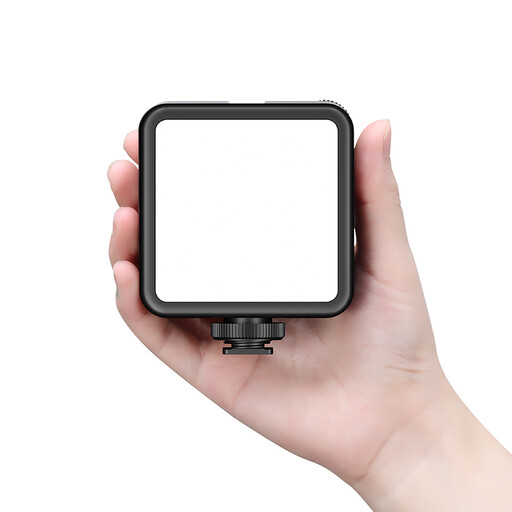
Suitable for a changing setup where you want to be able to move a compact light around.
The light has a built-in rechargeable battery, with adjustable brightness and colour temperature. Ulanzi lists a 1/4"-20 mount. Keep the connections dry and use the light in a well-ventilated area.
 No image available
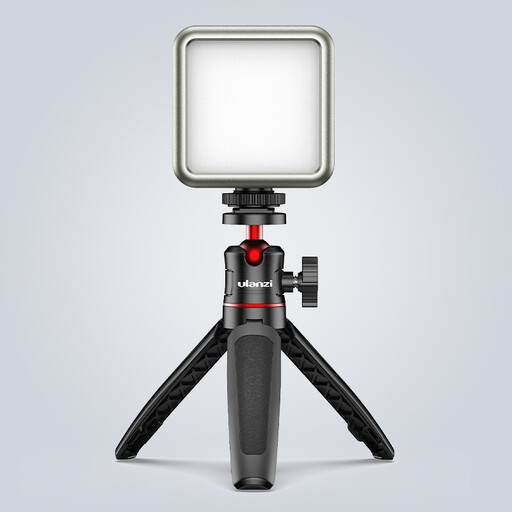
Could suit recordings of small details when you’re looking for a compact light with adjustable brightness and colour temperature.
The product name lists a 2000 mAh battery, a colour temperature range of 2500–9500 K and a magnetic back. Use an adapter with a 5 V output and keep the light away from damp conditions.
 No image available
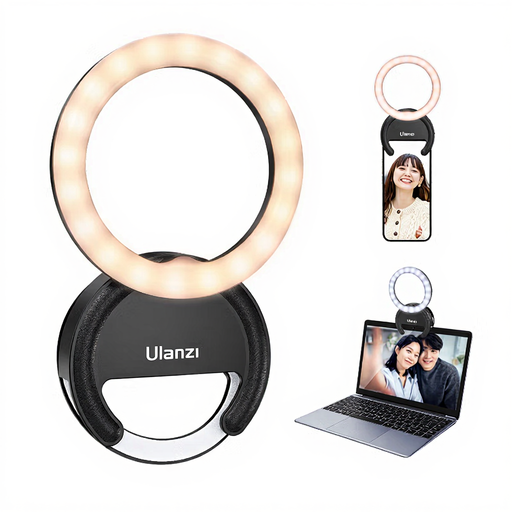
Designed for a setup where you film with a smartphone and want to attach the light to your phone.
The product name lists three colour temperatures from 3000–7000 K and five brightness levels.
Position the light outside your working area and try shining it onto your work from an angle. Record your hand movements to check that the stitches remain visible; the mount or stand you choose needs to fit the space available on your table.
The colour of the available light affects what the camera records. Set the white balance for your recording and compare a test image with the fabrics you’re using; a light’s CRI rating alone isn’t enough.
Test the intended dimmer setting and camera settings together. Sony explains that changing the shutter speed can reduce flicker; the right setting depends on your camera and the conditions. Check your camera manual for instructions on how to adjust it.
Before ordering, check whether the mount, stand, battery and adapter are included with the version you’ve chosen. According to the Dutch Government, statutory guarantees apply in the Netherlands, with no fixed statutory guarantee period; if a product is faulty, the retailer is your point of contact. For online purchases from a business, you generally have 14 days to change your mind, although there are exceptions.
The Netherlands Food and Consumer Product Safety Authority states that CE marking is mandatory for electrical products covered by the relevant rules. The rules that apply to a specific light and any adapter depend on the product and its power supply; check the markings and product information for the exact version. CE marking is a declaration by the manufacturer and isn’t, in itself, an independent inspection.