If your main priority is capturing small dates and raised details clearly, choose a mirrorless camera with a suitable macro lens and set it up securely for close-ups. For a moving tour, a compact stabilised camera is easier to handle; a camcorder may suit you if an integrated zoom is important. For every type, check that the smallest coin appears large enough and in focus at your recording distance. If reflections are distracting, adjust the angle of the light, coin or camera.
Who is this recording set-up for?
Collectors who want to show small coin details
If you want to fill the frame with dates, lettering and raised details, consider a fixed set-up with a suitable macro lens for close-up shots. Sony, Nikon and Canon each list specific macro lenses for their camera systems.
Filming in changing window light
With reflective coins, the position of the light, the shooting angle and the focus are all important to assess as you film. Sony explains that a camera or photographer can appear in a reflective subject.
Presenters moving around their collection
If you’re talking as you move past coins or display cabinets, ease of use and steady footage may matter more than extreme close-ups. DJI describes the Osmo Pocket 3 as a camera with mechanical stabilisation; Panasonic lists zoom and stabilisation for the HC-VX3.
What to look for in a camera for filming coins
Mirrorless camera with a macro lens
Choose this option if: small inscriptions and raised details are your main priority, and you can set the camera up for close-ups.
Bear in mind: you’ll need the right lens and mount; a macro lens isn’t automatically included with every camera body or kit.
Compact gimbal camera
Choose this option if: you mainly film while moving around your collection and want a compact, stabilised camera.
Bear in mind: stabilisation won’t compensate for a close-up that’s too small or remove reflections. DJI lists a minimum subject distance of 20 cm for the Osmo Pocket 3.
Camcorder with integrated zoom
Consider this option if: you want to zoom without changing lenses and prefer camcorder-style controls.
Bear in mind: zoom alone doesn’t tell you how large a coin will appear from your table. Panasonic lists the HC-VX3 as unavailable on its Dutch product page.
| What to consider |
What should you check? |
Who is this important for? |
| Clear coin details |
Check the magnification, working distance and lens mount for the exact camera body and lens. Record a test shot of the smallest coin from the distance you plan to use. |
If I want to show dates and raised details clearly, magnification matters more than a 4K label alone. Around 36% of consumers prioritise coin details. |
| Window light and reflections |
Check a test clip for both bright spots and dark areas, and adjust the angle of the coin, camera or light source if needed. |
If reflections disrupt my footage, I want to be able to adjust the light and camera angle. Around 29% of consumers prioritise control over window light and reflections. |
| Stability while moving around |
Decide whether you’ll be filming while walking or from a fixed position; check the stabilisation and close-up distance for the same set-up. |
If I’m moving around the collection while talking, I want steady footage without losing sight of the close-up requirements. Around 21% of consumers prioritise a moving tour. |
| Complete kit and spoken commentary |
Check what’s included in the kit, whether it comes with a compatible macro lens, and which audio and recording accessories you’ll need. |
If I want to start filming straight away and record commentary, I want to know in advance which extra items I’ll need. Around 14% of consumers prioritise a ready-to-use kit. |
Common mistakes
-
Assuming 4K or high zoom means a camera is suitable for macro
Resolution and zoom factor don’t determine how large a coin will appear in focus from your table.
Check the magnification, minimum focus distance and working distance of the exact lens or fixed-lens camera. Test it with the smallest coin you want to film.
-
Choosing a camera body without the macro lens you need
The macro magnifications listed apply to specific lenses and won’t automatically apply to a standard zoom lens supplied with the camera.
Before buying, check which lens is included and whether its mount is compatible. You may need to buy a suitable lens separately.
-
Expecting stabilisation to solve reflections
Steady footage won’t stop a bright spot or the camera’s reflection from appearing on a coin.
Record a test clip in the window light you plan to use, then adjust the shooting angle or light if reflections are distracting.
Camera brands to consider
Sony
The Sony ZV-E10 II paired with a separate Sony E-mount macro lens gives you an interchangeable-lens option; check whether the lens is included with your chosen kit.
- Sony lists a 1:1 reproduction ratio for the SEL30M35.
- Sony lists a working distance of around 2 cm for this lens at its closest focusing distance. This may leave little room to position window light near the coin; the lens specification isn’t a measurement for every Sony camera.
Nikon
A Nikon Z50II with a separate NIKKOR Z DX MC 35mm f/1.7 is an option for both general video and close-ups of coins.
- Nikon lists maximum 0.67× reproduction for the lens on DX. Nikon lists 4K 30p for the Z50II; 4K 60p uses a crop.
- The lens must be included in your chosen kit or bought separately. Nikon lists a distance of 7.2 cm between the front of the lens and the subject at the minimum focus distance.
Canon
The Canon EOS R50 with a compatible RF 35mm F1.8 MACRO IS STM is one possible combination for a fixed tabletop set-up and general video work.
- Canon lists 4K 30p for the EOS R50 and 0.5× magnification for the RF lens mentioned here.
- This lens’s magnification isn’t the same as that of a 1:1 lens. Test whether the smallest coin appears large enough in the frame.
DJI
The Osmo Pocket 3 is a compact option for a handheld tour while moving around.
- DJI lists three-axis mechanical stabilisation for the Osmo Pocket 3.
- DJI lists a minimum subject distance of 20 cm for this model. That means it’s not an obvious replacement for a macro lens; test whether the smallest coin appears large enough from that distance.
Panasonic
The HC-VX3 is a camcorder option with an integrated zoom lens that’s worth considering.
- Panasonic lists 24× optical zoom and image stabilisation for the HC-VX3.
- The zoom specification doesn’t confirm that a coin will appear large enough from your chosen table distance. Panasonic lists the model as unavailable on its Dutch product page.
Joybuy product picks
These cameras are designed for video recording and tours around your collection. Check for each model whether the smallest coin will appear large enough from your recording distance.
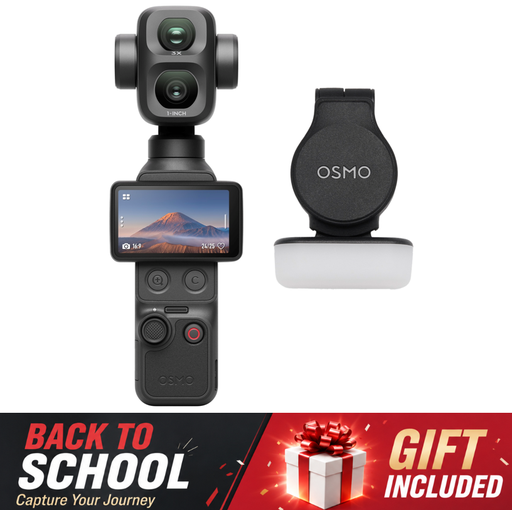 Image unavailable
Osmo Pocket 4P Standard Combo, black
For close-ups of coins, check whether the camera focuses at your chosen distance and makes the coin large enough in the frame.
The product description lists a 20 mm f/2.0 lens and 4K video. According to the description, 4K/240fps is only available in slow-motion mode.
View at Joybuy
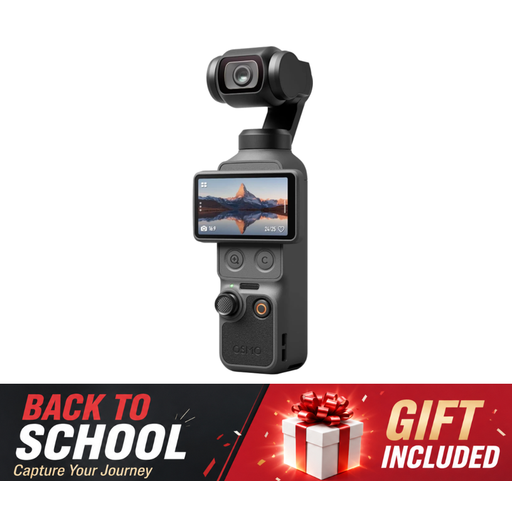 Image unavailable
DJI Osmo Pocket 4 Standard Combo
The listed stabilisation and rotating screen position may be useful for a moving tour; check separately whether the close-up distance works for your coins.
The product title lists 3-axis stabilisation, 2× lossless zoom, 107 GB of built-in storage, a 1-inch CMOS sensor and a 2-inch rotating screen. It also lists 4K/240fps video.
View at Joybuy
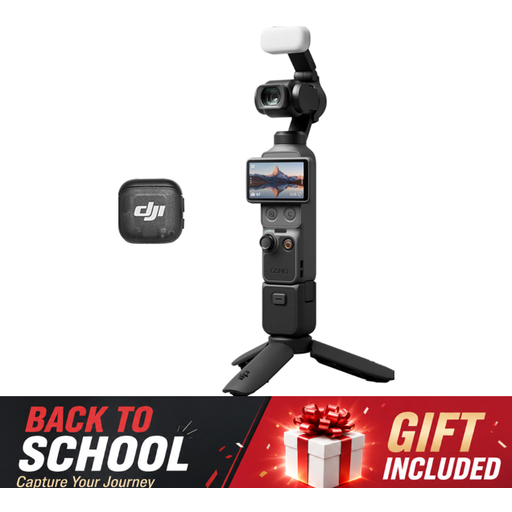 Image unavailable
Osmo Pocket 4 Creator Combo
The included microphone may come in handy if you want to record spoken commentary as you move around. For coin details, check the camera’s close-up distance.
The product title lists 3-axis stabilisation, 4K/240fps, 14-stop dynamic range, 107 GB of built-in storage and a handle with a 1/4-inch thread.
View at Joybuy
 Image unavailable
KOMERY G7-A 4K digital camera, pink
The product title describes it as suitable for vlogging; record a test to see whether the framing and focus work for small coins.
The product title lists 4K video, 80 MP and 18× zoom. It doesn’t specify the type of zoom.
View at Joybuy
 Image unavailable
Komery W6 digital camera
If you want to adjust the framing while recording, check whether the listed zoom and focus work with the distance to the coin.
The product title lists 12× optical zoom, 4K video, 64 MP and Wi-Fi.
View at Joybuy
Frequently asked questions
Can I film a coin from very close up with the DJI Osmo Pocket 3?
DJI lists a minimum subject distance of 20 cm for the Osmo Pocket 3. Test whether your coin appears large enough from that distance; a 4K label or digital zoom alone doesn’t prove that a camera is suitable for macro work.
How do I set up a fixed close-up in window light?
Set up the camera and coin securely, focus on the most important detail, and adjust the angle of the camera or coin if reflections are distracting. Nikon recommends using a tripod for macro photography and describes manual focus as a technique; Sony points out that reflective subjects can show the camera or photographer in their surface.
Is a camera body enough for close-ups of coins?
Not always. Check what’s included with the specific kit and whether the lens you need is compatible with the camera mount. The magnification figures mentioned apply to specific macro lenses and don’t automatically apply to a camera body or standard zoom lens.
What are my rights when buying a camera online in the Netherlands?
For a distance purchase made online from a professional seller, you generally have a 14-day cancellation period from delivery, subject to legal exceptions and conditions relating to any return costs. The product must also conform to the contract. The Government of the Netherlands states that there is no fixed statutory guarantee period in the Netherlands; contact the seller if there’s a problem.
Can I publish a video of my coins if other people are recognisable in it?
Check the privacy rules before publishing footage of identifiable people. The Dutch Data Protection Authority describes recognisable images of people as personal data covered by the GDPR. If you prefer, film without identifiable bystanders and check which rules apply to your publication beforehand.


