Which recorder is right for you?

Recording long group scenes

You want to capture a rehearsal in one continuous recording. Check the power supply and storage in advance, and make sure the microphone position you choose picks up the actors’ voices clearly. Tascam and Zoom list power options for their recorders.

Practising lines

You want to find short passages quickly and play them back, perhaps at a different speed. Sony and Zoom list A-B repeat and playback speed adjustment features.

Recording in a reverberant room

You mainly want to hear actors clearly, wherever they are on stage. Shure explains that microphone placement matters because a microphone cannot effectively separate direct speech from room reverberation.

What should you consider when choosing?

Field recorder for long group scenes

Choose this option: if you want to record a full scene with several actors.

Bear in mind: stated battery life depends on the power source and settings; a distant microphone won’t eliminate reverberation.

Compact field recorder for recording and practice

Choose this option: if you record group scenes and then want to listen back to passages at a different speed.

Bear in mind: check which microSD card and power supply you’ll need for the length of your rehearsal day.

Compact voice recorder for practising lines

Choose this option: if you mainly want to find and repeat lines, and practise them at different speeds.

Bear in mind: Sony’s stated maximum of 59 hours applies to stereo MP3 at 128 kbps, not every recording format.

What to consider What to look for Who should pay extra attention?
Long takes Check the power supply, recording format and storage. Make a test recording in advance using the settings you plan to use. If I want to record a long rehearsal without interruption, I focus on power and storage. Around 33% of consumers prioritise uninterrupted takes.
Clear voices Test the microphone position with actors in their usual places. If necessary, try a suitable external microphone. If I want to follow actors’ lines clearly from different positions, I test the recording on stage. Around 27% of consumers prioritise clarity.
Repeating lines Check whether the exact model offers A-B repeat, speed control and useful search or marker features. If I want to find and play back a passage quickly while practising, repeat features matter to me. Around 20% of consumers primarily need to practise lines.
Managing and sharing recordings Decide who will have access and what the recording will be used for. Check how you can transfer and store files. The Dutch Data Protection Authority notes that audio recordings in which people can be identified may contain personal data. If I want to keep or share rehearsal files, I want to agree in advance on their purpose and who can access them. Around 20% of consumers prioritise managing and sharing recordings.

Common pitfalls

  • Assuming the maximum recording time is guaranteed

    Manufacturers’ figures apply under specific conditions. For example, Sony states a maximum of 59 hours for stereo MP3 at 128 kbps; that figure doesn’t automatically apply to other formats or settings.

    Check the conditions behind the stated recording time, and test your chosen format and power supply before the rehearsal.

    Depending on the model and setup you choose, you may need extra batteries, a suitable memory card or an external power supply.

  • Expecting 32-bit float to make a distant voice clear

    A recording feature can’t overcome the distance between the microphone and an actor, or the reverberation in the room. Shure explains that a microphone cannot effectively separate direct speech from unwanted reverberation.

    Test the microphone on stage with actors in their usual places. Only then consider whether you need a suitable external microphone.

  • Treating voice recorders and field recorders as interchangeable

    The models mentioned here have different strengths: Sony describes search and repeat features, while Tascam also lists an external microphone input and power from AA batteries.

    First decide whether you mainly want to record a full group scene or practise individual lines. Then check the features of the exact model.

Brands to compare

Tascam

The DR-05XP is a field recorder for anyone looking to make long group recordings and consider using built-in or external microphones.

  • Tascam lists 32-bit float recording, omnidirectional stereo microphones and an external microphone input for the DR-05XP.
  • According to Tascam, the stated maximum of 17½ hours of continuous use applies with two AA alkaline batteries; actual battery life depends on how the recorder is used.

Zoom

The H1essential combines a compact field recorder with playback features for practising recorded passages.

  • Zoom lists X/Y microphones, speed control, A-B repeat and USB-C power.
  • The 10-hour battery life stated by Zoom applies when using batteries. A suitable microSD card is required for recording.

Sony

The ICD-UX570 series is a compact voice recorder for finding and repeating passages.

  • Sony lists A-B repeat, speed control and 4 GB of built-in storage.
  • Sony’s stated maximum recording time of 59 hours applies specifically to stereo MP3 at 128 kbps, not to other recording formats.

Joybuy products

The products below are general-purpose voice and AI recorders. Before buying, check that their recording, language and playback features suit Dutch-language theatre dialogue and the way you rehearse.
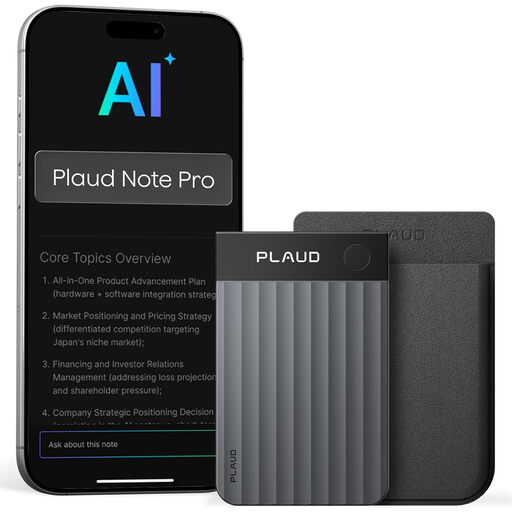
Plaud Note Pro AI voice recorder, black

Plaud Note Pro AI voice recorder (Black)

This model is designed to record audio and turn it into text and summaries. Check that its language support and file handling suit your rehearsals.

View at Joybuy

Digital voice recorder with 64 GB and transcription function

Digital voice recorder, 64 GB, with transcription function

The product name specifies 64 GB of storage and transcription. Check whether the transcription feature supports Dutch dialogue and how files can be transferred.

View at Joybuy
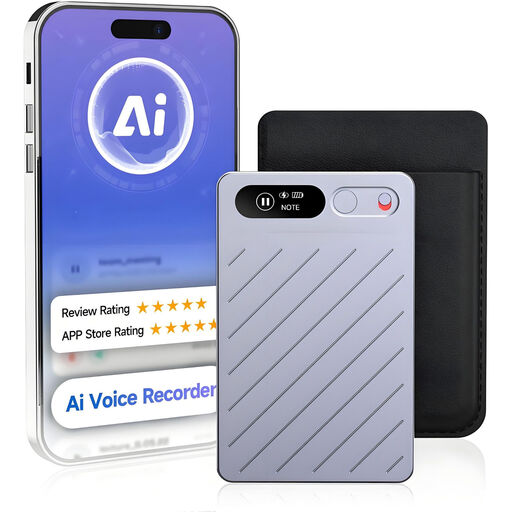
Compact AI dictation device with 64 GB

AI Dictation Device, 64 GB

The product name mentions transcription and summaries. Check its language support and whether the features are suitable for listening back to scenes.

View at Joybuy

Rexsun L357 digital voice recorder with 128 GB

Rexsun L357 digital voice recorder, 128 GB

The product information describes this model as suitable for long recordings and repeating passages. Check the controls and whether voices are clear from the distance at which you plan to use the recorder during rehearsals.

View at Joybuy

Rexsun L810 digital voice recorder with 64 GB

Rexsun L810 digital voice recorder, 64 GB

The product name mentions one-touch recording. Check that the controls and file transfer suit long takes and the way you like to listen back.

View at Joybuy

Frequently asked questions

How do I prepare a recorder for one long rehearsal take?

Check the power supply and recording media, then make a test recording on stage. Listen back to make sure actors further away are clear too. Zoom recommends testing a microSD card if it’s new or has previously been used in a different way.

Does a higher bit depth help with reverberation in the rehearsal room?

No, not by itself: a recording setting won’t change the room’s acoustics or the distance from the microphone. Shure explains that a microphone cannot effectively separate direct speech from reflected sound, so compare microphone positions using a test recording first.

What are my rights if a recorder I bought online doesn’t work properly?

When you buy as a consumer, the product must conform to the contract. If it’s faulty, you can ask the seller for a solution, as the Government of the Netherlands explains. Online purchases generally come with a 14-day cooling-off period after delivery, according to ACM ConsuWijzer, subject to applicable exceptions.

Can I record fellow actors and share the rehearsal recording?

A recording in which someone can be identified may contain personal data. If a theatre company processes this data, it needs an applicable legal basis under the GDPR, according to the Dutch Data Protection Authority. Consent is one possible legal basis, but conditions apply. Agree in advance with everyone involved on why the recording is being made and who can listen to or share it.
