
Hosting a one-off celebration meal
You want to store rolls for a get-together and first check whether your existing freezer space is enough.


You don’t automatically need an extra freezer for a single get-together. First, use the freezer space you already have if the packaged rolls fit and you can set it to around −18 °C, the ideal temperature according to the Consumers’ Association. If you regularly run short of space, a table-top freezer is better for easy-to-reach portions, an upright freezer for organised storage and a chest freezer for large stocks. Also compare the space available, annual energy consumption and, if you’re freezing a large batch at once, the stated freezing capacity.
You want to store rolls for a get-together and first check whether your existing freezer space is enough.
You often freeze rolls and other food, and want to be able to find individual portions easily.
You regularly need plenty of freezer space and want to assess both capacity and freezing performance.
Choose this when: the packaged rolls fit without displacing other food, and you can set your freezer to around −18 °C.
The trade-off: you won’t need another appliance, but available space and freezing performance will still be important.
Choose this when: you often want to store smaller, individually packaged portions and have room for a compact appliance.
The trade-off: drawers make portions easy to reach, but capacity is generally lower than that of a tall upright freezer.
Choose this when: you regularly want to store rolls and other frozen foods in an organised way, and have enough room for a tall freezer.
The trade-off: check that the dimensions fit, then compare the stated annual energy consumption of models with a suitable capacity.
Choose this when: you regularly freeze large quantities and have room for the freezer and space to open its lid.
The trade-off: small portions at the bottom are generally less easy to reach than portions in the drawers of an upright freezer.
First, work out whether your existing freezer can handle the one-off quantity. The Consumers’ Association recommends around −18 °C as the ideal temperature. If you need extra freezer space, compare capacity, layout, freezing performance and annual energy consumption.
| What to consider | What should you look for? | Who is this important for? |
|---|---|---|
| Do you need more space? | Measure whether the packaged rolls will fit and check whether you can set your existing freezer to around −18 °C. The Consumers’ Association recommends this as the ideal temperature. | If I’m only freezing food for a celebration meal, I want to know whether the rolls will fit without displacing other food. Around 36% of consumers prioritise checking whether their existing freezer space is suitable. |
| Capacity and freezing performance | Compare the capacity in litres with the stated freezing capacity in kg per 24 hours for the exact model. These are two different specifications. | For a large batch, I want to know how much will fit and how much the appliance can freeze in a day. For around 29% of consumers, this combination is the most important buying consideration. |
| Energy consumption | For models with a suitable capacity, compare the EU energy label (A–G) and stated consumption in kWh per year. The European Commission has used this scale for household fridges and freezers since 1 March 2021. | If the freezer will stay on after the celebration, I want to compare the annual energy consumption of suitable models. Around 21% of consumers give ongoing energy consumption the greatest weight. |
| Layout and maintenance | Check the drawers or baskets and the cooling system for each model. Inventum says the VK952W has Low Frost, which requires periodic defrosting; Liebherr says the FNe 1404 has NoFrost. | If the freezer is shared, I want to find portions easily and know how much maintenance it needs. Around 14% of consumers prioritise maintenance and ease of access. |
Your existing freezer may already meet your one-off needs, provided the packaged portions fit and the temperature is suitable.
First, check the available space and temperature setting. Only then compare additional appliances by suitable size and stated consumption in kWh per year.
An extra appliance takes up space permanently and uses electricity for as long as it is running.
Capacity tells you how much you can store; the stated freezing capacity tells you how much food the model can freeze in a given period.
If you’re freezing a large batch, compare both the capacity in litres and the stated number of kg per 24 hours for the full model number.
Inventum says the VK952W’s Low Frost feature still requires periodic defrosting; Liebherr says the FNe 1404 has NoFrost.
Check the cooling system and maintenance instructions for the exact model. Don’t draw conclusions about how well it stores bread from this alone.
Manual defrosting takes extra time.
The stated suitability for different ambient temperatures can vary from one model to another.
Compare the lowest temperature in the room where you plan to install it with the specifications for the exact appliance.
The VR550 is a table-top model with drawers, while the VK952W is a larger chest freezer. These models illustrate the difference between easy-to-reach portions and space for larger stocks.
The FNe 1404 Pure is a table-top model to compare if you’re looking for a compact freezer with NoFrost.
The VV856WIT is a compact table-top model to compare if you’re considering drawers and have limited space for installation.
Beko offers freestanding freezers in a range of capacities, including upright models with static cooling or NoFrost. These are worth comparing if you’re likely to need extra freezer space regularly after your celebration meal.
These Joybuy product picks are aimed at providing extra freezer space for rolls and other frozen foods. Compare their capacity and layout with the amount you want to store and, if you’re freezing a large batch at once, check the stated freezing capacity too.
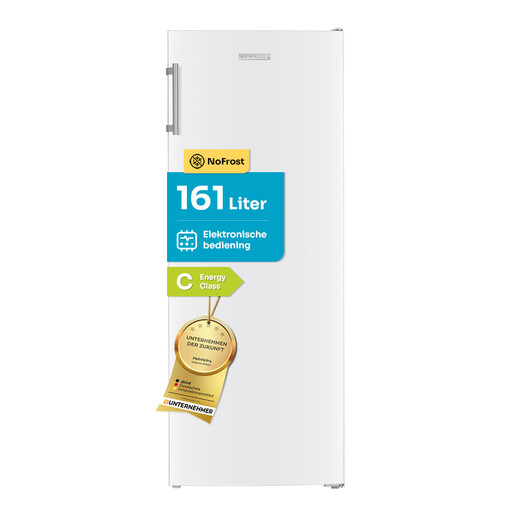 No image available
An option if you regularly need extra freezer space and want a layout with drawers.
The product information lists a capacity of 161 l, three freezer drawers and two trays, energy label C and a temperature range of −14 °C to −22 °C.
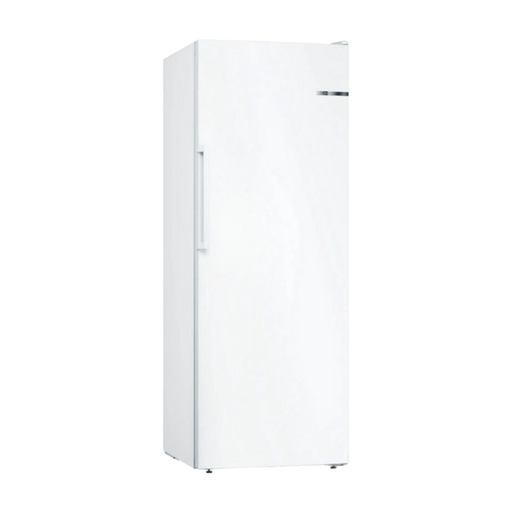 No image available
An upright freezer to consider if you want to store rolls and other frozen foods in an organised way.
The product information lists a capacity of 200 l and a stated freezing capacity of 16 kg per 24 hours. It also mentions NoFrost, SuperFreeze, VarioZone and a BigBox drawer.
 No image available
A table-top model to compare if you’re looking for compact extra freezer space for individual portions.
The product information lists a capacity of 87 l, a stated freezing capacity of 5 kg per 24 hours and energy label D. The title mentions No-Frost; the description lists a switchable fridge and freezer function.
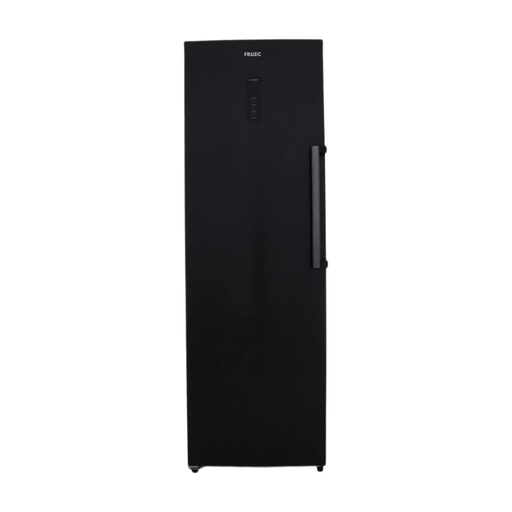 No image available
A larger upright freezer to consider if you regularly need plenty of storage space.
The product information lists a capacity of 274 l, a stated freezing capacity of 17 kg per 24 hours, energy label C and No-Frost.
 No image available
An option to compare if you’re looking for a medium capacity and a switchable fridge and freezer mode.
The product information lists a capacity of 122 l, a stated freezing capacity of 5,5 kg per 24 hours and external dimensions of 1155 × 475 × 565 mm. The title mentions No-Frost and energy label E.
For opened soft white rolls and opened part-baked rolls, the Netherlands Nutrition Centre recommends 1–3 months in the freezer; after that, their quality may deteriorate. For an unopened pack, follow the storage advice on the packaging.
Compare the lowest ambient temperature in the room with the specifications for the exact model. Inventum says the VK952W is suitable for temperatures down to −15 °C, while ETNA specifies a minimum of 10 °C for the VV856WIT. These figures do not apply to other models.
Yes. Inventum says the VK952W’s Low Frost feature still requires periodic defrosting. Check the manual for the model you choose; don’t rely on the feature name alone to determine how much maintenance it needs.
According to the Dutch government, there is no fixed statutory warranty period in the Netherlands, but you are entitled to a product that is fit for purpose. If a product is faulty, contact the seller, even if a manufacturer’s warranty is mentioned.
Compare the stated consumption in kWh per year and the energy label for the exact model. Since 1 March 2021, the European Commission has used the A–G scale for household fridges and freezers.