
Cooking with a crowded worktop
You cook fennel soup in a pan and want to blend it there, without leaving an appliance on the worktop. The Dutch Consumers' Association describes blending in the pan as a practical use for a hand blender.


If you cook fennel soup in a pan and have limited worktop space, a hand blender is usually the practical first choice: blend the soup straight in the pan, then put the appliance away. A jug blender could be a good option if a smoother texture or blending larger quantities at once matters more to you, but it takes up space and means transferring the soup. Check the usable capacity and instructions for hot ingredients for the exact model, too. Choose a soup maker if you want one appliance to take care of both cooking and blending, and its capacity and storage requirements suit your kitchen.
You cook fennel soup in a pan and want to blend it there, without leaving an appliance on the worktop. The Dutch Consumers' Association describes blending in the pan as a practical use for a hand blender.
You prioritise a smooth texture or larger batches, and have room for a jug blender. The Dutch Consumers' Association points out that a hand blender can sometimes produce a less even result.
You want to heat and blend the ingredients in the same appliance, rather than using a pan and a separate blender. A soup maker could suit you, provided it has enough capacity and you have room to store it.
The Dutch Consumers' Association highlights blending in the pan as a practical use for a hand blender. Then choose according to your preferred texture, the quantity you usually make and the storage space available.
| What to consider | What to look for | Who should prioritise this? |
|---|---|---|
| Blending with limited space | Check how much room the appliance, blending foot and any accessories take up. Also make sure the cord reaches your cooking area. | If I want to blend in the pan and put the appliance away afterwards, compact storage matters most to me. Around 40% of consumers prioritise saving space when blending in the pan. |
| Texture and quantity | Compare the usable capacity of the exact jug with the amount of soup you usually make; the jug's total capacity isn't always its usable capacity. | If I mainly want smooth soup or enough for one batch, I'm more willing to make room for a jug blender. Around 30% of consumers prioritise texture or portion size above all else. |
| Cooking and blending in one appliance | Check the soup maker's jug capacity and programmes, and make sure you have a suitable permanent place to store it after use. | If I want one appliance to cook and blend the soup, its capacity and storage space are decisive. Around 20% of consumers choose cooking and blending in the same appliance as their main requirement. |
| Temperature and cleaning | Follow the instructions for temperature, fill level and cleaning for your specific model. Don't rely on general claims about blending soup. | If clear instructions for blending hot ingredients and easy maintenance matter most to me, I'll check the manual for the exact model. Around 10% of consumers put safe use and maintenance first. |
For the Philips HR2041/00, Philips lists a maximum capacity of 1.9 litres and a usable capacity of 1 litre. These figures don't refer to the same quantity.
Compare the usable capacity with the amount of soup you usually make, rather than looking only at the largest figure on the packaging.
A smaller usable capacity could mean blending in several batches and doing extra washing-up.
Philips' cooling instructions apply to models HR2512/90, HR2511/90 and HR2510/90. Don't assume they apply to other jugs without checking.
Before transferring the soup, check the temperature and filling instructions for the exact model.
A chopper or whisk adds other functions, but you don't need one just to blend soup.
Choose accessories for tasks you actually do, and consider how much storage space the extra attachments will take up.
Unused attachments take up storage space.
The ErgoMixx MSM66110 is a hand blender designed for blending in the pan, without an extensive accessory set as standard.
Braun says the MultiQuick 1 MQ 100 Curry is designed for easily blending soup, with a single control button.
The range includes various appliances, such as the HR2041/00 jug blender and the HR2204/80R1 SoupMaker. These are different types of appliance.
Tefal describes a range that includes compact blenders and models with a heating function.
This Joybuy selection features hand blenders for blending soup directly in the pan. Check the instructions for hot ingredients and the storage space needed for any accessories for each model.
 No image available
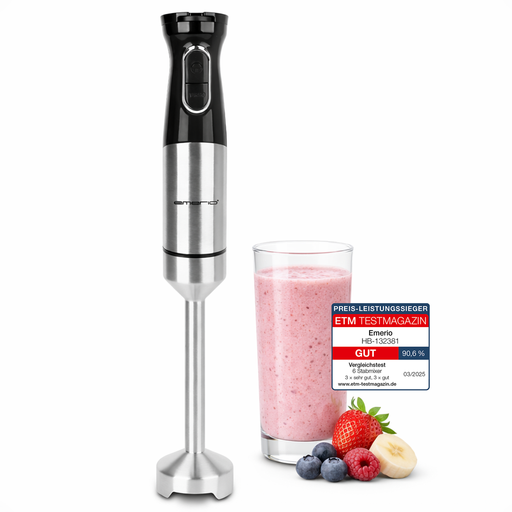
A hand blender for soup made in a pan, ideal if you don't want to leave a jug blender on the worktop after cooking.
The product description lists a removable stainless steel shaft, variable speed and a 1.2 m cord. For hot liquids, it recommends using a heat-resistant bowl and blending small portions.
 No image available
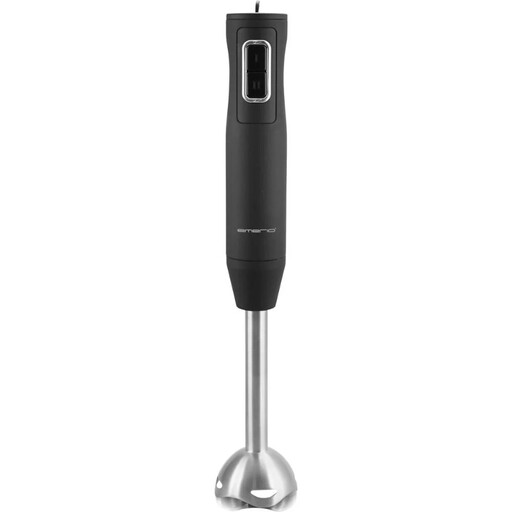
This hand blender is suitable for blending soup in the pan, so you won't need to transfer it to a separate jug first.
The product description lists two speed settings, a stainless steel shaft and a 1.05 m cord. It also describes the design as compact and easy to clean.
 No image available
A hand blender for soup, suitable for blending directly in the pan.
The product title lists 800 W, stainless steel and variable speed. The product description mentions splash protection; check the instructions for your model before using it with hot soup.
 No image available
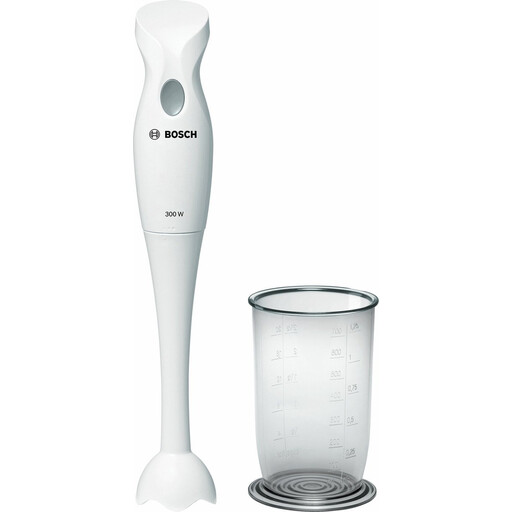
This hand blender is designed for blending soup and could be a good fit if you're looking for a compact appliance for a small kitchen.
The product description lists 300 W, a measuring beaker and removable parts. The stated width is 6.1 cm; allow for the other parts when planning where to store it, too.
 No image available
This hand blender is suitable for blending soup; the extra attachments add useful functions if you'll use them, too.
The product description lists adjustable speed, up to 1200 W and 15,000 rpm. The set includes a 700 ml measuring beaker, a 500 ml chopper and a whisk, so you'll need extra storage space.
That's a good idea for firm pieces of vegetable. The Dutch Consumers' Association recommends cooking hard vegetables first and adding liquid if needed; you should also follow your appliance's instructions.
No, the permitted temperature varies by model. For models HR2512/90, HR2511/90 and HR2510/90, Philips says to let ingredients cool to below 60 °C first. Don't assume this limit applies to the HR2041/00 or another blender without checking.
A removable blending foot can make cleaning easier. Check the manual for your model to see which detachable parts are dishwasher-safe; don't assume this includes the motor unit.
According to the Netherlands Food and Consumer Product Safety Authority, CE marking is compulsory for electrical products sold on the Dutch market. Check the marking and applicable product documentation for the appliance itself; the marking alone doesn't tell you how well it blends soup.
Not always. The Dutch Government says that many online purchases from a business come with a 14-day cooling-off period, but there are exceptions. Check the terms and conditions for your specific purchase.