
Vandaag of morgen in huis

Kwaliteit gegarandeerd

Welkomstaanbiedingen ontgrendelen: GRATIS bezorging | Tot 80% korting | Gratis 30 dagen JoyPlus-proefperiode
Download de app
A felt-tip pen set may seem like a straightforward purchase. However, sets vary considerably in tip shape, colour choice, age recommendation and maintenance. A low price per pen also means little if the tips quickly become dented, caps go missing or colours bleed through the wrong type of paper.
Joybuy Product Recommendation Officer filters the most important product specifications, so you can compare products with confidence. Pay particular attention to these three common pitfalls:
The tip determines what you can use a set for:
Also check whether the tip is pressure-resistant or spring-loaded. Young children may press down hard, which can be a problem. According to the product description, the STABILO Trio Scribbi uses a thick, spring-loaded tip that springs back when pressure is applied. This is a specific product specification, not a general guarantee that the pen will remain undamaged in all circumstances.
Water-based ink is common in colouring pens and felt-tip pens for drawing and colouring. Look at the following:
According to STABILO’s own product information, Pen 68 ink can be picked up with water to create a watercolour effect. Use thicker paper for this and test first to see how the colour spreads.
For children aged 3 and over, the age recommendation is important. Also check whether the product details include a CE mark or EN 71 reference. This information helps with selection, but does not replace supervision for young children. Small parts, such as loose caps, may present a risk.
An ergonomic shape can feel comfortable during longer drawing sessions. Triangular felt-tip pens often provide a clear grip. According to the product description, the STABILO Cappi has an ergonomic grip and a cap ring, while the STABILO Trio Scribbi has a triangular shape. However, comfort varies depending on the user’s hand and age.
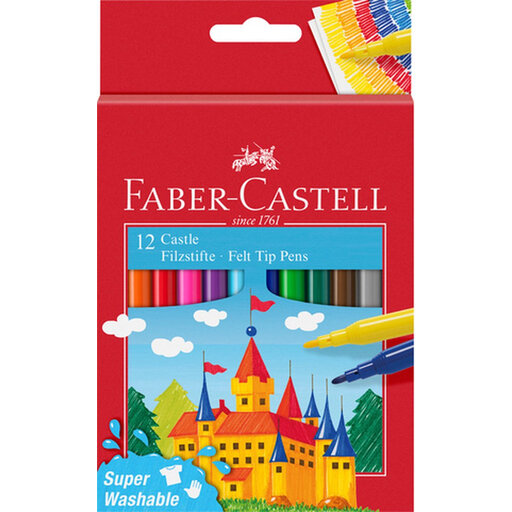
Why it suits this profile: A well-organised set of 12 colours is suitable for first drawing projects, homework and a compact craft box.
You are not paying for a large number of colours that may rarely be used. The product information mentions a strong tip and an age recommendation from 4 years.
12 assorted colours, suitable for paper and card; according to the manufacturer, washable from hands and most fabrics.
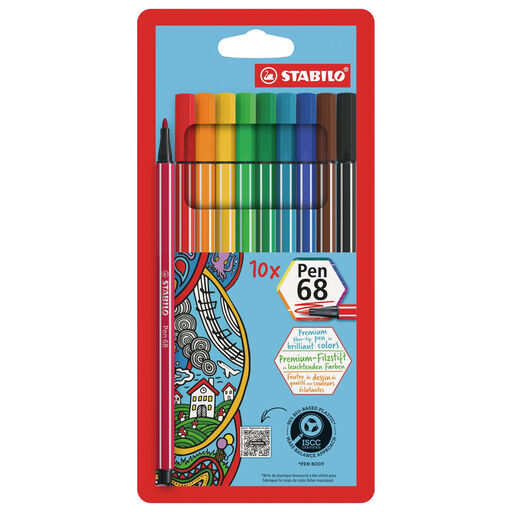
Why it suits this profile: These STABILO felt-tip pens are ideal for adults, school pupils and anyone who enjoys even lines, colouring and creative techniques.
The product description specifies a pressure-resistant tip of approximately 1 mm and water-based ink. This makes the set suited to controlled use rather than simply offering a large number of colours.
18 colours, an approximately 1 mm writing width and, according to the manufacturer, the option to combine the ink with water for watercolour effects.
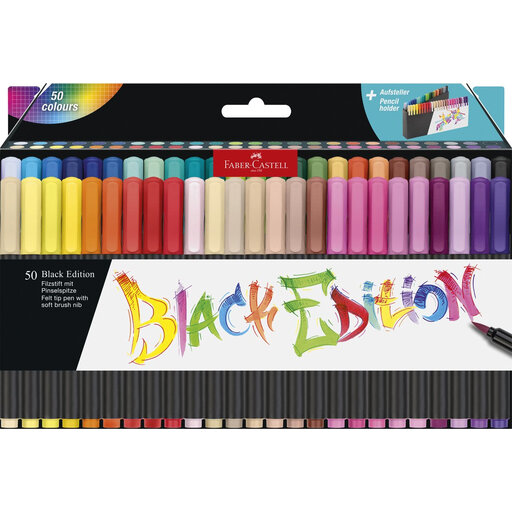
Why it suits this profile: The wide range of colours is practical for hand lettering, colour studies and projects where you want to compare lots of shades.
The choice of 50 colours is linked to a brush tip here, rather than just the number of colours. Bear in mind the stated limitation: use on light paper, not black.
50 assorted brush pens, suitable for thick and thin lines; according to the manufacturer, washable ink made with food colourings and an EN 71 reference.
We have compiled a complete, up-to-date list of products that fully meet these strict selection criteria and the applicable European safety regulations.
Proper storage helps prevent unnecessary replacement:
Check the stated minimum age recommendation and the available safety information. According to the product description, the STABILO Trio Scribbi is intended for children aged 3 and over. The 12-piece Faber-Castell set has a minimum age recommendation of 4 years. Also choose a sturdy tip, an easy-to-hold shape and supervise young children.
This depends on usage, storage, paper and whether the cap is replaced. Some brands specify how long the pen can be left uncapped without drying out; according to STABILO’s own information, the STABILO power can last for up to eight weeks without a cap. This is a brand claim under the manufacturer’s stated conditions, not a fixed lifespan. Replacing the cap correctly remains important.
No. Ordinary colouring pens usually have a fixed tip for even lines. Brush pens have a flexible tip that changes line thickness according to the pressure applied. For young children and large areas, a medium or broad fixed tip is often easier to use. For hand lettering and decorative writing, a brush pen can offer more possibilities.
