
Vandaag of morgen in huis

Kwaliteit gegarandeerd

Welkomstaanbiedingen ontgrendelen: GRATIS bezorging | Tot 80% korting | Gratis 30 dagen JoyPlus-proefperiode
Download de app
A box of felt-tip pens and markers may seem like an easy choice. Yet many people end up buying a set that does not suit their paper, project or intended usage time. A felt-tip pen for children works differently from a fineliner for making notes. And an acrylic marker that writes well on paper is not automatically suitable for glass, wood or ceramics.
Pay particular attention to these three common pitfalls:
Water-based ink is a practical choice for school, writing, colouring and many hand-lettering projects. The smell is generally limited, and some varieties are described as washable from hands or textiles. Always check the information about washability: “washable” does not mean that every stain will disappear completely from every material.
Alcohol markers dry quickly and are designed for sketching, illustrations and colour gradients. The ink can bleed through thin paper. So use marker paper or place a protective sheet beneath your drawing. According to the product description, the Faber-Castell Goldfaber Sketch Marker Set uses alcohol-based ink with a 1 to 5 mm brush nib and a 0.6 mm fineliner nib.
Acrylic markers and paint markers contain water-based acrylic ink. According to the product specifications, they are suitable for materials including paper, metal, ceramics, plastic, glass, fabric, stone, canvas and wood. Test the marker on an inconspicuous area first, as adhesion and removability can vary depending on the surface.
There are also special sets for parties, theatre, Halloween and cosplay featuring face paint or cosplay make-up. Only use these products as stated on the label. The UCANBE set is described as containing water-activated make-up. The product information recommends a patch test and advises against use on irritated skin, around the eyes or on mucous membranes.
The nib determines how much control you have:
A soft brush nib is versatile, but can wear out more quickly when you press hard. For young children, a pressure-resistant medium nib may be more practical.
For children, CE marking and, where stated, EN 71 are relevant points to check. Also look at the recommended minimum age and whether the product contains small parts. Ventilated caps may provide an additional safety feature, but they do not prevent a cap from posing a choking hazard if swallowed.
Close markers securely after use. Store them away from direct sunlight and extreme temperatures. The length of time a marker can be left uncapped varies according to the product description: some STABILO models are said to last for longer periods, but this is no reason to deliberately leave the caps off. With acrylic markers, you often need to shake the marker first and press the nib several times until the ink starts to flow. Do this on a test sheet.
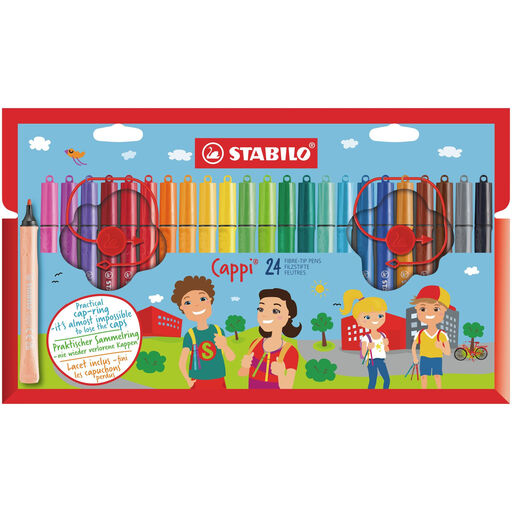
Why it suits this profile: A well-organised set for home, school or on the go, without having to buy several different nib types straight away.
The caps can be attached to two cap rings. According to the product description, this means they are less likely to get lost.
24 colours, a 1 mm medium nib and washable ink according to the product information.
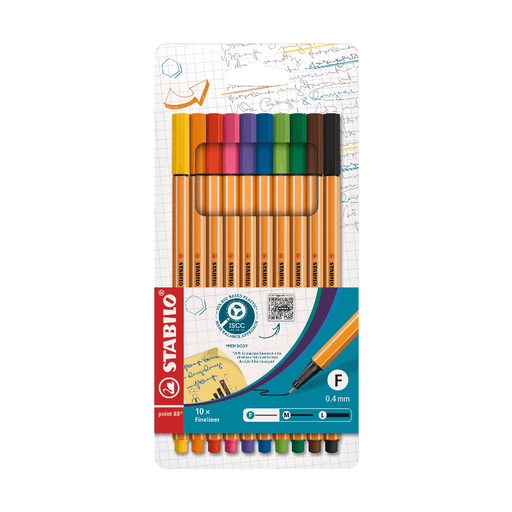
Why it suits this profile: Suitable for students, office work, bullet journalling and precise drawing where a consistent line width is important.
The 0.4 mm nib prevents you from using a broad felt-tip pen for details or small letters.
Metal tip, water-based ink and a set of 10 varied colours.

Why it suits this profile: For creative users who want to work on more than just paper, such as wood, canvas, ceramics or glass.
The product specifications list several surfaces and two nib sizes, so you do not need a separate marker for every surface.
Six metallic colours, 1 mm and 3 mm nibs, plus a shake-and-pump system with an ink-level indicator.
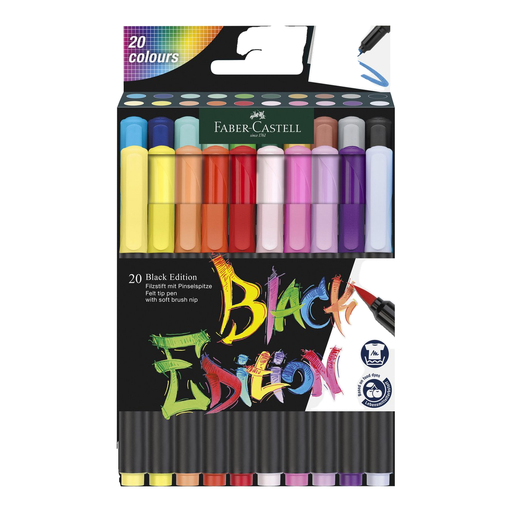
Why it suits this profile: An accessible set for hand lettering, small drawings and colour accents without alcohol-based ink.
The brush nib creates line variation with light or firm pressure, so you do not immediately need to buy several nib sizes.
20 colours, washable ink according to the product description, and suitable for children and adults.
For school and the office, colouring pens, STABILO point 88 fineliners and highlighters are usually sufficient. If you want to create broad areas of colour, consider STABILO Pen 68 or STABILO power. For creative surfaces, acrylic markers are the more logical choice. Dual-tip markers are useful when you want to switch between broad strokes and details.
With alcohol markers, your choice of paper matters more than the number of colours. A set of 24 well-balanced shades may be more practical than a larger set containing lots of nearly identical colours. For make-up palettes, face paint or cosplay make-up, also check the ingredients, batch information, shelf life and warnings on the label. Do not use cosmetic paint as ordinary craft paint.
We have compiled a complete, up-to-date list of products that fully meet these strict selection criteria and the applicable European safety regulations.
Choose a medium nib, a sturdy tip and clear information about age suitability and safety. Sets such as STABILO Cappi and Faber-Castell felt-tip pens list features such as an ergonomic shape, washable ink or EN 71. Let children use markers on paper or card, and replace the caps after use.
Replace the cap on each marker immediately after use and store the set according to the product information. For example, keep fineliners horizontally in their box and avoid direct sunlight. A marker that can be left uncapped may still dry out more quickly if this happens regularly.
They can be, but the ink may bleed through the paper and saturate the surface. Preferably use special marker paper or thicker paper, and place a protective sheet beneath your work. For school notes and everyday writing, water-based fineliners or colouring pens are generally more practical.
