
Vandaag of morgen in huis

Kwaliteit gegarandeerd

Welkomstaanbiedingen ontgrendelen: GRATIS bezorging | Tot 80% korting | Gratis 30 dagen JoyPlus-proefperiode
Download de app
Buying felt-tip pens and markers seems simple, until you have to choose between a set of colouring pens, brush pens, washable felt-tips, acrylic markers or alcohol markers. A large number of colours doesn’t automatically mean a set is right for you. For children, grip, tip strength and washability are often more important than dozens of extra colours. For illustration, hand lettering or craft projects, the tip shape, ink type and surface matter more.
A set of 50 colours may seem appealing, but it isn’t always practical for a young child or a beginner. Also check the tip shape, storage and recommended age. A small set with clear basic colours may be better for school and everyday colouring than a larger set with delicate tips.
Washable felt-tips are handy for children, but how washable they are varies by product and surface. According to STABILO product information, certain inks can be removed from hands with soap and water; pre-treatment is recommended for clothing. Jar Melo states that its pens are 90% washable on skin and most fabrics. So treat stains as quickly as possible and protect the table, clothes and floor.
Standard drawing pens are usually intended for paper or card. According to Faber-Castell product information, acrylic markers are suitable for various surfaces, including wood, glass, ceramics, plastic, metal and canvas. That doesn’t mean they’ll adhere or cover equally well on every surface. Test the marker on a small, inconspicuous area first.
The tip determines how you draw and colour:
Also check whether the tip is pressure-resistant. A sturdy or springy tip is useful for children who press harder when colouring.
Water-based ink is generally suitable for paper, schoolwork and children’s colouring. It often has little odour, and some versions are washable. According to product information, STABILO Pen 68 uses water-based ink and can be used with water to create a watercolour effect. Use thicker paper or card for this technique to reduce bleeding and buckling.
Alcohol markers dry quickly, are water-resistant according to product information and can bleed through paper. Place a protective sheet under your drawing. They’re best suited to sketching and illustration for older users.
Acrylic markers contain water-based acrylic ink and are designed for a range of surfaces. Shake-and-pump systems usually need to be primed before use. Keep the cap on the marker, shake it according to the instructions and pump the tip on a separate sheet until the ink flows evenly.
Check the recommended minimum age and look out for small parts. For example, STABILO Pen 68 is not recommended for children under 3 because it contains small parts; the stated minimum age is 6. Faber-Castell Black Edition brush pens are listed as suitable from age 10. For young children, sturdy, thick tips and an easy-to-grip barrel are more practical.
A CE mark or EN 71 statement can provide relevant conformity information, but it doesn’t replace supervision. Make sure children use markers as directed on the packaging and replace the caps after use. Store the pens in a dry place, away from direct sunlight.
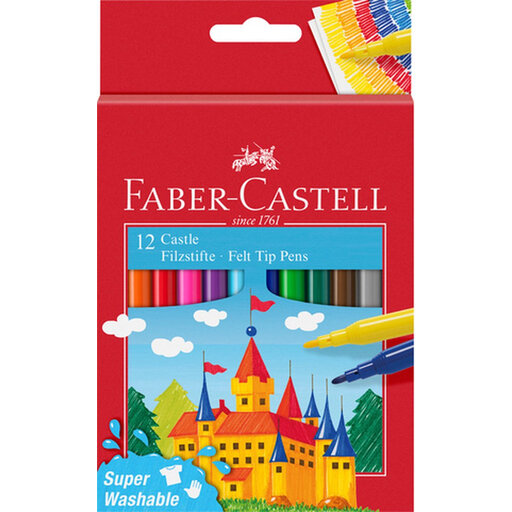
Why it suits this profile: A manageable set of 12 drawing pens for children from the stated minimum age of 4, as well as simple drawing and colouring projects.
You’re not paying for an overwhelming range of colours, and you get a sturdy tip that product information says is suitable for children.
12 colours, sturdy tips, suitable for paper, card and, according to product information, wood; washable ink on hands and most fabrics at 30 degrees.
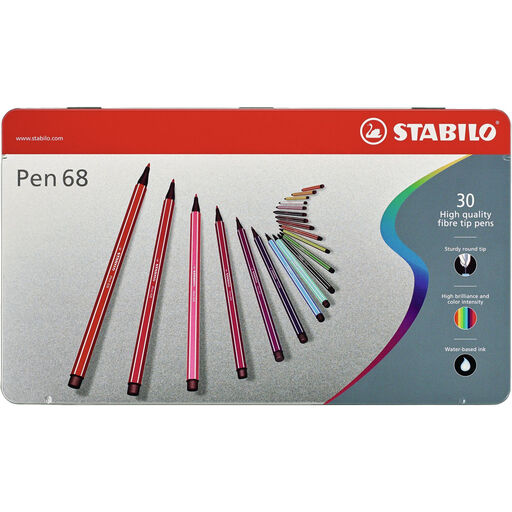
Why it suits this profile: Ideal for students, hobbyists and adults looking for a consistent medium tip and a range of creative uses.
The pressure-resistant tip is clearly specified as around 1 mm wide. Check your paper if you’re adding water, as thicker paper is recommended.
30 colours, water-based ink, odourless according to product information, and suitable for watercolour effects with a wet brush.

Why it suits this profile: For creative adults and hobbyists who want to work on more than just paper, including surfaces such as wood, glass, ceramics or canvas.
The marker isn’t limited to paper. Product information lists several surfaces and explains how to activate the pump-and-shake mechanism.
6 standard colours, water-based acrylic ink, two tip sizes of 1 and 3 mm, and an ink-level indicator according to the product description.
We’ve put together a complete, up-to-date list of products that meet these strict selection criteria and current European safety regulations.
Their lifespan depends on how they’re used and stored, and whether the caps are replaced. Some product descriptions say a marker can be left uncapped temporarily without drying out straight away, but always replace the cap after use. Store the pens in a dry place, away from direct sunlight, and in the position specified.
That depends on the minimum age and how the pens are made. Check the age recommendation, look for small parts and check for any CE or EN 71 information. Washable ink makes cleaning easier, but supervision and protecting clothes are still important.
Don’t just look at the purchase price. A larger set may be good value if you use lots of colours, while a smaller set is more practical if you mainly need the basics. Replacement markers or refills aren’t always available for alcohol markers and acrylic markers. So check in advance that the set suits how often you’ll use it and what you’ll use it for.
