
Vandaag of morgen in huis

Kwaliteit gegarandeerd
Download de app
Categorieën

A fatbike, with its signature wide tires, offers the freedom to explore trails where a standard bicycle falls short. However, the market is vast, and it's crucial to select a model that suits your needs without paying for features you won't use. It's easy to make the wrong choice if you don't pay attention to core specifications. This article will help you make an informed decision based on verifiable product features.
When purchasing a fatbike, a few technical parameters are decisive. By focusing on these, you can objectively assess a model's performance and suitability.
Wheel Size (Inches): The wheel size largely determines who the bike is suitable for.
Brakes: For an all-terrain bike, reliable brakes are essential. Dual disc brakes are a common standard. They provide consistent and powerful braking performance, even in wet or muddy conditions, which is a significant advantage over traditional rim brakes.
Gears: A 7-speed bike, often equipped with a Shimano drivetrain, offers sufficient range for recreational use. It allows the rider to both climb hills and build speed on flat sections. Operation via a grip or trigger shifter should be smooth and intuitive.
Frame and Tires: The frame, often made of Hi-ten steel, is built for durability and shock absorption. The essence of a fatbike is its tires, typically 4.0 inches wide. These provide superior traction and float on loose surfaces like sand, snow, and forest trails.
Based on the specifications above, we have selected several models from the HILAND fatbike Roon series. These bikes target the entry-level segment and provide a functional foundation for adventurous riders.
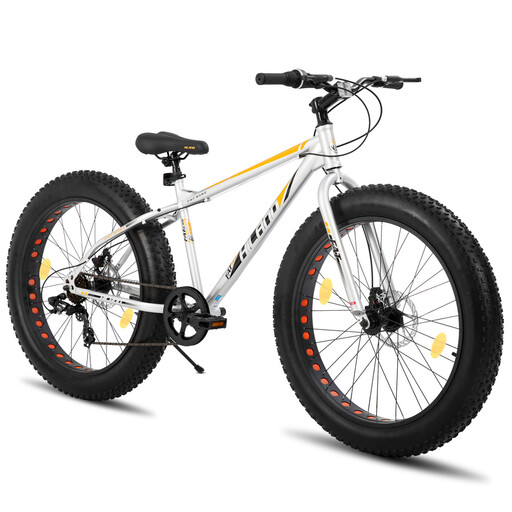
Why this product: This model bridges the gap between kids' and adult bikes. The 24-inch wheel size makes it a suitable choice for growing teens or shorter adults seeking a full-fledged fatbike experience. The bike is equipped with key functional features: a durable steel frame, dual disc brakes, and a Shimano 7-speed drivetrain.
Advantages:
Who is this for: Teens and shorter adults looking for a robust and versatile fat-tire MTB for recreational rides.
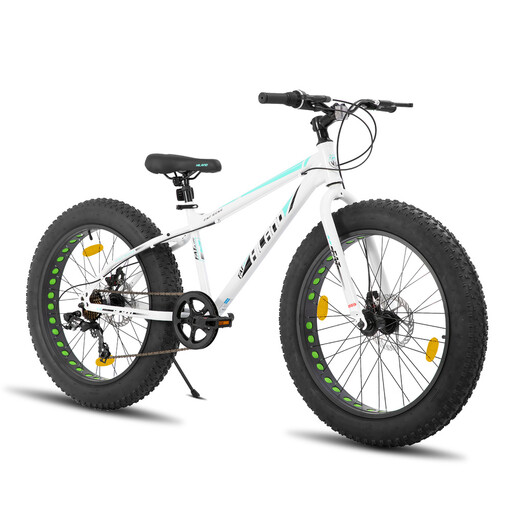
Why this product: This is the standard adult fatbike in the Roon series. With its 26-inch wheels and a high-carbon steel frame, this bike is designed for stability and durability. The specifications are focused on functional performance, featuring a reliable Shimano derailleur and powerful disc brakes.
Advantages:
Who is this for: Adults seeking an entry-level fat-tire mountain bike for adventurous rides on the beach, through the woods, or in the snow.
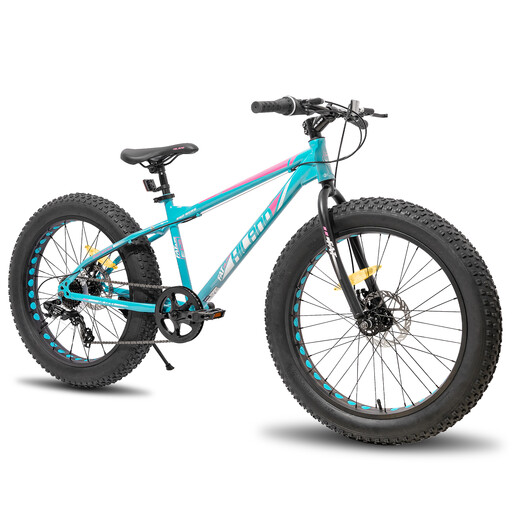
Why this product: This kids' fatbike brings the features of the adult models to a smaller scale. The 20-inch wheels and robust steel frame are tailored for young adventurers. Safety and ease of use are paramount, featuring dual disc brakes and an easy-to-operate 7-speed grip shifter.
Advantages:
Who is this for: Kids who are ready for their first true all-terrain bike and want to discover the world off the beaten path.
A complete fatbike is a specific choice. If purchasing an entirely new bike is a step too far, or if you primarily ride on paved roads, modifying your current mountain bike is an alternative. Fitting wider tires with more aggressive tread can significantly improve grip and comfort. For those looking to upgrade their current bike, take a look at our mountain bike tires category.
What is the advantage of a fatbike over a regular mountain bike? The main advantage lies in the 4.0-inch wide tires. These can be run at a lower tire pressure, giving them a much larger contact patch with the ground. This results in superior traction and 'float' on soft, loose surfaces like sand, snow, or deep mud, where a normal mountain bike would sink.
Is a fatbike heavy to ride? Due to their wide tires and robust frames, fatbikes are generally heavier than standard bikes. The extra rolling resistance from the tires is especially noticeable on asphalt. However, on the terrain they are designed for (soft and uneven), the added grip and stability compensate for this, which can actually make the riding experience feel smoother.
Can I use a fatbike for daily commuting? You can, but it's not the most efficient choice for rides that are entirely on paved roads. The rolling resistance of the fat tires requires more effort on asphalt. However, if your route includes unpaved paths, dirt roads, or parks, a fatbike can be a fun and versatile option.