
Vandaag of morgen in huis

Kwaliteit gegarandeerd

Welkomstaanbiedingen ontgrendelen: GRATIS bezorging | Tot 80% korting | Gratis 30 dagen JoyPlus-proefperiode
Download de app
A fast-drying hairdryer can save time on busy mornings, after exercising or while travelling. However, a high RPM rating or high wattage does not tell you everything. A device may look powerful on paper, but be too heavy in practice, offer little temperature control or be awkward to use with curls.
Joybuy Product Recommendation Officer therefore filters the most important product specifications and marketing claims. This allows you to compare hairdryers based on features you can actually check.
A power rating of 1,800 or 2,300 watts indicates how much electrical power the device uses, but does not directly determine how quickly your hair will dry. The motor, airflow, nozzle and construction also play a part. A powerful hairdryer with well-directed airflow may feel more efficient than a heavier model with only a higher wattage.
An ionic hairdryer, or a hairdryer with negative ions, may help to reduce static electricity and frizz, according to product descriptions. However, the result also depends on your hair type, the temperature used, your drying technique and your haircare products. Claims about “millions of ions” are not always directly comparable between brands either.
Treat this as an additional feature rather than a guaranteed result. A brand’s own research may mention certain effects, but such claims are not a general guarantee for every user.
A compact hairdryer is useful in a small bathroom or hand luggage, but may sometimes have fewer temperature settings, a shorter cable or no diffuser. Check the voltage too. A device rated for 220–240 V is suitable for use in the Netherlands; if you travel outside Europe, a model with multiple voltage settings is preferable.
As well as the power rating, look at the stated motor speed or airflow rate. Products in this selection mention, for example, 20,000 RPM, 110,000 RPM or an airflow of up to 23 m/s. These figures are useful for an initial comparison, but measurement methods may vary between manufacturers.
For thick or long hair, powerful airflow is usually more practical. For fine hair, a lower setting with temperature control may be more comfortable. A device with multiple speed settings offers greater flexibility than a model with just one fixed airflow strength.
A hairdryer with temperature control gives you more control than a device with only hot and cold settings. Look at the number of combinations, for example:
Smart temperature control sounds appealing, but check exactly what is specified: a sensor, constant temperature or overheat protection are different features.
A lightweight hairdryer helps prevent your arm from tiring quickly. Product specifications vary considerably in terms of weight: the Braun HD130 is listed at 257 grams, the BABONIR FZ201 at 330 grams and the ochama Ultra-Light at approximately 480 grams.
A quiet hairdryer is particularly useful in a shared home or when you get up early. Only rely on a decibel rating if one is actually provided. The Nicebay DW-9041 states less than 65 dB according to the product description; this is a brand or supplier specification, not an independent comparison.
For styling, a hairdryer with concentrator nozzle and a diffuser are different accessories. A concentrator directs the air towards a section of hair or a brush. A hairdryer with diffuser distributes the air more widely, making it interesting for curly or wavy hair.
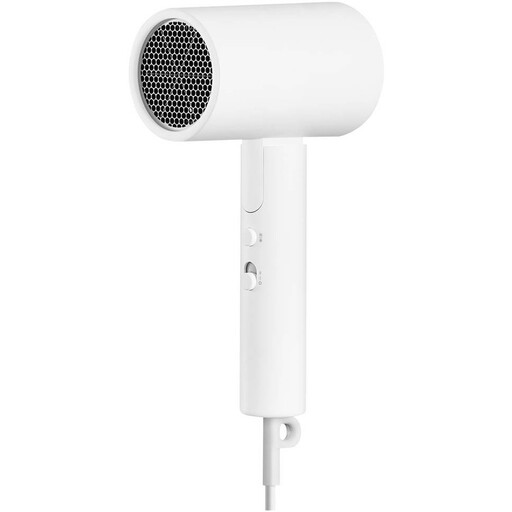
Why it suits this profile: This model combines a compact, foldable design with 1,600 watts, two speeds and two temperature settings for everyday use.
The choice is not based on wattage alone: weight, foldability, airflow of up to 15 m/s and the 360° rotating concentrator nozzle are also specified.
433 grams, foldable, ionic function and suitable for 220–240 V.
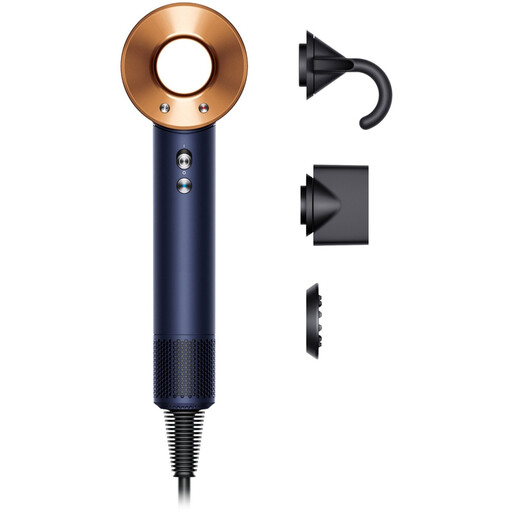
Why it suits this profile: The product description lists a digital V9 motor, three speeds, four temperature settings, a cold shot and intelligent heat control.
There are multiple temperature and speed settings, so you do not have to dry your hair using just one hot setting.
Precise styling with a concentrator, 3 speeds and 4 temperature settings.
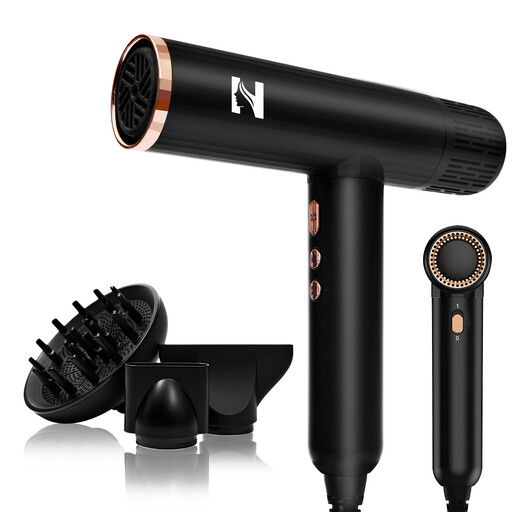
Why it suits this profile: This model is designed for thick, long or curly hair and lists a 110,000 RPM brushless motor, 1,900 watts, a diffuser and two concentrators.
The set includes a diffuser and multiple settings. This means you do not have to work through curls or thick hair with one concentrated jet of air.
3 speeds, 4 temperature settings, diffuser, 23 m/s airflow and a stated weight of 570 grams.
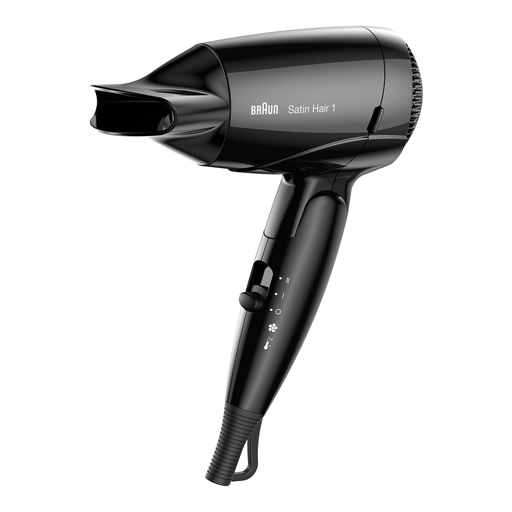
Why it suits this profile: The foldable handle, 257-gram weight and multiple voltage settings make this a practical hairdryer for travelling.
The multiple-voltage function is clearly specified. However, always check which plug or adapter you need for your destination.
257 grams, foldable handle, 1,200 watts and two temperature settings.
We have put together a complete, up-to-date list of products that fully meet these strict selection criteria and the applicable European safety regulations.
Do not use an electrical appliance in or near water. Unplug it after use and allow the hairdryer to cool completely before storing it. A CE mark is relevant for European conformity, but you should also check the manual, warranty, plug type and contact details of the responsible party.
An ionic function may help to reduce static electricity, according to the brand’s product description. For fine hair, a low speed may be more important; for thick or frizzy hair, ionic technology and a targeted concentrator nozzle may be useful additional features. The effect varies from person to person.
Models rated at approximately 1,600 to 2,300 watts are common for home use. Wattage alone does not predict drying time. Also compare the airflow, motor, temperature control and weight. A lower wattage may make more sense for a compact travel hairdryer.
Its lifespan depends on how often it is used, filter maintenance, storage, and the quality of the cable and casing. Allow the device to cool down, do not block the air inlet and stop using it if you notice smoke, a burning smell or unusual noises. Before buying, check the warranty and your statutory conformity rights.
