
Vandaag of morgen in huis

Kwaliteit gegarandeerd

Welkomstaanbiedingen ontgrendelen: GRATIS bezorging | Tot 80% korting | Gratis 30 dagen JoyPlus-proefperiode
Download de app
If you're looking for a fast 3D printer, chances are you no longer want to wait for prints that take hours or even days. You're ready for an upgrade that accelerates your workflow, whether you're a hobbyist, a prosumer, or a small business. The market makes lofty promises with terms like "lightning-fast" and "high-speed," but not every printer lives up to them.
Before you buy a 3D printer, it's crucial to know what to look for. Many users fall into the same traps, leading to frustration and a poor purchase. Here are the three most common mistakes.
600mm/s print speed sounds impressive, but it's useless if the printer can't accelerate quickly. High top speed without powerful acceleration is like a sports car in a traffic jam: the potential is never realised. Print quality often plummets at those speeds if the rest of the machine can't keep up.carbon fiber printer unusable.To separate marketing claims from facts, focus on the specifications that truly matter for speed and quality.
A high print speed is only achievable with high acceleration. Acceleration, measured in mm/s?, determines how quickly the print head can change direction and reach its top speed. For fast, detailed prints, an acceleration of 10,000 mm/s? or higher is a good guideline. Printers that combine this with a high top speed, like 600 mm/s, can genuinely reduce print time by 70% or more without sacrificing quality.
For high speeds, a CoreXY 3D printer is a popular choice. In this design, the print head moves along the X and Y axes, while the print bed only moves vertically (Z-axis). Because the heavy print bed doesn't shake back and forth, vibrations are minimised. This results in cleaner prints, even at high speeds. A sturdy, metal frame is essential to handle the forces involved.
A professional 3D printer for high speeds has a direct drive extruder. This is mounted directly on the print head, providing faster and more precise filament feeding, which is crucial for rapid directional changes. To print materials like PA-CF (Nylon Carbon Fiber) or PET-CF, an all-metal hotend capable of reaching temperatures of 300°C is necessary, along with a hardened steel nozzle that resists wear. Features like a 3D printer with automatic leveling are no longer a luxury; they ensure a perfect first layer, which is essential for a successful print, and save you a great deal of time and frustration.
Based on these criteria, we have selected a few models that suit different user profiles.
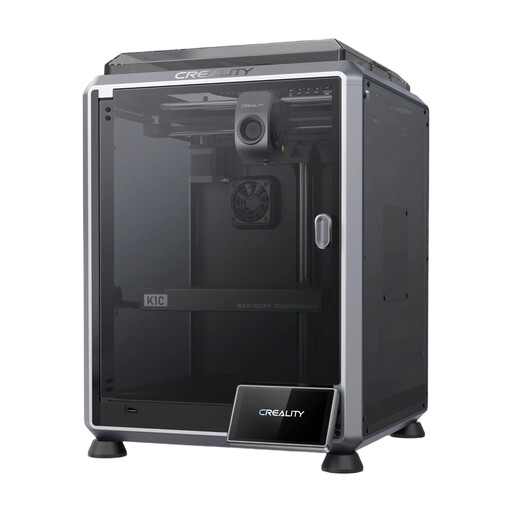
Why This Fits Their Persona: The K1C offers an excellent balance of speed, advanced features, and reliability. It's ideal for those who want to create functional parts and prototypes with modern materials without paying a premium.
This printer is designed for carbon fibre filaments. Its clog-free direct extruder and tri-metal "Unicorn" nozzle can handle the higher temperatures and abrasion from these materials.
The CoreXY system with 20,000 mm/s? acceleration delivers genuinely fast prints. The built-in AI camera and fully automatic calibration complete the user-friendly experience.
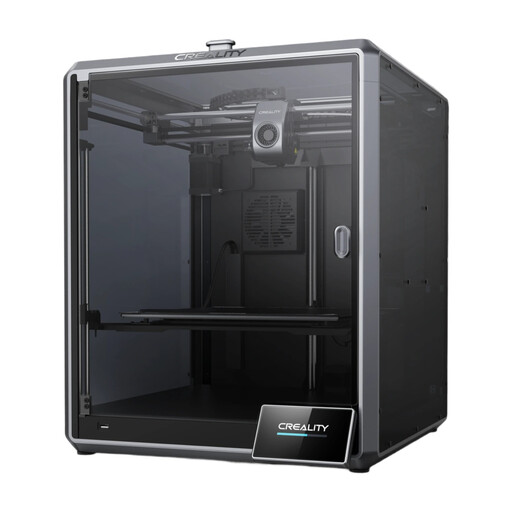
Why This Fits Their Persona: For professionals who need large, functional prototypes or end-use parts, the K1 MAX combines a huge build volume with the speed and precision of the K1 series.
The stable, die-cast frame and CoreXY structure prevent the vibrations and inaccuracies that are often a problem with large, fast printers. The AI LiDAR scans the first layer for added assurance.
The 300x300x300 mm build volume is its key advantage. This, combined with the 600mm/s print speed and hands-free automatic leveling, makes it a production powerhouse.
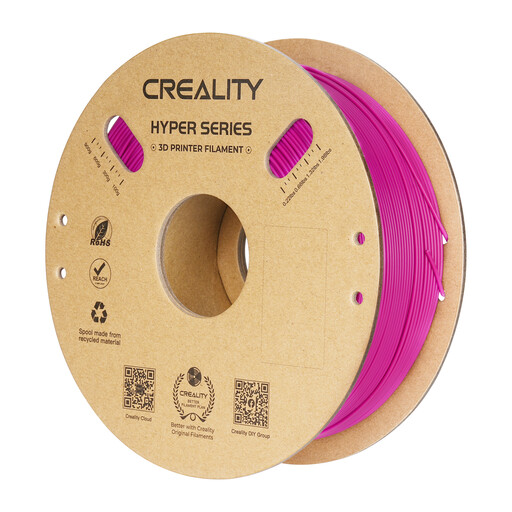
Why This Fits Their Persona: You have a fast printer, but are you getting the most out of it? This filament is for the user who wants to maximise their machine's performance and demands reliable results at high speed.
It avoids the pitfall of under-extrusion and weak prints that comes from using standard PLA at high speed. Its formula is designed for high fluidity and rapid cooling.
According to Creality, this filament is 10 times faster than standard PLA and compatible with speeds up to 600 mm/s. The dimensional accuracy of +/- 0.02mm ensures consistent results.
A fast printer also deserves striking colours. If you want to give your projects a unique look, exploring different types of filament is a logical next step.
A fast printer is just the beginning. Give your creations colour and character with our range of specialty filaments.
For users who print regularly, create prototypes, or run a small business, the answer is often yes. The time you save can be significant. A print that previously took 10 hours can now be finished in 2-3 hours. This increases your productivity and allows for faster design iterations. For the occasional hobbyist, a standard printer may be sufficient.
Standard PLA is usually not suitable for such high speeds. You need a "high-speed" or "hyper" PLA, like the Creality Hyper PLA. These filaments have higher fluidity to prevent under-extrusion and are formulated to cool quickly for good layer adhesion and dimensional accuracy. For engineering materials like ABS, PETG, or carbon fibre, always check the manufacturer's recommended print speeds.
The main difference is in the motion system. A standard "bed-slinger" printer (like the Ender 3 style) moves the print bed back and forth on the Y-axis. This heavy, moving part limits speed and can cause vibrations. A CoreXY 3D printer keeps the bed stationary on the X and Y axes (it only moves down). The lightweight print head does all the fast work, resulting in higher speeds, fewer vibrations, and better print quality.
