
Vandaag of morgen in huis

Kwaliteit gegarandeerd

Welkomstaanbiedingen ontgrendelen: GRATIS bezorging | Tot 80% korting | Gratis 30 dagen JoyPlus-proefperiode
Download de app
Farmina dog food is available in many varieties, from Farmina N&D dry dog food with chicken, lamb or fish to puppy food and Vet Life dog food for specific dietary needs. This choice is useful, but it can make comparing products more difficult. An appealing package or term such as “grain-free” does not automatically mean that a recipe is right for your dog.
Pay particular attention to three common pitfalls:
First choose between dog food for adult dogs, puppy food or a senior recipe. Then check whether the product is intended for small dogs or for medium-sized and large breeds. A small dog often needs smaller kibble and has different energy requirements from a large dog.
For puppies, the growth stage and expected adult weight are important. For example, Farmina N&D Ocean Cod with Pumpkin Puppy Medi/Maxi is intended for puppies of medium-sized and large breeds. The product information lists cod, dehydrated cod protein, sweet potato and pumpkin as key ingredients.
Dog food containing lamb, chicken or fish can be appealing if you are looking for a particular protein source. However, check that the source actually appears near the top of the ingredients list. In Farmina N&D Ancestral Grain Adult Dog Medi/Maxi Lamb, lamb is the first ingredient, followed by dehydrated lamb. The recipe also contains spelt and oats, so it is not grain-free.
A fish-based recipe may suit dog owners who prefer cod or herring as an animal protein source. According to the product information, Farmina N&D Ocean Cod and Pumpkin Adult Small Dog Food contains 25% cod and 25% dehydrated cod protein. These are verifiable details; claims about effectiveness or suitability still depend on the individual dog.
If your dog has a sensitive stomach or you suspect a food intolerance, it is sensible to look beyond marketing terms. Pay attention to:
According to the product description, Farmina Vet Life Ultra-Hypoallergenic Formula for Dogs uses hydrolysed fish protein and rice starch. The manufacturer positions this product as helping to reduce food and ingredient intolerances. This is a brand claim, not a guarantee. Speak to a vet before starting an elimination diet or using therapeutic food.
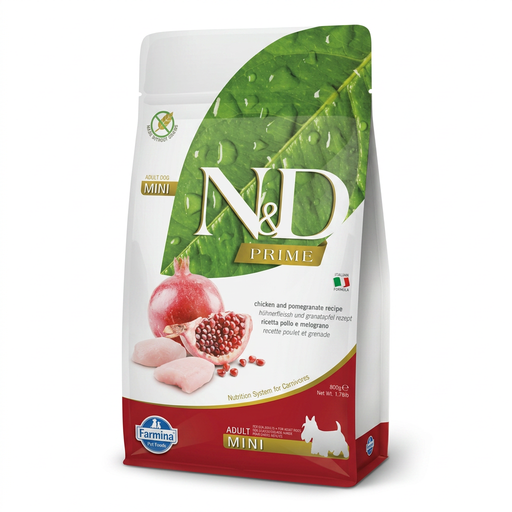
Why it suits this profile: The small pack is practical for trying a recipe first. The product is intended for small adult dogs and contains chicken as a key protein source.
You do not need to buy a large bag straight away before knowing whether your dog accepts the kibble. However, check the portion size and transition period on the packaging.
Small 800 g pack; 34% crude protein and 18% crude fat according to the product details; suitable for small adult dogs.
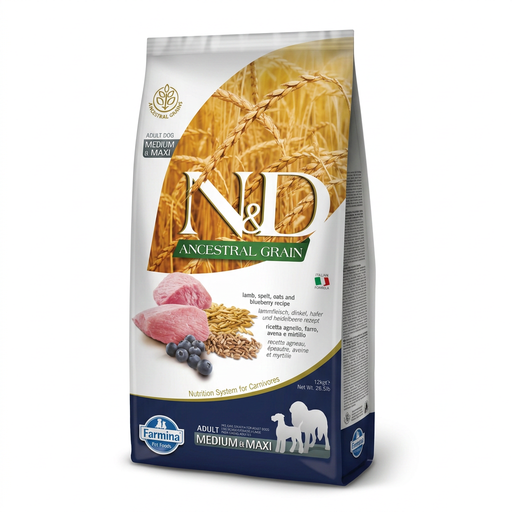
Why it suits this profile: This large pack is aimed at medium-sized and large adult dogs. The recipe combines lamb with spelt and oats rather than being grain-free.
The ingredients list makes it clear that this is not grain-free dog food. This means you can make an informed choice based on tolerance rather than relying solely on a packaging claim.
28% crude protein; 18% fat; lamb appears first on the ingredients list; glucosamine and chondroitin sulphate are listed separately.
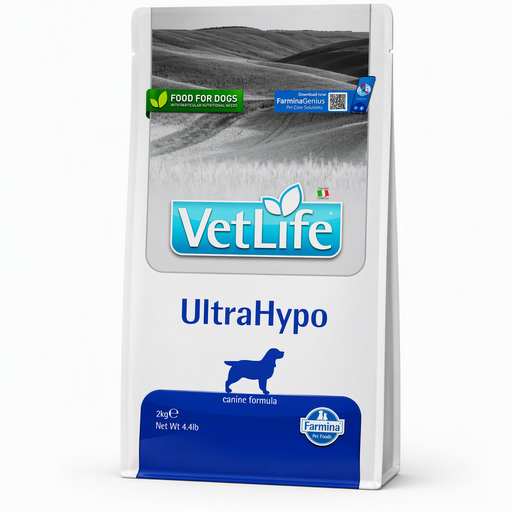
Why it suits this profile: This therapeutic food has a short ingredients list featuring hydrolysed fish protein and rice starch. Use this type of product only after consulting a vet.
The product description clearly identifies the protein and carbohydrate sources. This can help with a controlled food trial, but it does not replace veterinary advice.
Hydrolysed fish protein; 18% crude protein and 15% fat; 2 kg pack for a defined feeding period.
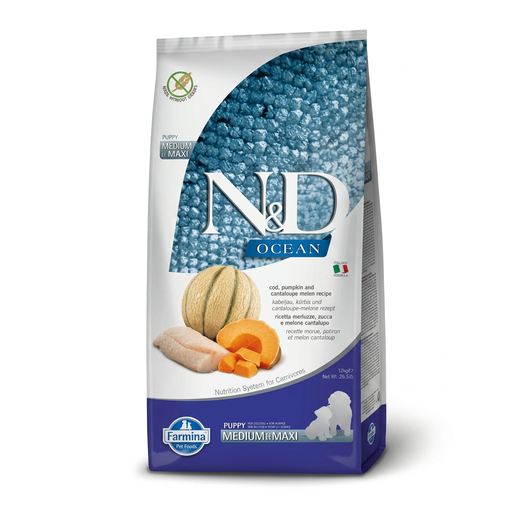
Why it suits this profile: This Farmina puppy food is tailored to medium-sized and large puppies. Cod, fish oil, sweet potato and pumpkin are listed in the composition.
The life stage and breed size are clearly stated. This helps you avoid choosing an adult recipe for a dog that is still growing.
Intended for medium-sized and large puppies; cod as the listed animal protein source; 12 kg contents.
Mix the new food gradually with the old food. A practical transition takes around seven to ten days: start with a small proportion of new kibble and increase it step by step. Keep an eye on your dog’s stools, appetite and body condition. If problems persist, it is advisable to consult a vet.
Store Farmina dry dog food in a cool, dry place. Seal the bag securely after each use and check the best-before date and batch information on the packaging. Always provide fresh drinking water and base the portion on your dog’s weight, age, activity level and the feeding guidelines for the specific product.
We have put together a complete, up-to-date list of products that fully meet these strict selection criteria and the applicable European safety regulations.
That depends on the individual dog and the recipe. Look at the protein source, fibre, grains and pulses. Any changeover should be gradual. If stomach or digestive problems keep recurring, a vet can determine whether therapeutic food such as Farmina Vet Life Gastrointestinal is suitable.
No. Grain-free is a compositional characteristic, not a general guarantee of quality. Some Farmina recipes contain spelt and oats. Choose grain-free only when it matches your dog’s nutritional needs or recommended diet.
This varies according to your dog’s weight, activity level and the product. A small dog uses fewer grams per day than a medium-sized or large dog. Divide the net weight by the daily portion shown on the label to estimate how long it will last. After opening, also check the storage advice and close the packaging carefully.
