
Vandaag of morgen in huis

Kwaliteit gegarandeerd

Welkomstaanbiedingen ontgrendelen: GRATIS bezorging | Tot 80% korting | Gratis 30 dagen JoyPlus-proefperiode
Download de app
Farmina dog food is available in a range of recipes, protein sources, breed sizes and pack sizes. This makes comparing products useful, but also challenging. An eye-catching package or claim such as “grain-free” does not automatically mean that the food is right for your dog.
The most important choice depends on your dog’s life stage, body size, activity level, ingredient tolerance and daily portion. Below, you’ll find what to look out for and which Farmina N&D dog food options may suit different situations.
A high percentage of crude protein may sound appealing, but it does not tell you everything about the recipe. Also check which ingredients appear at the top of the list and whether the product is intended as complete food. A recipe with chicken, fish or lamb listed among the first ingredients may be a different choice from a product in which the animal ingredients are less clearly specified.
Several Farmina N&D dog food recipes state that they contain a high proportion of animal protein. According to Farmina’s own product information, for example, N&D Prime Chicken Adult Mini contains 34% crude protein, with fresh chicken and dehydrated chicken listed as the first protein sources.
Grain-free dog food contains no grains, but it may still include other ingredients that a dog does not tolerate well. These could include chicken, fish, egg, peas or potato. “Grain-free” is therefore no guarantee of a trouble-free switch.
Read the full ingredients list and introduce a new recipe gradually. If your dog has persistent symptoms or a diagnosed dietary problem, it is advisable to consult a vet.
A 12 kg bag may seem good value, but not every dog eats the same amount. An active 35 kg dog consumes considerably more than a small 5 kg dog. Also check the best-before date, seal the bag properly and store the food in a dry place away from direct sunlight.
First choose between puppy and adult food. Puppy food has a different nutritional composition and is tailored to support growth. Farmina puppy dog food is available for small breeds as well as medium and large breeds.
For adult dogs, look out for the following designations:
The kibble size and recommended daily amount may vary between variants.
Don’t just look at the name on the front of the pack. Also check:
For example, N&D Prime Chicken Adult Mini states 34% crude protein and 18% fat. N&D Pumpkin Duck Adult Medi/Maxi states 32% crude protein and 18% fat. These are verifiable product specifications, but they do not by themselves determine which recipe is the best fit.
Some variants are designed around a particular nutritional profile. According to the product information, N&D Quinoa Digestion Adult Mini Lamb and N&D Quinoa Digestion Adult Medi/Maxi Lamb contain ingredients including quinoa, inulin, fructo-oligosaccharides, fennel, mint and artichoke. The brand associates these ingredients with digestive support.
According to Farmina’s own product information, N&D Quinoa Skin & Coat Adult Medi/Maxi Venison was developed with skin and coat care in mind and contains ingredients including venison, quinoa, linseed and fish oil. These are product claims, not medical guarantees. If your dog has skin problems, hair loss or recurring diarrhoea, a vet should assess the cause.
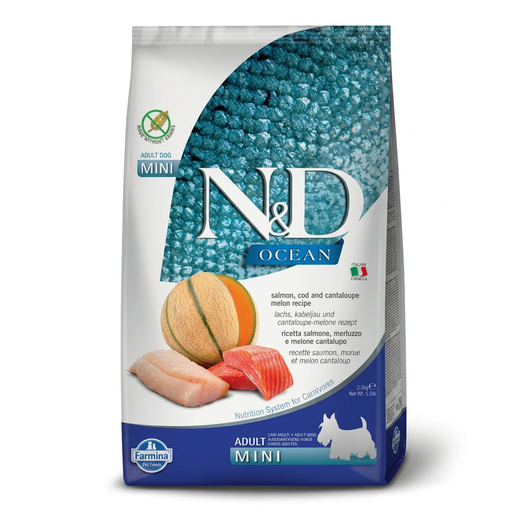
Why it suits this profile: A smaller bag is practical if you want to see how your small adult dog responds to a new recipe before committing to a larger pack.
You don’t buy a large stock straight away before you’ve had a chance to monitor acceptance and digestion.
For small adult dogs; 2.5 kg pack; salmon and dried salmon listed as ingredients; 32% crude protein.
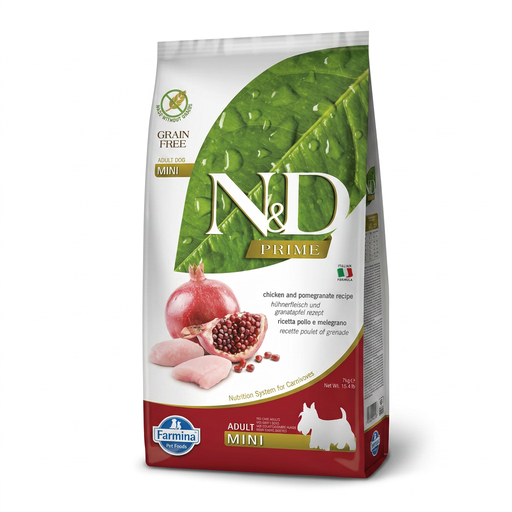
Why it suits this profile: This variant is a good choice for owners looking for a clearly specified chicken recipe for a small adult dog.
The product information lists specific protein sources and analytical values, so you don’t have to rely solely on the front of the pack.
34% crude protein; 18% fat; chicken and dehydrated chicken listed as the first ingredients; 7 kg pack.
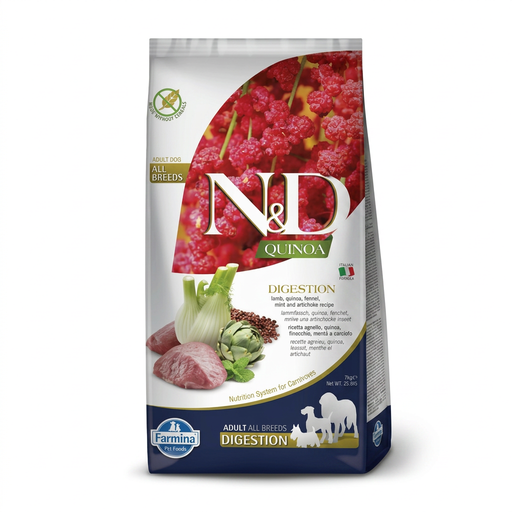
Why it suits this profile: An option for adult medium and large dogs whose owners take a considered approach to recipe selection and digestive health.
The variant has a clearly defined purpose and a full ingredients list, rather than relying solely on a general sensitivity claim.
25% crude protein; 12% fat; lamb listed as the animal protein source; quinoa, inulin and fructo-oligosaccharides in the recipe.
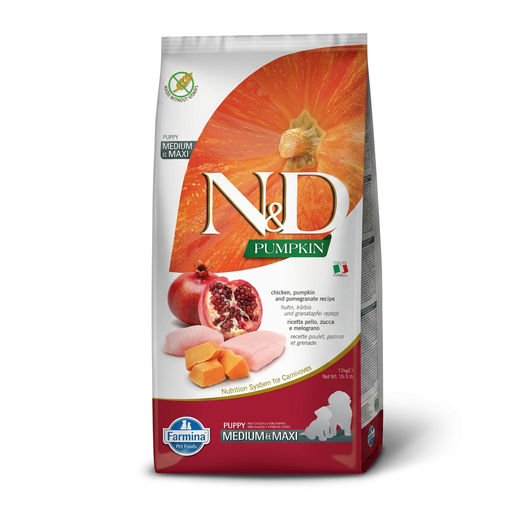
Why it suits this profile: Designed for puppies of medium and large breeds, with the daily amount adjusted according to age and weight.
The feeding guidelines are divided by age and weight. This helps prevent you from using an adult portion as your starting point.
34% crude protein; 20% fat; chicken listed as the main animal protein source; 12 kg pack.
We’ve put together a complete, up-to-date list of products that fully meet these strict selection criteria and the applicable European safety regulations.
Gradually mix the new Farmina dog food with your dog’s current food. A transition period of at least seven days is recommended for several variants. Start with a small proportion of the new food and increase it step by step. Don’t automatically stop the new food if your dog’s stools temporarily change, but contact a vet if symptoms persist or are severe.
Use the packaging as a starting point for the portion size. Adjust it according to your dog’s weight, age, activity level and body condition. Always provide clean drinking water. Farmina Vet Life dog food, such as the Kidney Formula or Ultra-Hypoallergenic Formula, is intended for specific dietary situations. It is best to use this type of diet food after consulting a vet.
According to Farmina’s own product information, some Farmina recipes have been developed with digestive health in mind, such as the N&D Quinoa Digestion range. This does not mean that every recipe will suit every dog. Check the ingredients, introduce the new food gradually and seek veterinary advice if symptoms keep coming back.
This depends on your dog’s weight and daily portion. A small dog may take several months to get through 7 kg, while a medium or large dog will use a 12 kg bag more quickly. Calculate usage using the feeding table on the packaging and store the bag in an airtight container.
Puppy food is intended to support growth and has different feeding guidelines from adult food. Farmina puppy dog food is also divided according to breed size. Only switch to adult food when your dog’s life stage and size make it appropriate.
