
Vandaag of morgen in huis

Kwaliteit gegarandeerd

Welkomstaanbiedingen ontgrendelen: GRATIS bezorging | Tot 80% korting | Gratis 30 dagen JoyPlus-proefperiode
Download de app
Farmina dog food is available in a wide range of varieties, from grain-free recipes with fish or meat to food for small dogs and veterinary formulas. This extensive choice is useful, but it can make selecting the right bag more difficult. Eye-catching packaging or a claim such as “natural” does not automatically mean the food is suitable for your dog.
When buying Farmina dog food, pay particular attention to your dog’s life stage, breed size, protein source and the purpose of the food. If your dog has kidney problems, food intolerances or gastrointestinal issues, it is important to consult a vet.
Grain-free dog food contains no grains, but that does not automatically make it suitable for every dog. Ingredients such as peas, chickpeas, potato or sweet potato are often used instead of grains. Always check the full composition, not just the front of the packaging.
A grain-free recipe may be suitable if you deliberately want to avoid grains or if your dog has previously reacted sensitively to a particular ingredient. If you suspect a food intolerance, a vet should establish the underlying cause.
A high protein percentage is not essential for every dog. An active adult dog may have different nutritional needs from an older or less active dog. As well as crude protein, look at fat, fibre, ash and the recommended daily amount.
For example, according to the product information, Farmina N&D Ocean Salmon Adult Mini contains 32% crude protein and 18% fat. The recipe is intended as complete food for adult dogs of small breeds. This is useful information, but you should always compare these values with your dog’s weight, activity level and condition.
Farmina Vet Life dog food is intended for specific nutritional situations. This includes kidney diets for dogs, oxalate formulas, gastrointestinal dog food and ultra-hypoallergenic formulas. These products are not simply a general variety of Farmina dog biscuits.
According to the product information, Farmina Vet Life Ultra-Hypoallergenic Formula is based on hydrolysed fish protein and rice starch. The manufacturer states that it is used as part of an elimination diet and recommends consulting a vet. Do not therefore use this type of food on your own initiative as a long-term solution.
Check whether the packaging is intended for puppy, adult or senior dogs. Also look at the category:
A small kibble may be more comfortable for a small dog, while a medium-sized or large dog will often need a different daily amount. The feeding guide on the packaging remains the key reference.
Pay attention to the first ingredients and check that the stated protein source actually appears in the composition. Farmina N&D Ocean Salmon Adult Medi/Maxi lists salmon, dried salmon protein, cod and dried cod protein, among other ingredients. The product information also states 30% crude protein and 18% fat.
Has your dog previously reacted to chicken, beef or another protein source? If so, choose a recipe with a different main source, but bear in mind that it may contain other animal-derived ingredients such as fish oil, chicken fat or dried egg.
For everyday feeding, choose a complete food that suits your dog’s age and size. There are separate recipes for specific needs:
When introducing a new food, switch gradually, usually over around seven days. This makes it easier to see how your dog responds to the change. Always provide fresh drinking water.
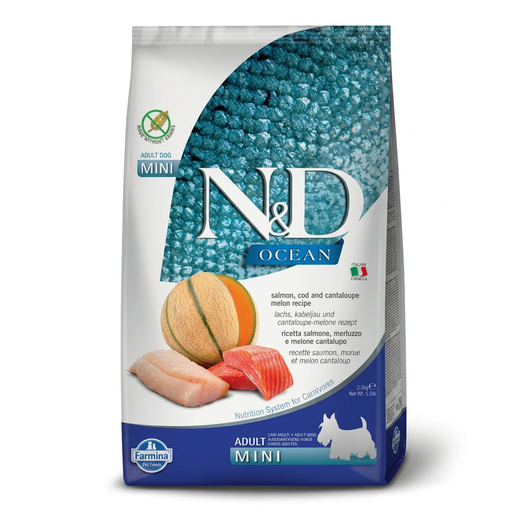
Why it suits this profile: A manageable 2.5 kg bag for owners who want to try Farmina first with a small adult dog.
The product information clearly states the target group, main protein, composition and analytical values. This means you do not have to rely on marketing terms alone.
Salmon as the main protein source, a grain-free composition, 32% crude protein and a size designed for small adult dogs.
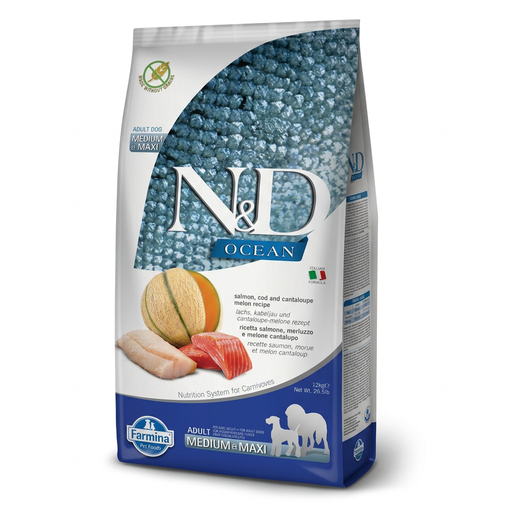
Why it suits this profile: A larger bag for households with a medium-sized or large adult dog that eats Farmina dog biscuits every day.
The fish species and percentages are listed in the product description. When your order arrives, always check the label, best-before date and current feeding guidelines.
With salmon and cod listed as protein sources, 30% crude protein, 18% fat and a 12 kg bag.
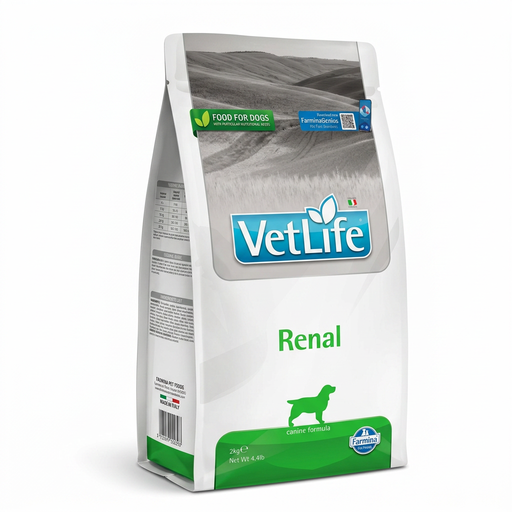
Why it suits this profile: For owners looking for a specific nutritional formula on a vet’s advice to support a dog with temporary or chronic kidney problems.
The product information states its purpose and protein source. Ask your vet to determine whether this composition and period of use are suitable for your dog.
Complete veterinary formula with potato, rice, dried egg and hydrolysed animal protein among its listed ingredients.
If you are looking for an alternative to fish, consider Farmina N&D Pumpkin Wild Boar Adult Medi/Maxi. According to the product information, this grain-free formula for medium-sized and large adult dogs contains wild boar, herring, pumpkin, peas and chickpeas.
For a small dog, Farmina N&D Pumpkin Series Lamb Adult Small Dog Food is an option containing 42% listed lamb ingredients and available in a size for small breeds. The product information also states that it is suitable for all life stages, so check the portion carefully for puppies and senior dogs.
There are also Quinoa formulas. Farmina Quinoa Coat Formula contains quail, quinoa, coconut and turmeric. Farmina Quinoa Digestive Lamb contains lamb, quinoa, fennel, mint and artichoke, among other ingredients. These compositions may be interesting if you are looking for one specific protein source or a different carbohydrate source, but “sensitive” does not automatically mean “hypoallergenic”.
For training or as a small reward, you can also choose a snack such as Rosewood Dog Salmon Fillet Strips Large. This is complementary food, not a replacement for a complete meal. According to the product information, the snack contains 97% salmon and is intended as a treat.
We have put together a complete, up-to-date list of products that fully meet these strict selection criteria and the applicable European safety regulations.
That depends on the composition and your dog’s specific reaction. Check the protein source, grains, fats and additional ingredients. If symptoms persist or you suspect an intolerance, consult a vet. According to the product information, a veterinary formula such as Ultra-Hypoallergenic should be used under supervision.
Gradually mix the new biscuits with your dog’s current food. A practical schedule is to use around 10% new food for the first two days, then gradually increase the amount until you have switched completely by around day seven. Adjust the pace if your dog reacts sensitively and provide fresh drinking water.
Store the bag in a cool, dry place, seal it properly after every use and follow the best-before information on the packaging. Ideally, use opened food promptly. A small bag can be useful when you first want to see whether your dog accepts the food well; a larger bag is often practical for medium-sized and large dogs.
