
Vandaag of morgen in huis

Kwaliteit gegarandeerd

Welkomstaanbiedingen ontgrendelen: GRATIS bezorging | Tot 80% korting | Gratis 30 dagen JoyPlus-proefperiode
Download de app
Anyone looking for Farmina cat food will soon come across a wide range of N&D options: dry and wet food, recipes with lamb or fish, formulas with pumpkin or quinoa, and packs ranging from 300 grams to 5 kilograms. This broad choice is useful, but it also makes comparing products more difficult. A recipe that suits an adult cat will not automatically be right for a kitten or neutered cat.
So do not focus only on terms such as “premium cat food” or “grain-free cat food”. Pay particular attention to your cat’s life stage, the full composition and the feeding guidelines on the packaging.
Grain-free means that a recipe contains no grains such as wheat, rice or maize. On its own, this says nothing about whether it is suitable for your cat. A grain-free recipe may still be high in fat or may not be appropriate for a kitten, neutered cat or cat following a specific feeding plan.
Always check that the label states that it is complete pet food and specifies which life stage it is intended for.
A high percentage of crude protein may sound appealing, but it is also important to consider the protein source and the rest of the nutritional analysis. Farmina N&D products often state that they contain a high proportion of ingredients of animal origin. This percentage comes from the manufacturer’s product information and should be considered alongside the ingredients list, fat content, fibre and moisture levels.
For example, a fish recipe may have a different energy density from cat food with lamb. Adjust the daily quantity according to the guidelines on the packaging.
A 5-kilogram bag can be practical for a cat that already eats the food happily. For a new flavour, a smaller pack is the wiser choice. This helps prevent waste if your cat rejects food containing herring, cod or wild boar.
When changing foods, a gradual transition over around seven days is standard practice. Start by mixing a small amount of the new food with the old food, then increase the proportion step by step.
First, choose the right product category:
If you are unsure about your cat’s weight, digestion or a medical condition, it is advisable to consult a vet. A brand’s nutritional claims are not a medical guarantee.
Check at least the following:
The Farmina N&D range includes various recipes with ingredients such as lamb, herring, cod, duck, quail, pumpkin and quinoa. According to the product descriptions, several variants are grain-free. Always check the current packaging before buying, as compositions may change.
A 300-gram tin is handy for trying a flavour or alternating with wet food. Once opened, the tin should be covered and stored in the fridge according to the product information, and used within the stated period.
Dry food in 1.5- or 5-kilogram packs is more efficient for everyday use, but requires a tightly sealed bag in a cool, dry place. A smaller bag is more suitable for households with one cat or for a cat that alternates between several flavours.
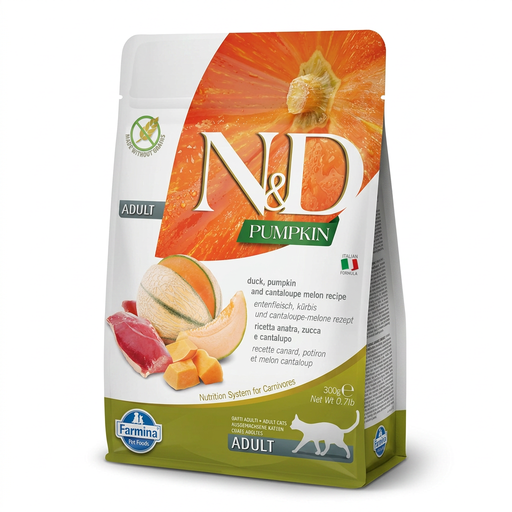
Why it suits this profile: A 300-gram pack reduces the risk of being left with a large supply if your cat needs time to get used to a new flavour.
The small size is suitable for testing whether your cat likes the food before you buy a larger pack. The product information lists duck, herring, pumpkin and a grain-free composition.
300 grams of wet food; complete food according to the product description; recipe with duck and pumpkin.
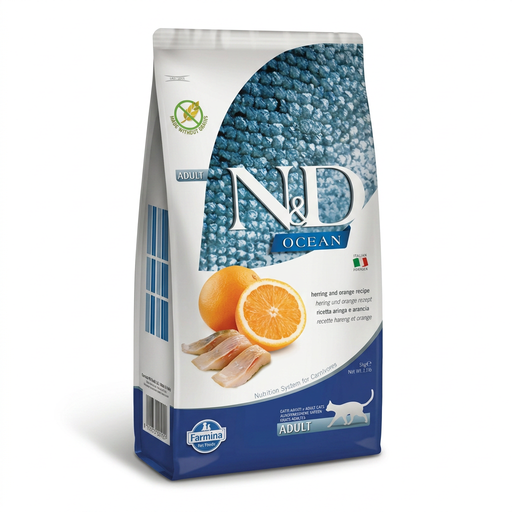
Why it suits this profile: For adult cats that eat a regular dry food with fish as their main source of animal protein, and for owners who find a larger pack more practical.
The product description clearly states 44% crude protein, 20% fat and a grain-free composition. This allows you to compare the recipe with other dry foods.
5 kg of dry food; herring as the main ingredient; DHA and EPA listed in the analytical data.
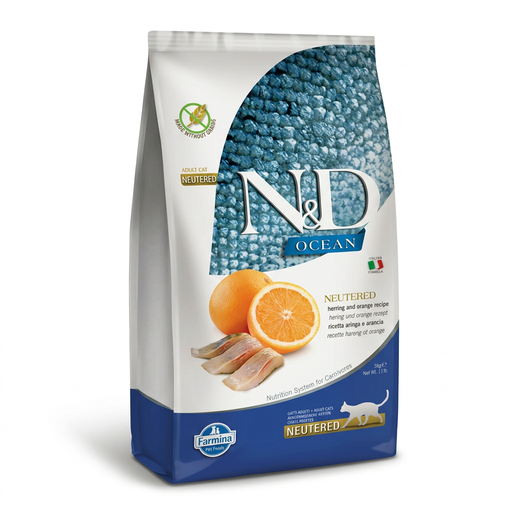
Why it suits this profile: Designed for households with an adult neutered cat that eats dry food every day, where portion control is important.
This variant is explicitly labelled for neutered cats. According to the product information, the recipe contains 46% crude protein, 11% fat and 5.1% crude fibre; always follow the feeding guide.
5 kg pack; herring as the main ingredient; clear analytical values for comparison.
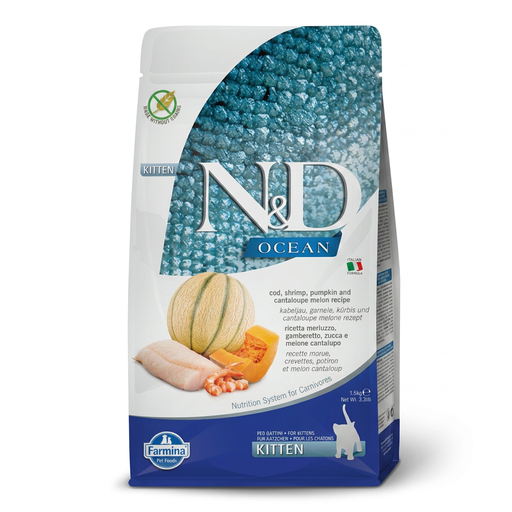
Why it suits this profile: A practical choice for kittens when you are looking for complete food to support growth and would prefer to start with a medium-sized bag.
The product information explicitly mentions kittens and a complete, balanced food. The recipe contains cod and dried cod; change over gradually according to the feeding instructions.
1.5 kg of dry food; cod as the main protein source; DHA and EPA listed in the product specifications.
We have put together a complete, up-to-date list of products that fully meet these strict selection criteria and the applicable European safety regulations.
That depends on the variant you choose. Products labelled as complete food for adult cats, kittens or neutered cats can be used as everyday food according to the product information. Always check the life stage and feeding guidelines on the packaging.
Gradually mix the new food into the existing food over around seven days. Start with a small proportion and increase it when your cat is accepting the food well. If digestive problems persist, it is advisable to seek advice from a vet.
Not every cat needs both types. Wet food generally contains a high level of moisture and can be used as a complete meal or for variety when this is stated on the label. A complementary product, such as a snack or topper, does not replace complete food. When combining wet and dry food, pay attention to the total daily amount.
