
Vandaag of morgen in huis

Kwaliteit gegarandeerd

Welkomstaanbiedingen ontgrendelen: GRATIS bezorging | Tot 80% korting | Gratis 30 dagen JoyPlus-proefperiode
Download de app
Summers are getting warmer, and the air in our homes isn't always as fresh as we'd like, especially for those with hay fever or living in a busy city apartment. A standard fan just circulates warm, dusty air, while a separate air purifier takes up extra space. The solution? A device that combines both functions. In this article, we'll help you make an informed choice for a fan with an air purifier that suits your needs.
The market offers many options. To cut through the marketing jargon, you can focus on a few key specifications.
A crucial metric for an air purifier for allergies is the CADR (Clean Air Delivery Rate). This figure, expressed in cubic metres per hour (m?/h), indicates how quickly the device can fill a room with clean air. A higher CADR means that pollen, dust mites, and fine particulate matter (PM2.5) are filtered out of the air more rapidly. For an average living room or bedroom, a CADR of around 250 m?/h is a good starting point.
No one wants to be kept awake by a humming appliance. A quiet fan for the bedroom is therefore essential. Manufacturers indicate the noise level in decibels (dB). A model that stays below 30 dB in night mode is generally considered whisper-quiet and won't disturb your sleep.
Modern devices offer more than just an on/off button. A fan with a remote control is practical, so you don't have to get out of bed. A smart fan that you can control via an app on your phone offers even more flexibility. This allows you to set schedules or adjust settings, no matter where you are.
Based on functionality and specifications, we have highlighted a few interesting models for you.
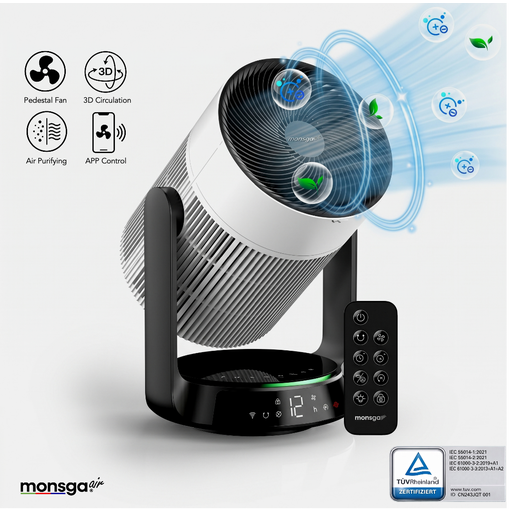
Why This Model Stands Out This device is a combination of a powerful air circulator and an effective air purifier. The unique 360-degree fan base, along with vertical and horizontal oscillation, creates a 3D airflow that moves the air throughout the entire room. This prevents stagnant, stale air and efficiently distributes the purified air.
According to the manufacturer, it has a CADR of 280 m?/h, making it suitable for quickly filtering allergens and fine dust. In sleep mode, the device produces a noise level of just 25 dB.
Pros
Who Is This For? For anyone seeking a complete solution for year-round comfort. Ideal for people with allergies or concerns about air quality who value silence, design, and smart control.
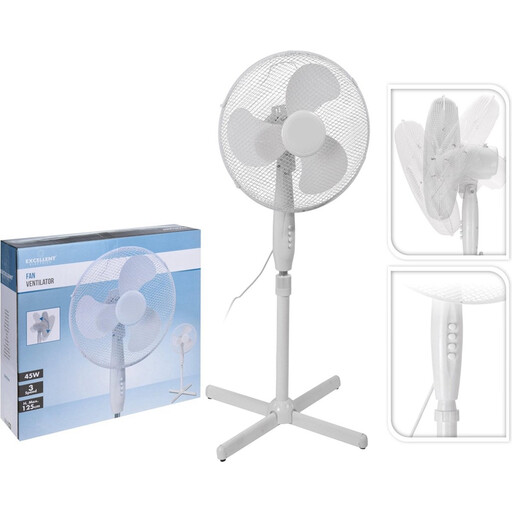
Why This Model Stands Out This is a no-nonsense pedestal fan that does what it's supposed to do: provide cooling. With a 40 cm diameter and a 45-watt power output, it delivers a powerful airflow. The height is adjustable up to 125 cm, and the oscillation feature ensures wide air distribution.
Pros
Who Is This For? For those primarily looking for an affordable and reliable fan for direct cooling in the living room, bedroom, or office, without the added function of air purification.
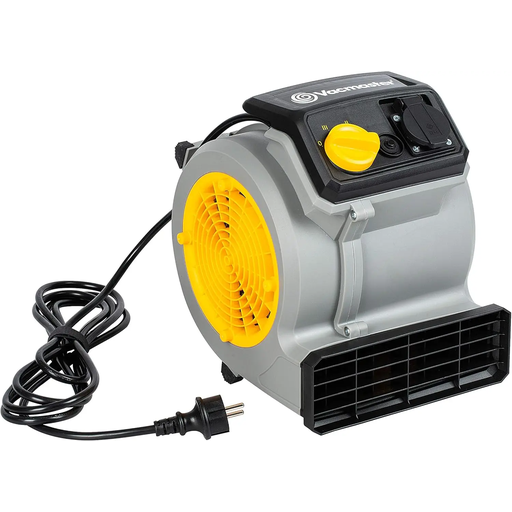
Why This Model Stands Out The Vacmaster is not a standard fan, but a powerful floor fan or air circulator. With a 124-watt motor and an airflow of 245 litres per second, this model is designed to move large volumes of air quickly. This makes it suitable not only for cooling but also for ventilation or drying spaces. A unique feature is the integrated power outlet, which allows you to daisy-chain multiple fans together.
Pros
Who Is This For? For those who need maximum air movement in larger spaces, or for practical applications like drying a damp basement or a freshly painted wall. Less suitable for a quiet bedroom due to its higher noise level.
The models above are intended for indoor use. Are you looking for a solution to stay comfortable on your patio or balcony on a hot day? Then check out our selection of portable outdoor misting fans for a refreshing mist.
A traditional fan creates a direct airflow that you feel when you're in front of it. An air circulator is designed to move all the air in a room. It does this by creating a concentrated beam of air that bounces off walls and ceilings, resulting in constant, gentle circulation. This helps to even out the temperature throughout the room.
A device with a built-in HEPA filter is designed to capture very small particles from the air, such as pollen, dust, and pet dander. By continuously filtering the air, the concentration of these allergens in an enclosed space can be reduced. This can provide relief for people suffering from allergies like hay fever. The effectiveness depends on the CADR rating and the size of the room.
For an undisturbed night's sleep, it is advisable to look for a fan that produces a noise level of less than 30 decibels (dB) on its lowest setting. Models that operate around 25 dB are often considered whisper-quiet and are ideal for use in the bedroom.
