
Sofa-lover who wants to feel the air
You want to direct the airflow from a suitable spot on or beside the sofa, with the option to switch on oscillation when needed.


If you mainly want a breeze by the sofa, look for a fan you can point towards that spot. If you want the air to reach other areas too, oscillation and an adjustable setup can be useful. Also check that the model can stand securely, and look at the airflow and noise level for the setting you plan to use. A fan moves air around, but it doesn’t replace ventilation that brings in fresh air and removes stale air, as Milieu Centraal explains.
You want to direct the airflow from a suitable spot on or beside the sofa, with the option to switch on oscillation when needed.
You also use the room to study or relax, and want to be able to adjust the airflow. Consumentenbond considers both noise and ease of use when assessing fans.
Your choice depends on having a clear, stable spot on a table or the floor, so consider the setup and how much space the fan needs.
First decide where you want the airflow to reach and how much space you have. Then compare the settings you’ll actually use, the noise level and the stated power consumption.
| What to consider | What to look for | Who it matters to |
|---|---|---|
| Airflow by the sofa | Check whether you can direct the fan head and whether its oscillation range suits where you sit. | I want to feel the air on the sofa without having to keep moving the fan. Around 36% of consumers make targeted airflow where they sit their main priority. |
| Noise while studying or relaxing | Compare the setting you’ll actually use; a noise level stated for the lowest setting doesn’t automatically apply to other settings. | When I’m studying or relaxing, I want to weigh the noise against the airflow that feels comfortable to me. Around 29% of consumers make quiet operation their main priority. |
| Space on a table or the floor | Measure the intended spot and check the dimensions, stability, and clearance needed for the fan head and cable. | I want to know in advance whether the fan will fit safely, with enough room beside the sofa. Around 21% of consumers make limited space their main priority. |
| Power use and features you need | Check the stated power consumption and which setting it applies to. Also see what’s included and whether you need any extra features. | If I use a fan regularly, I want to know the power consumption for my chosen setting and which extras I really need. Around 14% of consumers make power use and essential features their main priority. |
A fan moves air around the room, but it won’t remove stale indoor air on its own.
Use the fan to keep air moving, while ensuring you can still bring in fresh air and remove stale air.
The setting that gives you enough airflow may not be the lowest setting for which a noise level is stated. For example, Rowenta lists 32 dB(A) for the lowest setting of the VU2740F0; this is the manufacturer’s figure and doesn’t tell you how noisy it is on other settings.
Compare figures alongside the setting they apply to, and consider which one suits your distance from the fan and how you’ll use it.
The base, oscillating head and cable all need to fit in the space beside the sofa.
Measure the spot first and compare the available space with the model’s dimensions and setup.
The VE-5721 is a compact tabletop fan for directing air towards where you’re sitting. This describes this particular model, not the entire range.
Duux says the Whisper Flex² Smart can be set up as either a tabletop or pedestal fan, with horizontal and vertical oscillation.
The Turbo Silence Extreme+ VU2740F0 is a tabletop model worth comparing if you want to balance airflow against quiet operation on the lowest setting.
Meaco describes the MeacoFan 1056 as an air circulator with automatic horizontal and manual vertical adjustment.
This selection focuses on keeping air moving where you sit, with tabletop, pedestal and adjustable models. Check each model’s setup and adjustment options to see whether they suit your space.
 No image available
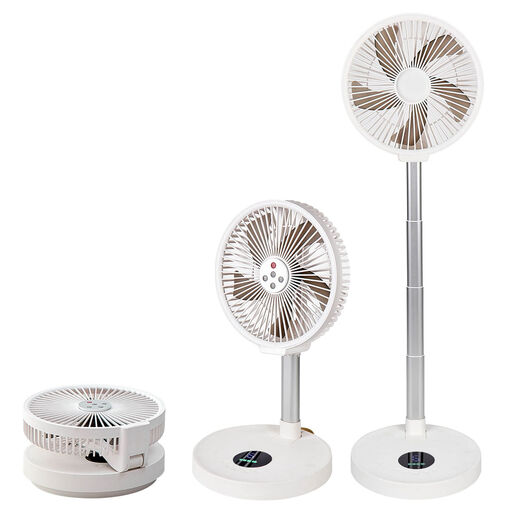
Worth considering if you want a foldable model that you can move between tabletop and floor use.
The product name lists six speeds, a timer, remote control and adjustable height. The battery has a capacity of 7200 mAh; it charges via USB-C, and the stated run time is up to 13.5 hours.
 No image available
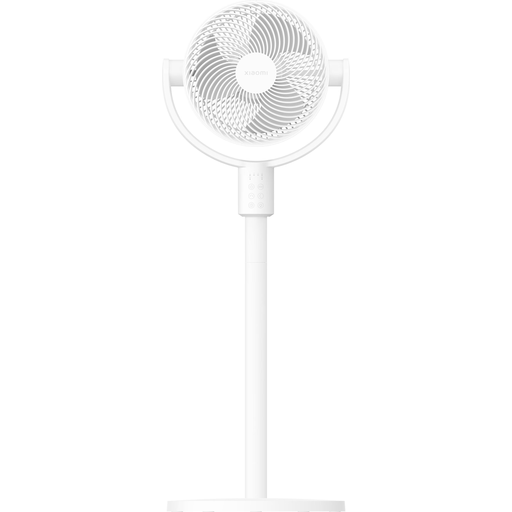
This pedestal model is worth considering if you want to direct air towards more than one spot. Check that its height and setup will fit in the space beside your sofa.
The product name lists 3D automatic oscillation, 100 speeds, two modes, app control and a DC inverter motor. It also lists an airflow of 1440 m³/h, a range of 13 m and a noise level of 28 dB in sleep mode.
 No image available
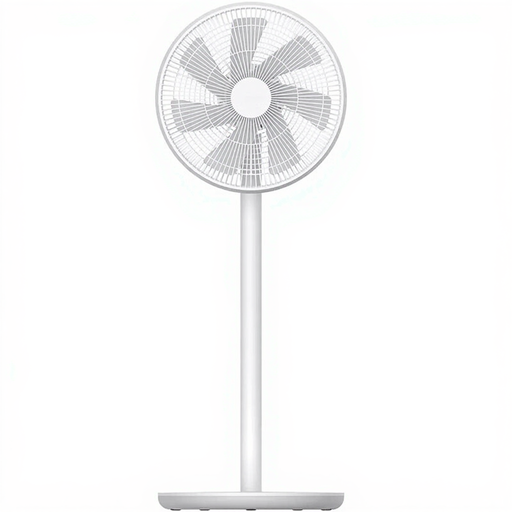
A pedestal model to consider if you want to distribute air from the floor. Check in advance that your available space suits its setup.
The product name lists app control, seven blades, 90° oscillation and adjustable height. It also states an airflow range of 12 m.
 No image available
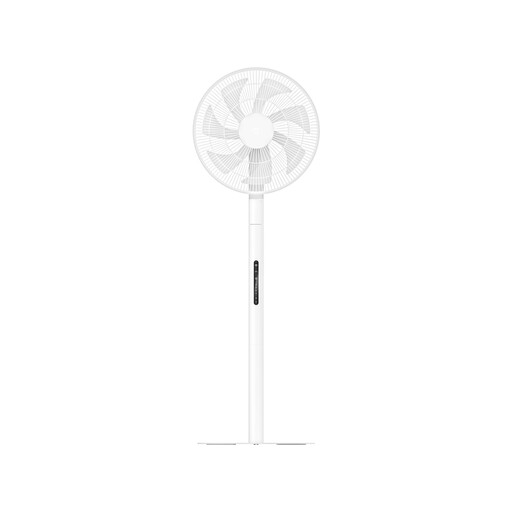
This pedestal model is worth considering if you want to adjust the airflow. Check that its height and intended position suit your room.
The product name lists control via app, remote and touch, a DC inverter motor, and support for portable charging via Type-C.
 No image available
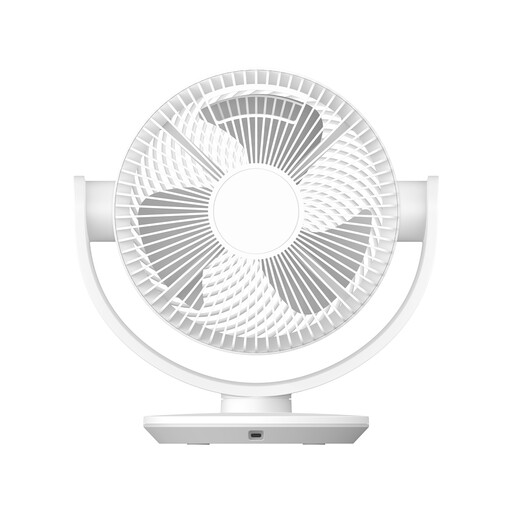
This tabletop model is suited to anyone who wants to place an air circulator on a surface beside the sofa.
Check the dimensions and make sure there’s enough clear space on the tabletop before choosing a spot.
No. A fan moves air around the room; ventilation means bringing in fresh air and removing stale air. Make sure the room’s existing ventilation options remain usable.
Choose a clear, stable spot where you can direct the airflow towards where you’re sitting and the fan head can oscillate. Measure the space and check the exact model’s dimensions and setup.
To calculate power use, take the power consumption for the setting you use in kW and multiply it by the number of hours you use it. The result is the consumption in kWh. A figure for one setting doesn’t automatically apply to all settings.
In the Netherlands, if a product is faulty, you can make a claim against the seller under the statutory guarantee. According to ACM ConsuWijzer, what you can reasonably expect depends on the product and the circumstances; a manufacturer’s guarantee doesn’t automatically end your statutory rights.
Electrical appliances must meet the product safety rules that apply to them. The Netherlands Food and Consumer Product Safety Authority states that CE marking is compulsory for products covered by the Commodities Act Decree on Electrical Equipment; which rules apply depends, among other things, on the rated voltage. CE marking alone is not an independent test of how a product performs in use.