
Anyone who wants a breeze by their chair
You’re looking for targeted airflow for one seat and don’t want a large appliance in the room. The Consumers’ Association describes desk and table fans as small and primarily intended for one person.


If you mainly want to feel a breeze yourself, a small, adjustable desk fan is a good fit for a stable surface beside your chair. If you also want to circulate air around the room, look for automatic horizontal and vertical oscillation. Check where you can place it and compare the noise at the setting you’ll actually need: a fan doesn’t make the room air cooler.
You’re looking for targeted airflow for one seat and don’t want a large appliance in the room. The Consumers’ Association describes desk and table fans as small and primarily intended for one person.
You want more than just a breeze by your chair: you also want air to circulate, and are comparing a tilting head with automatic oscillation. Rowenta describes the QV2540F1 as oscillating horizontally and vertically.
You’ll need to decide whether you have a stable table surface or whether a spot on the floor would be more practical. The Consumers’ Association recommends placing a fan on a stable surface.
First measure the space beside your chair, then decide whether you want the airflow directed mainly at you or circulating around the room too. A table fan is primarily intended for one person, according to the Consumers’ Association; Milieu Centraal notes that a fan doesn’t make the air cooler.
| What to consider | What should you check? | Who is this important for? |
|---|---|---|
| Targeted airflow | Check the tilt angle and speed settings, and whether the airflow reaches your chair at the height you want. | If you mainly want a breeze by your seat and don’t need air to circulate around the whole room. Around 31% of consumers give targeted airflow by the chair top priority. |
| Air circulation | Check whether the model only tilts manually or oscillates automatically both horizontally and vertically. | If you want air to circulate around a larger part of the room as well as around you. Around 25% of consumers prioritise circulating air around the room. |
| Stable positioning | Measure the available space and check the fan’s footprint, cable route and outlet height. | If a narrow walkway or limited space determines where you can put the fan. Around 25% of consumers start by considering the available stable space. |
| Noise in use | Where possible, compare the noise at the speed you need and from the distance you’ll be sitting. | If you use the fan close by while reading or relaxing. Around 19% of consumers prioritise a quiet spot by the chair. The Consumers’ Association measures noise at different speeds and distances. |
The airflow may feel cool, but it doesn’t lower the temperature of the air in the room. Milieu Centraal explains the difference between using a fan and cooling the air.
Choose a fan based on the airflow you want to feel, and don’t expect it to lower the room temperature on its own.
A quiet lowest setting won’t necessarily provide the airflow you need at your sitting distance. The Consumers’ Association measures noise and airflow at different settings and distances.
Compare noise alongside the airflow you need at the setting you’re likely to use.
A fan beside a chair needs to stand securely and mustn’t obstruct the walkway. The Consumers’ Association warns that a fan can topple if it’s knocked.
Measure the space and check the base, height and cable route before choosing a model.
Duux describes the battery pack for the Whisper Flex² as optional and distinguishes between the No Wi-Fi and Smart versions.
Check the exact version and what’s included in the box before counting on battery use or app control.
Philips describes the CX2050/00 as a table fan with a tilting head, designed to direct airflow from a surface.
Rowenta describes the QV2540F1 as a compact table fan with multi-directional oscillation.
According to Duux, the Whisper Flex² No Wi-Fi can be used as a table or pedestal fan, with adjustable horizontal and vertical oscillation.
BONECO describes the F100 as a compact table air circulator with three settings.
This selection includes compact clip-on and handheld fans for personal airflow by your chair, as well as standing models that can be used on a table or the floor for wider air circulation. A handheld fan is portable, but it isn’t the same as a fan that stands on its own beside your chair.
 No image available
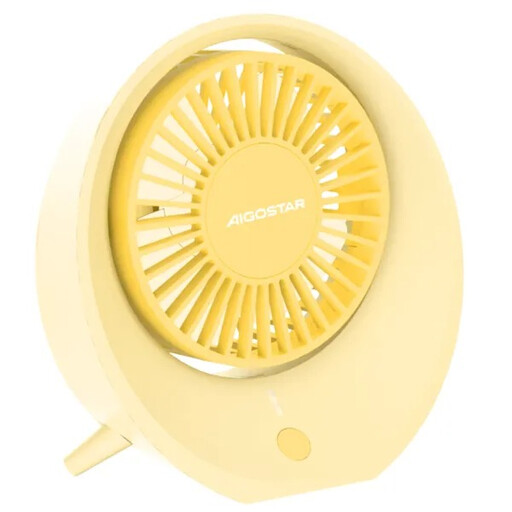
The clip-on fitting may work well if you have a suitable edge beside your chair to attach the fan to.
The product specifications list dimensions of 153 × 70 × 160 mm, a weight of 260 g and three adjustable speeds. The stated coverage area is 2 m².
 No image available
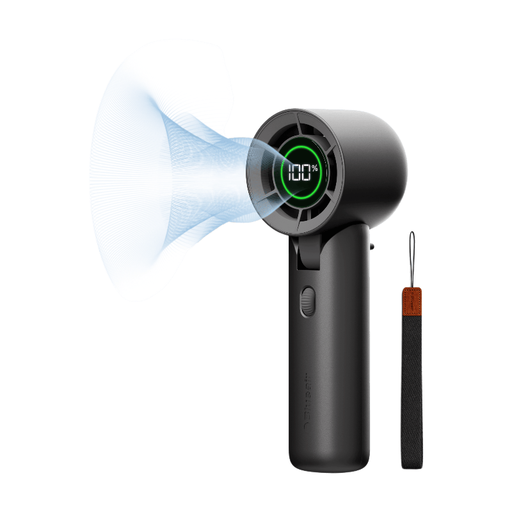
This is a portable handheld fan; the product description also mentions hands-free use on a desk.
The stated dimensions are 19 × 7 × 6,5 cm and the weight is 0,3 kg. The description mentions a head that adjusts forwards by up to 75°, speed settings from 0–100 and USB-C charging.
 No image available
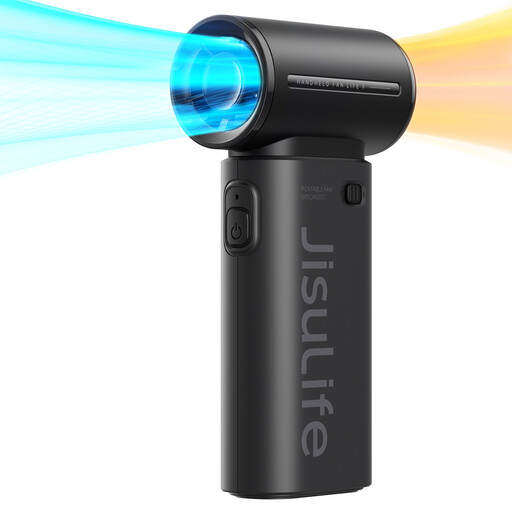
This portable handheld fan may suit you if you want a personal breeze, but it isn’t a freestanding table fan.
The description lists five speeds, a 5000 mAh battery capacity and USB charging. The stated dimensions are 3,3 × 6 × 11,9 cm.
 No image available
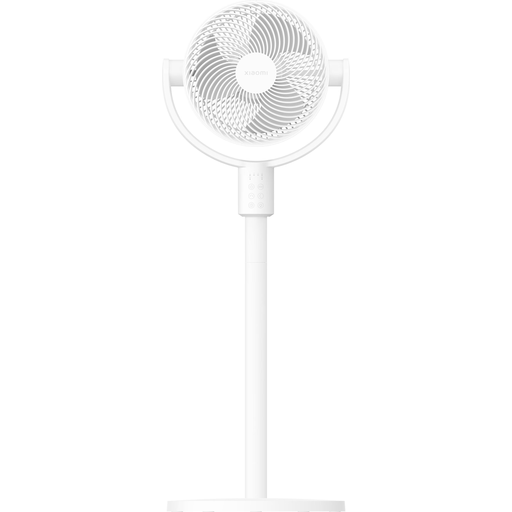
The description mentions both table and floor placement, which may be useful if you want to adjust the fan’s position around your chair.
The title lists 3D automatic oscillation, adjustable height, two modes and 100 speeds. The description mentions app control.
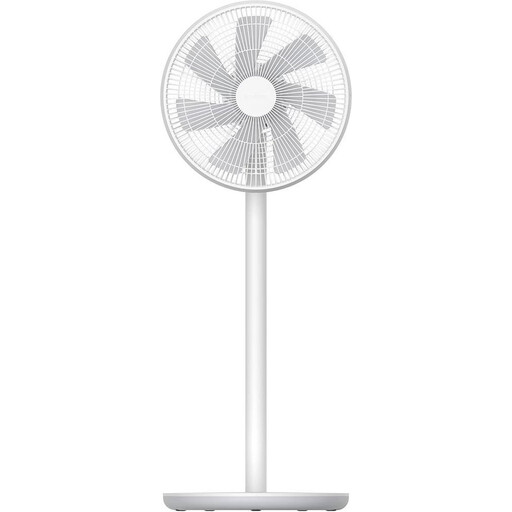 No image available
The description says it can be used as a table or floor fan, with automatic oscillation to circulate air around the home.
The product information lists 100 speeds and a maximum airflow of 20 m³/min. It also mentions control via the Mi Home app and adjustable speed.
No, a fan doesn’t lower the temperature of the air. According to Milieu Centraal, the airflow can still feel cooler against your body.
Place it somewhere stable where it’s unlikely to be knocked, and direct the airflow at the height you want while seated. The Consumers’ Association warns that taller fans are particularly prone to toppling; also make sure the cable doesn’t obstruct the walkway.
Check the manual for your exact model before cleaning the grille or blades. BONECO lists a removable blade cover for the F100; don’t assume other models have the same feature.
The regulations that apply depend on the product and its features. For low-voltage rules, the NVWA specifies a range of 50–1000 V AC and 75–1500 V DC. The European Commission lists ecodesign requirements for comfort fans with an electrical power of up to and including 125 W. A CE mark isn’t an independent performance test.
For online purchases from a business, you generally have a 14-day cooling-off period, according to the Dutch government. Before ordering, check the seller’s information and whether any applicable exception applies.