
Family with a large oven dish
Wants to cook vegetable lasagne in one dish, so checks that it fits in the oven’s usable interior space. The Consumers’ Association recommends comparing these measurements in advance.


First, measure your largest oven dish and compare its dimensions with the oven’s usable interior space. The capacity in litres alone won’t tell you whether the dish will fit. The Consumers’ Association recommends checking the dish’s dimensions against the oven’s internal measurements. Choose a built-in oven if your space and installation are suitable, or a freestanding oven if you don’t have a built-in cavity. A combination microwave is only an alternative if its features and capacity suit the way you want to cook.
Wants to cook vegetable lasagne in one dish, so checks that it fits in the oven’s usable interior space. The Consumers’ Association recommends comparing these measurements in advance.
Is looking for a freestanding fan oven and weighing up the worktop space available against the room needed to cook a family meal.
Already has a fitted kitchen and is comparing the cavity dimensions, usable interior space and cleaning options of a replacement model.
Suitable for: a kitchen with a suitable cavity and connection, when you want to keep the oven off your worktop.
Bear in mind: check the cavity dimensions and installation details for the exact model. Its stated capacity doesn’t guarantee that your dish will fit.
Suitable for: a kitchen without a suitable built-in cavity, provided there’s enough suitable worktop space.
Bear in mind: compare the external dimensions and placement instructions with the space available, and check the internal dimensions for your oven dish too.
Suitable for: anyone who wants to heat food quickly as well as bake, provided the specific appliance’s features suit how they plan to use it.
Bear in mind: the Consumers’ Association points out that combination microwaves sometimes lack a bottom heating element and have fewer shelf positions. Check this for the model you’re considering.
| What to consider | What to look for | Who should pay particular attention? |
|---|---|---|
| Will the family-sized dish fit? | Measure the dish’s width, depth and height, then compare them with the usable internal dimensions and shelf position. | I want to use my large oven dish for family lasagne in one go and know in advance whether it will fit; around 40% of consumers are primarily concerned about space for their dish. |
| Will this type of oven suit my kitchen? | For a built-in oven, check the cavity dimensions and installation instructions. For a freestanding model, compare the external dimensions and placement instructions with the space available. | Without a suitable built-in cavity, I want to know whether a freestanding appliance will fit on my worktop; around 30% of consumers prioritise where the oven will go. |
| How much energy does regular baking use? | Where available, compare the energy use per cycle for the relevant oven setting and choose a size that suits what you usually bake. | If I bake often, I want to factor in energy use without choosing a larger oven than I need; around 20% of consumers prioritise energy use. |
| How much effort will cleaning take? | Check the cleaning method and whether the manufacturer says any parts can be removed or washed. | After baking, I want to remove food residue as easily as possible; around 10% of consumers mainly choose an oven for ease of maintenance. |
The stated capacity alone won’t tell you whether your dish will fit; shelves and other parts can reduce the usable space.
Measure your dish and compare its dimensions with the interior space and shelf position of the exact model.
If your existing dish doesn’t fit, you may need a different or smaller oven dish.
For the Severin TO 2056, the manufacturer mentions both a fan function and technical specifications that say this function is not available. As a result, the information about this exact model is contradictory.
Don’t treat the TO 2056 as a confirmed fan oven until Severin has clarified the conflicting information for this model.
According to the Consumers’ Association, combination microwaves sometimes lack a bottom heating element and have fewer shelf positions.
If baking is your main use, check the specific model’s oven settings, shelf positions and space for your dish.
The Bosch HBA534EB3 is an example of a built-in oven with 3D Hotair.
The freestanding Inventum OV607B is an example of a fan oven with a stated capacity of 60 l.
The Princess 112754 is a freestanding fan oven with a stated capacity of 45 l.
The ETNA OM165ZT is an example of a built-in oven with turbo fan and a stated internal capacity of 65,63 l.
The Siemens HB478G0B6 is an example of a built-in oven with 3D hotAir and pyrolytic cleaning.
These models are built-in ovens with fan or convection cooking, for anyone with a suitable cavity who wants to use an oven dish.
 No image available
A built-in option for anyone looking for fan-assisted cooking and baking on multiple levels.
Stated capacity: 70 l; power: 3 kW. The product name lists a grill, pizza function, AquaClean steam cleaning, LED display with timer, ECO mode and energy rating A.
 No image available
A built-in model for anyone looking for fan cooking and a cleaning function.
Stated capacity: 66 l; five heating methods; 3D Hotair for baking on up to three levels; EcoClean Direct.
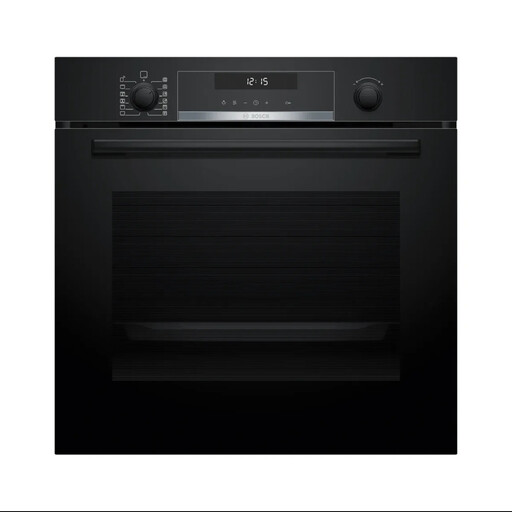 No image available
A built-in oven for anyone looking for 3D Hotair and pyrolytic cleaning.
Stated capacity: 71 l; stated interior dimensions: 357 × 480 × 415 mm. The product name lists an Air Fry function and Home Connect.
 No image available
A built-in model for anyone looking for 3D Hotair and cleaning functions.
Stated capacity: 71 l; 3D Hotair for baking on up to three levels; EcoClean Direct and Cleaning Assistance. The product name lists a width of 60 cm and energy rating A+.
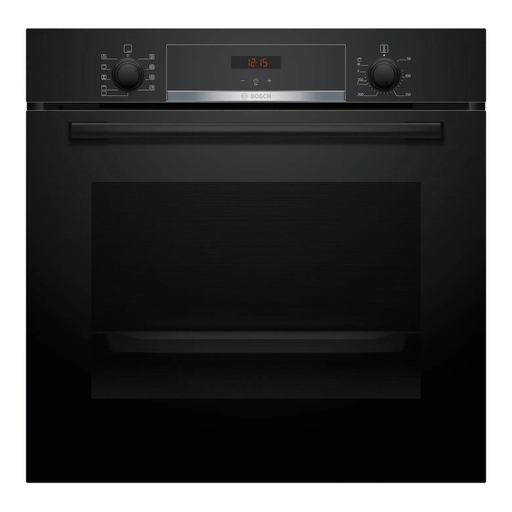 No image available
A built-in oven for anyone looking for convection and hydrolytic cleaning.
Stated capacity: 71 l; seven cooking programmes; grill function; hydrolytic cleaning.
You can’t tell from the capacity in litres alone. Measure your oven dish and compare its dimensions with the usable interior space; the Consumers’ Association points out that this can be smaller than the stated capacity.
According to Milieu Centraal, preheating usually isn’t necessary, although cooking may take a little longer. Follow the cooking instructions for your recipe and appliance.
The Netherlands Nutrition Centre advises cooling leftovers quickly, storing them covered in the fridge and not leaving them out of the fridge for more than two hours. Eat refrigerated leftovers within two days and reheat them thoroughly until piping hot.
According to ACM ConsuWijzer, the seller is responsible for the legal guarantee if a product breaks sooner than you could reasonably expect when used normally. There isn’t one standard fixed guarantee period that applies to every oven, and a manufacturer’s guarantee doesn’t replace your legal rights.