
Cooking for a crowd
You want to roast several portions in time to serve them together. So look at the usable tray space and how many batches you’ll need, not just the capacity in litres.


Start by considering how many portions you need and how many baking trays you want to use at once: an oven’s capacity in litres doesn’t tell you how many sweet potatoes will fit on a tray. The Consumers’ Association points out that an oven’s stated capacity may differ from its usable space. If you have a suitable housing unit, choose a built-in oven with an appropriate fan setting. If not, a freestanding model may be a better fit, but you may need to plan several batches. A claim that an oven can bake on multiple levels doesn’t prove that full trays will brown evenly.
You want to roast several portions in time to serve them together. So look at the usable tray space and how many batches you’ll need, not just the capacity in litres.
You’re looking for a freestanding oven and want to know in advance how much worktop space it will need, which trays will fit and whether you’ll need to cook in batches.
You want to choose the fan setting and shelf positions when using multiple trays. Check the instructions for the specific model to find out how.
| What to consider | What should you check? | Who is this important for? |
|---|---|---|
| Portions per batch | Compare the usable interior space and tray sizes with the amount you want to roast at once. | If you’re cooking for a crowd, you’ll want to know how many pieces will fit on the trays at once. Around 36% of consumers choosing an oven for this neighbourhood meal say that portions per batch are their top priority. |
| Roasting on multiple trays | Check the fan setting and the model-specific instructions for using multiple shelf levels at once. | If you want to cook on several trays, you’ll want to be able to adapt the oven setting and arrangement to your meal. Around 29% of consumers put predictable roasting first. |
| Fitting into your kitchen | For a built-in oven, measure the housing unit; for a freestanding model, check its external dimensions and installation instructions. | If your kitchen has limited space or no suitable housing unit, you’ll want an oven that can be placed where it needs to go. Around 21% of consumers make installation their top priority. |
| Cleaning and energy use | Check the cleaning method and compare energy information only for ovens where it applies, using the same basis for measurement. | If you roast regularly, you’ll also want to know how to clean the oven and compare its energy use. Around 14% of consumers prioritise maintenance and running costs. |
Shelves and trays take up space. So an oven’s capacity in litres doesn’t tell you how many pieces of sweet potato you can spread across the trays.
Plan your portions and compare the tray sizes with the usable interior space. You may need extra trays or have to roast in several batches.
A manufacturer’s claim about cooking on multiple levels isn’t a test using full trays of sweet potato, and doesn’t guarantee identical results on every shelf.
Check the manual for the right setting and tray arrangement, and try it out before the meal.
A built-in oven needs to fit the housing unit. A freestanding model needs a suitable spot that meets the installation instructions.
Compare the exact dimensions of the model with your kitchen before weighing up its features. The wrong size could mean kitchen alterations or an oven that can’t be installed.
Energy information and extra cooking functions don’t tell you how many trays will fit or how well sweet potatoes will brown.
Assess tray space and roasting settings separately. Compare energy information only when the models are covered by the same applicable rules and use the same basis for measurement.
The features mentioned apply to specific models and versions; they are not a general assessment of an entire brand.
Built-in models such as the HBA534BS3 may be worth considering if you have a suitable housing unit and want to use several shelf levels.
The OV607B is freestanding, while the IOM6072RK is a built-in model. Which type is right for you depends on your kitchen.
The built-in O560ZWA may suit you if you have a suitable housing unit and want to take the stated interior capacity into account.
The OP956ZG and MO470ZT offer different features to suit different kitchen needs.
This Joybuy selection includes freestanding and built-in ovens with a fan function. Compare the tray space with your portion plan and check that the oven can be installed in your kitchen. The Netherlands Food and Consumer Product Safety Authority (NVWA) states that CE marking is required for electrical products covered by the Commodities Act Decree on Electrical Equipment; the low-voltage rules described apply to a nominal AC voltage of 50 V to 1,000 V. Check the version being offered. CE marking doesn’t prove a specific baking performance.
 No image available
This freestanding oven is an option if you’re not looking for a built-in model; check how many trays will fit for your neighbourhood meal.
The product description lists a 65-litre capacity, a turbo fan and four shelf positions. Check which baking tray comes with the version being offered.
 No image available
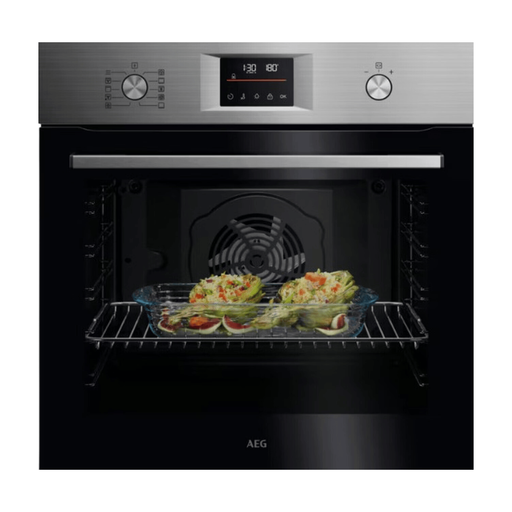
This built-in oven may suit you if you have a suitable housing unit and want a fan function; measure the housing unit and check the tray space.
The product information lists convection cooking, a 72-litre capacity, five shelf positions and pyrolytic cleaning. The number of shelf positions alone doesn’t tell you how full trays will turn out.
 No image available
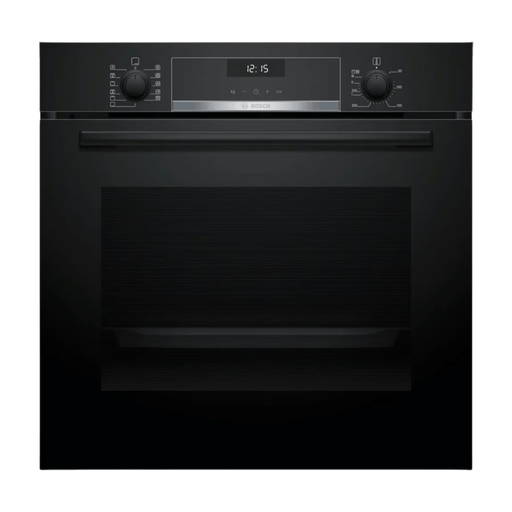
This built-in oven may suit you if you have a suitable housing unit and want to use multiple levels; check the recommended tray arrangement.
The product information lists a 71-litre capacity, 3D Hotair for up to three levels and Air Fry. These features aren’t an independent test using full trays of sweet potato.
 No image available
This compact freestanding oven may suit you if you’re looking for a countertop model; check that the available tray space is enough for the amount you want to roast.
The product description lists a 30-litre capacity, a fan function and an adjustable temperature range of 100 °C to 230 °C.
 No image available
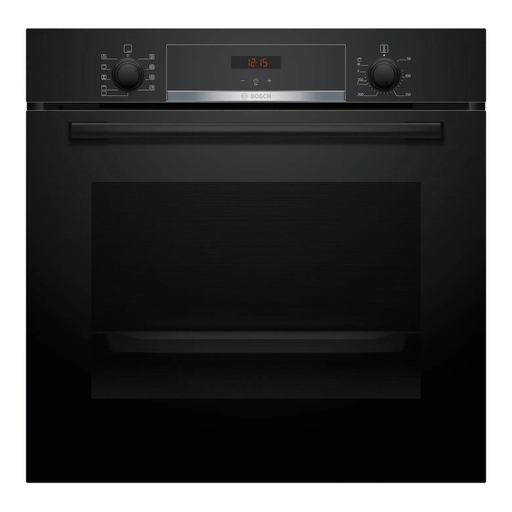
This built-in oven may suit you if you have a suitable housing unit and want to consider cooking on multiple levels; check how many trays will actually fit.
The product information lists a 71-litre capacity, convection and 3D Hotair for up to three levels. This isn’t an independent measurement of how evenly full trays brown.
First decide how many portions you want to make and how you’ll arrange the pieces on the trays. Then measure the trays and usable interior space; the Consumers’ Association points out that an oven’s stated capacity may differ from its usable space. Don’t use the capacity in litres to work out a fixed number of portions.
Check the manual for the exact model for instructions on using multiple levels at once. ETNA recommends the fan setting when baking on multiple levels; this doesn’t guarantee that every full tray will brown identically.
No, the number of shelf positions alone doesn’t tell you how many pieces will fit on the trays. Check the tray sizes, usable interior space and instructions for your chosen arrangement.
According to the Netherlands Food and Consumer Product Safety Authority (NVWA), CE marking is required for electrical products covered by the Commodities Act Decree on Electrical Equipment. The low-voltage rules described apply to electrical equipment with a nominal AC voltage of 50 V to 1,000 V; check whether the rules apply to the version being offered. A CE mark says nothing about the roasting results.
Not necessarily. The European Commission states that small and portable ovens are outside the scope of the energy labelling rules for household ovens. First check whether the specific model falls within that scope, and compare energy information only on the same basis for measurement.