
Baking for a large group
You want to know whether a large tart tin, or more than one dish, will fit in the oven. The Consumentenbond recommends comparing the internal dimensions with those of your largest oven dish.


First, measure your tart tin and compare it with the usable interior space: the stated capacity in litres does not prove that the tin will fit, the Consumentenbond points out. Choose a built-in oven if you have a suitable housing space, a freestanding model if you have a spot available, or a combination microwave if you also want to reheat food and the model has a suitable oven function. A larger oven is not automatically the most energy-efficient choice: Milieu Centraal says that a large oven can use around 20% more energy than a medium-sized oven when cooking a single dish.
You want to know whether a large tart tin, or more than one dish, will fit in the oven. The Consumentenbond recommends comparing the internal dimensions with those of your largest oven dish.
You’re looking for a freestanding oven with the right oven settings and a suitable spot in your kitchen. Check both the external dimensions and the usable interior space.
You want to reheat and bake with one appliance, so you’ll need to check that its oven function and interior space are suitable for your tart tin.
Measure your tart tin and check the internal dimensions and shelf positions. The capacity in litres alone won’t tell you whether it will fit, according to the Consumentenbond.
| What to consider | What to look for when buying | Who is this important for? |
|---|---|---|
| Tin size and oven space | Measure the tin and compare it with the internal dimensions and shelf positions; check there’s room for the number of dishes you plan to cook. | For a get-together, I want to be sure my tart tin will fit. Around 36% of consumers prioritise fit and oven space. |
| Oven settings | Check whether the model has a separate fan setting and which top- or bottom-heat settings are available. | When I bake a savoury tart, I want to be able to match the settings to the recipe. Around 29% of consumers give suitable baking functions top priority. |
| Space and combination use | Compare the appliance or housing dimensions with the space available; for a combination microwave, also check whether the tin will fit inside. | If I want one appliance for reheating and baking, the space in my kitchen matters too. Around 21% of consumers prioritise kitchen space and combination use. |
| Energy use and additional costs | Don’t choose a larger oven just for this occasion; compare energy information only when it’s available on a like-for-like basis, and check the installation requirements. | I want enough baking space without choosing a larger appliance than I need. Around 14% of consumers give the most weight to energy use and additional costs. |
The stated capacity isn’t the same as the usable space. So the tin may not fit, even if the number of litres suggests it should.
Measure the tin and compare its dimensions with the interior space and shelf positions of the exact model.
Available functions and shelf heights vary by model. The Consumentenbond notes that combination microwaves often don’t have bottom heat.
Check the oven settings and space for your tin on the specific model. Follow the recipe and the instruction manual for the temperature and cooking time.
The European Commission excludes small and portable ovens from the scope of the energy labelling rules for household ovens.
Compare energy information only when it applies to that type of oven and is presented on a like-for-like basis.
A suitable housing space and the installation requirements are separate things to consider when choosing a built-in model.
Check the housing dimensions, installation instructions and any installation requirements before choosing a model.
Bosch states that its HBA534BB3 built-in oven has a capacity of 71 l, 3D Hotair and top and bottom heat.
Inventum describes the OV607B as a 60 l freestanding oven and the MN327CB as a combination microwave with a stated capacity of 32 l.
Severin describes the TO 2058 as a 42 l baking and toast oven with fan cooking and top and bottom heat.
The BS7700T has a stated capacity of 72 l, fan cooking, bottom heat and steam support.
This selection includes built-in ovens, a freestanding gas oven and combination microwaves. For each model, check that the oven function and interior space are suitable for your tart tin and recipe.
 No image available
Check the internal dimensions and your tin before choosing; the stated capacity alone doesn’t confirm that your tart tin will fit.
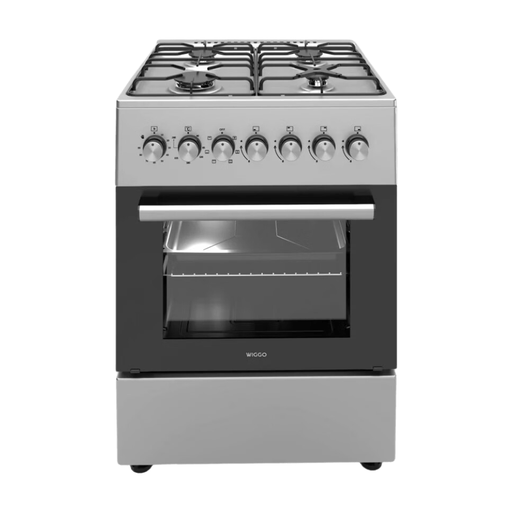
The product name lists 70 l, 60 cm and 3 kW.
 No image available
Check that the oven function is suitable for the recipe and that the appliance will fit in the space available.
The product name lists a 60 cm freestanding gas oven. According to the product information, installation and connection to the gas supply must be carried out by a professional technician.
 No image available
A combination appliance may suit you if you also want a microwave function; measure your tart tin and check the oven space available.
The product name lists grill and fan functions and a capacity of 20 l.
 No image available
A built-in model may suit you if you have a suitable housing space; also compare the internal dimensions with your tart tin.
The product name lists 71 l and 3D Hotair.
 No image available
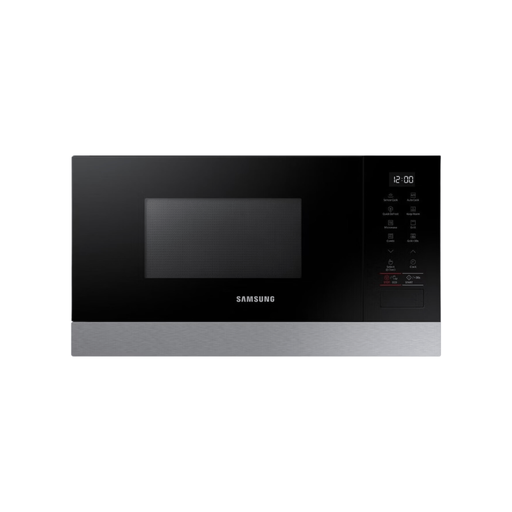
Before baking, check that the oven function and available space are suitable for your tart tin.
The product name lists 22 l, a ceramic interior and 900 W.
No, the capacity in litres alone won’t tell you whether your tin will fit. The Consumentenbond recommends comparing the internal dimensions with those of your largest oven dish.
Yes, if the model you choose has a suitable oven function and the tin fits inside. According to the manufacturer, the Inventum MN327CB has an oven function that can be used independently; don’t assume every combination microwave has the same settings.
The Voedingscentrum gives general storage guidance for leftovers: 2 days in the fridge and 3 months in the freezer. This is general advice about leftovers, not an oven specification.
Not necessarily: the European Commission excludes small and portable ovens from the scope of the energy labelling rules for household ovens. The absence of such a label does not, in itself, prove that a compact model is being sold unlawfully.
According to the Dutch government, when you buy as a consumer, you’re entitled to a product that is fit for purpose. The Netherlands has no fixed statutory two-year warranty period, and the seller is your point of contact if there’s a fault. For online consumer purchases, a 14-day cancellation period generally applies, subject to statutory exceptions.