
Occasional biscuit baker
You want to bake a modest batch without needing a built-in oven. Tray size, straightforward baking settings and a safe spot on the worktop matter more than a large oven capacity.


For the occasional small batch of shortbread, a freestanding fan oven may be suitable, as long as the baking tray and required clearance are right for the job. If you regularly want to bake on several trays at once, consider a built-in oven with an explicit multi-level baking function. Always check the usable tray dimensions, oven settings and accessories included.
You want to bake a modest batch without needing a built-in oven. Tray size, straightforward baking settings and a safe spot on the worktop matter more than a large oven capacity.
You regularly make a larger batch of biscuits and want to know whether suitable baking trays can be used on separate levels.
You need to weigh up the worktop space available, a suitable built-in oven cavity and, perhaps, an appliance that can also be used as a microwave.
| What to consider | What should you check? | Who is this important for? |
|---|---|---|
| Baking tray and batch size | Measure the oven interior and baking tray, and allow for the size of your biscuits and the space between them. Koopmans’ shortbread recipe leaves around 3 cm between slices of dough. | If I want to bake enough biscuits for a lunchbox in one batch, I focus on the usable tray space. Around 33% of consumers prioritise a suitable baking tray and batch size. |
| Oven setting and temperature | Check for a separate fan setting and an adjustable temperature. For its own shortbread mix, Koopmans recommends 170 °C for conventional electric baking or 150 °C with the fan setting; these are not universal settings. | If I want to follow the recipe closely, I need to be able to select the right setting and temperature. Around 25% of consumers prioritise control over the baking settings. |
| Where it will go in your kitchen | Compare the external dimensions and required clearance for a freestanding model, or the cavity dimensions and connection requirements for a built-in oven. Follow the instructions for the exact model. | If my worktop space is limited or I want to use an existing cavity, the oven needs to fit safely on the worktop or in the built-in space. Around 25% of consumers consider positioning the most important factor. |
| Energy use and accessories | Compare the available energy consumption per baking session on a like-for-like basis and check how many compatible baking trays are included. Don’t confuse the manufacturer’s warranty with your statutory rights. | If you bake regularly, you’ll want to know how much energy the oven uses and whether the trays you need are included. Around 17% of consumers prioritise energy use and after-sales support. |
The usable space may be smaller than the stated capacity, and biscuits also need room on the baking tray. A larger capacity doesn’t tell you how many biscuits will fit on one tray.
Measure the oven interior and tray, then compare them with the size of your biscuits and the space they need between them.
A small tray may mean you need to bake extra batches or find a compatible tray separately.
According to the Dutch Consumers’ Association, combination microwaves often lack bottom heat or multiple shelf positions. So the term ‘fan’ on its own doesn’t tell you what a model can do for baking.
Check the oven settings and the usable tray or rack supplied with the specific model.
The European Commission excludes small and portable ovens from the scope of the specific EU energy-labelling rules for domestic ovens. The absence of a label doesn’t, by itself, tell you how much energy an oven uses.
Compare the available energy consumption figures for similar cooking tasks, if they’re available for the models you’re considering.
A multi-level baking function doesn’t automatically mean that all the baking trays you need are included.
Check the full model number to see how many levels the oven supports and which accessories come in the box.
If there aren’t enough compatible trays included, you may need to buy them separately.
The freestanding OV457B is an example for anyone who doesn’t want to use a built-in oven cavity.
The TO 2058 is a freestanding alternative with a fan setting and separately usable top and bottom heat.
The HBA534BS3 built-in oven may be worth considering if you have a suitable cavity and want to bake on several levels.
The KOFCH20H built-in oven is an option to explore if multiple baking levels and included trays are important to you.
This selection includes built-in ovens, a combination microwave and a freestanding baking appliance for anyone who wants to bake using a fan setting. Check that each model’s oven settings, dimensions and included accessories suit your batch size and kitchen.
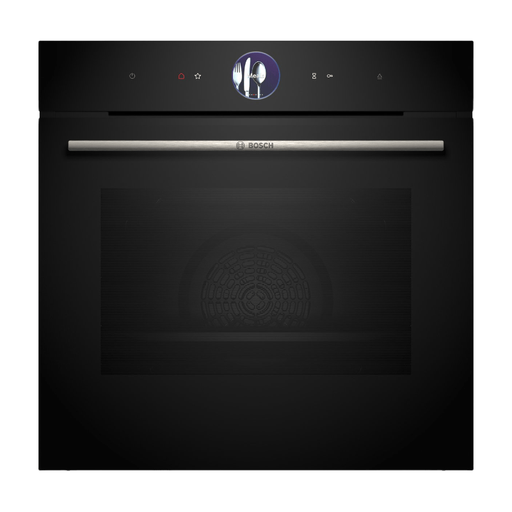 No image available
Could suit you if you’re looking for a built-in oven with a baking function; check that its specific features work for your recipe.
The product title lists a 60 × 60 cm size and an Air Fry function. The product description mentions 21 heating systems, including a fan function, and an enamelled baking tray.
This is a built-in model; the description says it should be installed by a qualified electrician.
 No image available
Could suit you if you want microwave and grill functions as well as a baking function; check that the oven setting and tray are suitable for your biscuits.
The title lists a 25-litre capacity and a silver finish. The description mentions convection, adjustable temperatures from 110–210 °C and a baking tray included.
 No image available
Could suit you if you’re looking for a built-in oven and want to bake on several levels; check the installation requirements and the trays you’ll need.
The product title lists a 71-litre capacity. The description mentions a 3D fan function and baking on up to three levels at once.
This is a built-in model; the description says it requires professional installation.
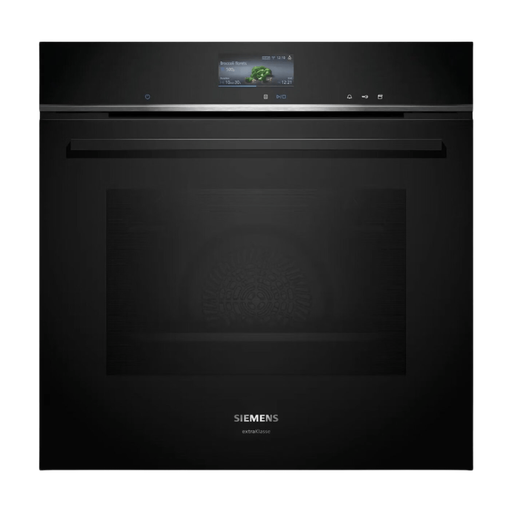 No image available
Could suit you if you’re looking for a built-in oven with a multi-level baking function; check which trays are included.
The product title lists a 60-litre capacity. The description mentions a 4D fan function for baking on four levels.
The description says it should be installed by a qualified electrician.
 No image available
Could suit you if you’re looking for a freestanding appliance with a baking function; check that it will fit on your worktop.
The title lists a 30-litre capacity and 21 programmes. The description mentions a baking programme and an adjustable temperature range of 30–230 °C.
Keep the appliance away from flammable materials while in use and clean the interior after use, as stated in the product description.
No. Follow the setting and temperature in the recipe you’re using, and check what your oven allows you to select. For its own shortbread mix, Koopmans recommends 170 °C for a conventional electric oven or 150 °C with the fan setting. Don’t automatically use these temperatures for other doughs.
Follow the positioning and connection instructions for the exact model. The Inventum OV457B manual warns that accessible parts can get hot and says to use oven gloves when putting food in or taking it out. For another oven, follow its own manual.
No. According to the Dutch government, there is no fixed statutory guarantee period in the Netherlands. What you can expect depends, among other things, on the product, its price and the sales information. If a product is faulty, contact the seller. A manufacturer’s guarantee is in addition to your statutory rights.
No. The European Commission lists small and portable ovens as being outside the scope of the specific EU energy-labelling rules for domestic ovens. Don’t assume that the lack of an energy label on these models means their energy use is low or high; compare available consumption figures on a like-for-like basis.
Let the biscuits cool, then store them somewhere dry in an airtight container. The Netherlands Nutrition Centre advises keeping biscuits in a cool, dry, dark place. For a school lunch, it recommends choosing mainly foods from the Dutch Wheel of Five; a biscuit isn’t a substitute for a balanced lunch.
CE means the manufacturer declares that the product meets the relevant EU requirements; it isn’t an independent assessment of baking performance. When considering an offer, also check the product identity, connection requirements and instructions for use.