Who is this oven-buying guide for?

Workshop hosts catering for larger groups

You want to roast the planned quantity of carrots in as few batches as possible, so you’re comparing baking trays, usable space and shelf levels. Recipe advice from Albert Heijn Allerhande and information from the Consumentenbond can help you look beyond capacity in litres when making your choice.

Workshop hosts without a built-in cabinet cavity

You’re looking for a freestanding fan oven that fits the available workspace with the tray you need, and can be used in line with the placement instructions. The fire service recommends allowing for heat dissipation and ensuring you have a suitable electrical connection.

Workshop hosts with a fitted kitchen

You can install a built-in oven and want to weigh up cabinet dimensions, the electrical connection, controls and post-workshop cleaning, as well as the usable tray space. For built-in ovens, the Consumentenbond recommends considering the space available and how practical the oven will be to use.

What should you look for in a fan oven for carrots?

Compact freestanding oven

Best for: roasting smaller portions in batches when you don’t have a suitable built-in cabinet cavity.

Bear in mind: a smaller baking tray may mean extra batches, so measure the usable tray space.

Larger freestanding oven

Best for: cooking more carrots per batch when you have enough worktop space and don’t want a built-in model.

Bear in mind: check how many suitable trays will actually fit, and follow the instructions for positioning, ventilation and connection.

Built-in fan oven

Best for: a workshop kitchen with a suitable cabinet cavity, for example if you want to use different shelf levels.

Bear in mind: compare the full installation dimensions and compatible baking trays. A manufacturer’s claim about using several levels doesn’t prove that carrots will roast evenly on every tray.

What to consider What to look for when buying Who is this important for?
Quantity per batch Work out your portions and compare tray sizes, internal dimensions, included trays and usable shelf levels. If I’m cooking carrots for a group and want to avoid unnecessary batches, I prioritise the baking area. Around 36% of consumers say the quantity per batch is their top priority.
Positioning and electrical connection Measure the worktop space or the full cabinet cavity, and check the model’s positioning instructions, ventilation clearance and electrical connection. If I’m not sure whether an oven will fit safely on my worktop or in the existing cabinet cavity, I check before choosing. Around 29% of consumers prioritise positioning and the electrical connection.
Keeping an eye on the cooking Check the fan setting and included trays, and whether you can access the trays during cooking. If I want to use several trays, I need to know how I can turn the carrots and whether the trays need swapping around. Around 21% of consumers say control over cooking is their top priority.
Use and cleaning Where possible, compare energy use per cycle on a like-for-like basis, and check how the oven and trays can be cleaned. After a workshop, I want to know how much cleaning the oven and accessories will need, and how its energy use fits with the way I use it. Around 14% of consumers prioritise use and maintenance.

Common buying considerations people overlook

  • Choosing based only on capacity in litres

    The stated capacity doesn’t tell you how much usable space there is on a baking tray. The tray and internal dimensions also matter for the quantity of carrots you plan to cook.

    Measure the tray you want to use and check the internal dimensions and shelf levels of the exact model. The Consumentenbond points out that an oven’s stated capacity isn’t the same as its actual usable space.

    A tray that’s too small may mean roasting the carrots in extra batches.

  • Assuming several shelf levels guarantee the same results

    A manufacturer’s claim about cooking on several levels isn’t a recipe test for carrots. For roasted vegetables, Albert Heijn Allerhande recommends swapping the trays around halfway through and turning the vegetables.

    Allow time during the workshop to turn the carrots and, if the recipe calls for it, swap the trays around.

  • Connecting a freestanding oven in an unsuitable spot

    An oven needs to be able to dissipate heat in line with the positioning instructions. The fire service recommends plugging high-power appliances directly into a wall socket wherever possible, rather than using an extension lead or cable reel.

    Before buying, check the manual, the clearance around the appliance and the available electrical connection.

    You may need to change the set-up or electrical connection before you can use the oven.

Oven brands worth comparing

Bosch

Built-in ovens worth comparing if you have a suitable cabinet cavity. Bosch lists 3D Hotair for the HBA534BS3.

  • Bosch says this specific model can bake on up to three levels.
  • This isn’t independent confirmation that carrots will roast evenly on three trays; check that the trays fit and that the cabinet dimensions are suitable.

Inventum

Freestanding ovens worth comparing if you don’t have a suitable built-in cabinet cavity. Inventum describes the OV607B as a fan oven with a capacity of 60 litres.

  • Inventum says the OV607B comes with a baking tray and oven rack.
  • Capacity doesn’t tell you how many carrots will fit on the baking tray, so check the usable tray space.

ETNA

Built-in ovens worth comparing if your existing cabinet cavity and preferred controls suit your kitchen. ETNA lists turbo fan heating for the OM165ZT.

  • ETNA specifies a cabinet-cavity height of 600 mm and a removable inner door glass panel for the OM165ZT.
  • Also check the cabinet-cavity width and depth, and the electrical connection; these details alone say nothing about the roasting results.

Siemens

Built-in ovens with different settings to compare if your cabinet cavity and installation are suitable. The HB457G0B3F is one example, with 3D Hotair and top and bottom heat.

  • Siemens lists a capacity of 71 litres and included baking accessories for the HB457G0B3F.
  • Check the usable tray space and full installation requirements rather than relying on capacity in litres alone.

Tefal

More compact freestanding ovens may be worth comparing for smaller batches. The Optimo OF484811 is a 39-litre fan oven.

  • Tefal lists the internal dimensions and an included baking tray for this model.
  • On the product page consulted, Tefal lists the model as unavailable, so don’t consider it a confirmed current buying option.

Joybuy products for workshops

This selection of Joybuy products includes freestanding and built-in models with a listed fan or air-circulation function. Check the tray dimensions and installation requirements for each model to make sure they suit your workshop kitchen.

Wiggo WMO-E657(B) freestanding oven, 65 litres, black, 2000 W

Wiggo WMO-E657(B), 65 litres, 2000 W

A freestanding model worth comparing if you don’t want a built-in oven and have enough space in your workspace.

The product description lists a turbo fan, six cooking functions and an enamel interior. Don’t cover the ventilation openings during use, and only use the included or recommended accessories.

View at Joybuy
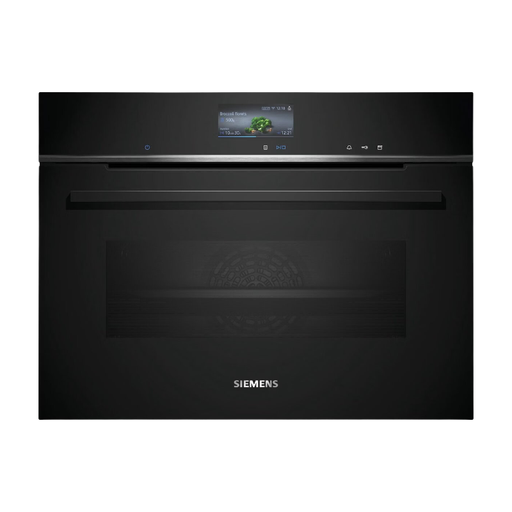
Siemens CS736G1B1 built-in steam oven, 47 litres, 4D hot air

Siemens CS736G1B1, 47 litres, 4D hot air

A built-in model to consider if your kitchen has a suitable cabinet cavity and you can arrange installation in line with the instructions.

The product title lists a 47-litre capacity and 4D hot air; the product description specifies installation by a qualified electrician.

View at Joybuy

Bosch HBA514BB3 built-in oven, 71 litres, 3D hot air

Bosch HBA514BB3, 71 litres, 3D hot air

A built-in oven worth comparing if your kitchen has a suitable cabinet cavity and you want to cook on several shelf levels.

The product description lists a 71-litre capacity and baking on up to three levels with 3D hot air. This doesn’t guarantee the same roasting results on every tray. The description specifies installation by a certified professional for this model.

View at Joybuy
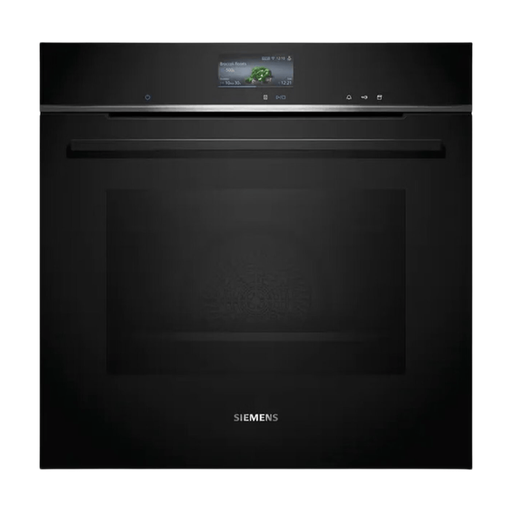
Siemens HS736G3B1 built-in oven, 60 litres, 4D hot air

Siemens HS736G3B1, 60 litres, 4D hot air

A built-in model worth comparing if you have a suitable cabinet cavity and can arrange installation in line with the instructions.

The product description lists 4D hot air and baking regardless of the position in the oven. Treat this as a product claim and check that it suits the method you want to use for your recipe. The description specifies installation by a qualified electrician.

View at Joybuy
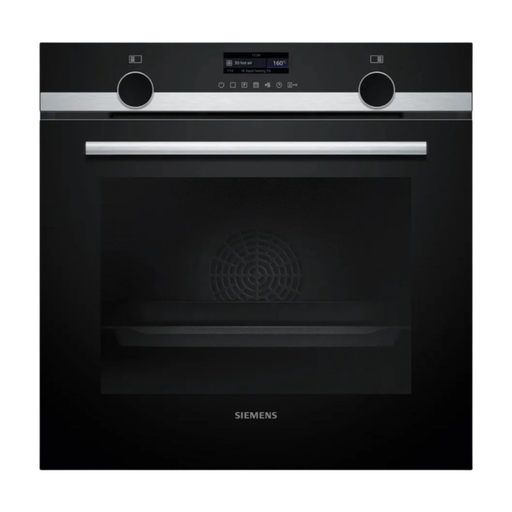
Siemens iQ500 HB579GBR3 built-in oven, 71 litres, black

Siemens iQ500 HB579GBR3, 71 litres, black

A built-in oven worth comparing if it fits the cabinet cavity in your workshop kitchen and convection suits your preferred cooking method.

The product description lists convection, a grill function, and hydrolytic and pyrolytic cleaning. Check the model’s installation dimensions and cleaning instructions.

View at Joybuy

Frequently asked questions

Can you roast two trays of carrots at once without moving them?

Don’t assume you can. Bosch lists fan cooking on up to three levels for one specific model, but Albert Heijn Allerhande recommends swapping the trays around halfway through and turning the vegetables when roasting them. Follow the recipe and the manual for the oven you’re using.

What starting temperature can you use for carrots?

Choose a recipe that suits the way you’ve cut the carrots and the oven setting. Uit Paulines Keuken gives an example for roasted carrots using 180 °C on the fan setting; this isn’t a guaranteed temperature or cooking time for every oven and portion size.

What should you consider when positioning a freestanding oven?

Follow the positioning and connection instructions for the exact model. The fire service recommends allowing heat from electrical appliances to escape and, wherever possible, plugging high-power appliances directly into a wall socket rather than an extension lead or cable reel.

Does a baking workshop provider need to register with the NVWA?

According to the NVWA, a business that sells or supplies food directly to consumers must register. Whether this applies to your workshop depends on how it’s organised, so assess your situation based on your business activities.

What food safety and allergen information is relevant for a commercial workshop?

The NVWA requires food businesses to prepare and store food hygienically in line with the applicable HACCP rules. If unpackaged food is offered, the provider must give information about any allergens it contains, so check the ingredients and toppings too. The NVWA gives 75 °C as an example for chicken or minced meat, not as a general core-temperature requirement for roasted carrots.
