
If you use one small oven dish
You’ll mainly want to know whether your dish will fit and whether the oven has useful settings for making a gratin.


Start by measuring your oven dish and checking the usable interior space: the capacity in litres alone won’t tell you whether your dish will fit. A compact freestanding oven may suit a single small gratin, while a larger model is only worth considering if you also use larger dishes. Also check the available heating settings, the placement instructions and whether the exact model has the relevant CE marking.
You’ll mainly want to know whether your dish will fit and whether the oven has useful settings for making a gratin.
You’re looking for a freestanding oven that fits the space available, with enough room around it for positioning and opening the door.
You may want to use a larger dish from time to time, so you’ll need to consider both the interior space and the room available in your kitchen.
First, compare your dish’s dimensions with the usable oven space. Then check the heating settings and how much room the appliance will take up.
| What to consider | What should you check? | Who is this important for? |
|---|---|---|
| Oven dish and cooking | Measure your dish, including its handles, and compare it with the stated usable space and shelf position. Check whether fan-assisted cooking and any other settings you want are available. | If I’m making one small gratin, I want to know whether my dish will fit and which settings I can use. Around 36% of consumers say fit and gratin cooking are their top buying priorities. |
| Positioning in the kitchen | Measure the space available, including room to open the door. Follow the placement instructions for the exact model. | With limited worktop space, I want to know in advance whether the oven will fit and can be used safely in the chosen spot. Around 29% of consumers say the worktop space available is their top buying priority. |
| Cooking settings and controls | Check the manual for the heating combinations, temperature settings and timer available on the exact model. | If the way the oven heats is the most important factor for my recipe, I want to be able to assess this model’s settings and controls. Around 21% of consumers say cooking settings and controls are their top buying priority. |
| Cleaning and aftercare | Check which parts can be removed and follow the cleaning instructions. Keep your proof of purchase and the seller’s details. | If your main concerns after cooking are cleaning and what to do if something goes wrong, you’ll want to know how to maintain the oven and who to contact. Around 14% of consumers say cleaning and aftercare are their top buying priority. |
The capacity doesn’t tell you whether your oven dish, including its handles, will fit on the shelf.
Measure your dish and compare its dimensions with the usable space and shelf position of the exact model.
A title may mention a feature that isn’t listed for the exact model code.
Check the model code and features in the product information and the manufacturer’s manual.
A freestanding oven needs to be positioned with the clearance specified in the manufacturer’s instructions.
Read the manual and measure the space before positioning the appliance.
An additional warranty package doesn’t replace your statutory rights if a product is faulty. ACM ConsuWijzer explains that statutory rights apply alongside any manufacturer’s warranty.
Compare any additional cover with your existing rights and keep your proof of purchase.
Inventum describes the OV207B as a 20-litre freestanding fan oven.
The manufacturer describes the Princess 112741 as a 20-litre fan oven with grill and convection functions.
Tristar describes the OV-3625 as a 28-litre freestanding convection oven.
According to Rommelsbacher, the BG 1055/E has a capacity of 18 litres and the BGS 1400 a capacity of 22 litres.
The manufacturer describes the Severin TO 2058 as a 42-litre fan oven for anyone who wants to cook larger oven dishes as well as small gratins.
These picks range from compact freestanding ovens to larger and built-in models. For a small gratin, focus on the size of your dish, the heating settings and the space available.
 No image available
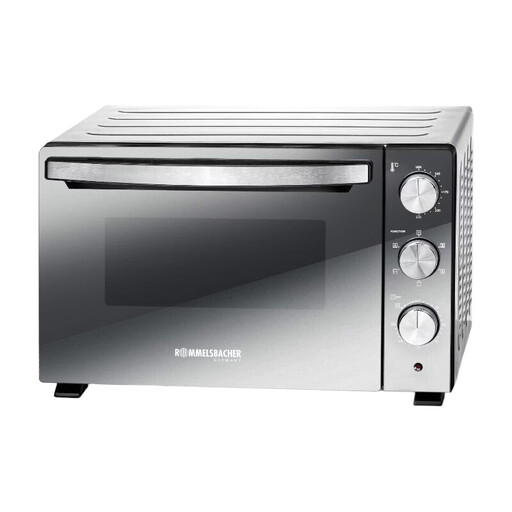
An option to consider if you use a small round baking tin and want to compare different heating settings.
The product description lists a 22-litre capacity, baking tins of up to 25 cm in diameter, fan-assisted cooking and top and bottom heat. This baking tin measurement doesn’t confirm that a rectangular dish or one with handles will fit.
 No image available
An option to consider if you want to compare top and bottom heat as well as fan-assisted cooking.
The product description lists a 30-litre capacity and external dimensions of 33 × 50,5 × 40,3 cm. It needs to be cleaned by hand, so measure the space available too and bear the cleaning instructions in mind.
 No image available
A built-in option if you have a suitable housing space and are looking for an oven with fan-assisted cooking.
The product description lists a 71-litre capacity, 3D fan cooking and EcoClean. The stated niche dimensions are 585 × 560 × 550 mm; check that they suit your kitchen.
 No image available
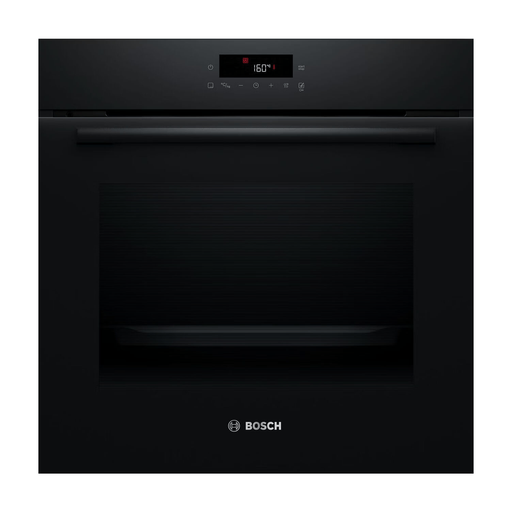
A built-in option if you have a suitable housing space and are looking for the stated heating and cleaning functions.
The product name lists a 71-litre capacity; the product description mentions 3D fan cooking and pyrolytic cleaning. The stated niche dimensions are 59,5 × 56,8 × 55 cm.
 No image available
A larger freestanding option if you also want the listed hob and have enough space.
The product name lists a 45-litre capacity, 60 cm and 3534 W. The product description mentions convection and top and bottom heat. Allow enough room for this appliance.
No. The settings in a recipe won’t necessarily work for every gratin or mini oven. The Voedingscentrum gives a temperature of 175 °C and a cooking time of 35–40 minutes for one specific recipe using pre-cooked potato wedges. Follow your own recipe and check that the gratin is cooked through.
First, check the placement instructions for the exact model. The space needed for heat to escape and for the door to open safely depends on those instructions, so don’t assume the same clearance applies to every oven.
The Voedingscentrum advises letting cooked leftovers cool within two hours, covering them and storing them in the fridge at 4 °C, then eating them within two days. When reheating, heat leftovers all the way through until piping hot. Don’t reheat them again if they have already been reheated once.
No. According to ACM ConsuWijzer, statutory rights in the Netherlands apply alongside any manufacturer’s warranty. The seller is your point of contact if a product is faulty, and there isn’t one fixed warranty period for every oven.
The required marking applies to electrical appliances covered by the relevant CE rules. The Netherlands Enterprise Agency explains that CE is a conformity mark applied by the manufacturer, not an independent safety certification. Check the marking and information for the exact model.