
Host cooking several portions
You want to roast as many onion wedges as possible at once for your guests. The Consumentenbond therefore recommends checking the interior dimensions and making sure your largest oven dish will fit.


Start by checking whether your oven dish or baking tray is large enough for the amount of onion wedges you want to cook at once; the capacity in litres won’t tell you which tray will actually fit. If you have a suitable housing unit, compare built-in fan ovens and their usable shelf positions. Without one, a freestanding oven could be a good option if you have room for both the appliance and its tray. The Consumentenbond recommends checking the interior dimensions against your largest oven dish, while Milieu Centraal advises taking energy use per cooking cycle into account.
You want to roast as many onion wedges as possible at once for your guests. The Consumentenbond therefore recommends checking the interior dimensions and making sure your largest oven dish will fit.
You’re looking for a freestanding oven and weighing up the available cooking space against the room the appliance will take up. The Inventum OV607B is an example of a freestanding fan oven supplied with a baking tray.
You cook oven dishes regularly and want to consider cleaning and energy use per cooking cycle, as well as baking space. Milieu Centraal points out that size and energy use are both relevant when comparing ovens.
First, measure the dish or tray you plan to use; the Consumentenbond recommends comparing it with the oven’s interior dimensions. If you’ll be using it regularly, Milieu Centraal advises factoring in energy use per cooking cycle.
| What to consider | What should you check? | Who should consider this? |
|---|---|---|
| Baking tray space | Measure your dish or tray and compare it with the interior dimensions and supplied accessories. Decide how many portions you want to cook at once. | When I’m cooking for guests, I want to be able to spread the onion wedges out on my dish or tray. Around 36% of consumers prioritise having enough baking tray space for several portions. |
| Positioning | Choose between a built-in and freestanding model, and check the dimensions and installation instructions for the exact model. | If I don’t have a suitable built-in housing unit, a freestanding oven needs to fit on my worktop; if I do have one, I’ll want to check the built-in dimensions. Around 29% of consumers prioritise how the oven will fit in their kitchen. |
| Cleaning | Check which cleaning function the model has, how the trays can be cleaned and what the manual says about accessories. | After roasting, I want to know how to clean the oven and tray. Around 21% of consumers prioritise cleaning and maintenance after use. |
| Energy use | For ovens with an applicable energy label, compare energy use in kWh per cycle and check which oven setting the figure is based on. | If I use the oven often, I want to be able to compare energy use per cooking cycle. Around 14% of consumers prioritise energy use when using their oven regularly. |
Racks, trays and other parts can reduce the space you can actually use. If an oven dish doesn’t fit, you may need to use a different one or cook in several batches.
Measure the largest dish or baking tray you plan to use and compare it with the interior dimensions and supplied accessories.
According to the Consumentenbond’s buying advice, combination microwaves often have fewer shelf positions and sometimes no bottom heat.
If you want to roast larger quantities of onion wedges, check the oven settings, tray shape and shelf positions.
The letter rating alone doesn’t tell you how much energy a cooking cycle will use. Size and energy use per cycle also matter, and extra batches can change the comparison.
Where possible, compare energy use in kWh per cycle on a like-for-like basis, and consider how much you’ll actually be cooking. Milieu Centraal notes that a small A+ oven may use less energy than a large A+++ oven.
Freestanding fan ovens, such as the OV607B, for anyone who doesn’t want to use a built-in housing unit.
Built-in ovens, with the OM670Ti as an example for a kitchen with a suitable housing unit.
Built-in ovens with a range of oven and cleaning functions; the HBA578BS0 is an example with pyrolytic cleaning.
Built-in ovens such as the HB457G0B3F, with fan heating functions and baking accessories.
Mini and freestanding ovens, such as the TO 2058, for anyone considering a more compact oven setup.
This selection includes a freestanding fan oven and built-in ovens. Compare them by usable baking space, the room available in your kitchen and the features you need after roasting.
 No image available
A freestanding model to consider if you don’t have a built-in housing unit and have room for the oven.
The product description lists a capacity of 65 litres, a turbo fan and four rack positions. The stated dimensions are 40 × 60 × 49 cm; cleaning is manual.
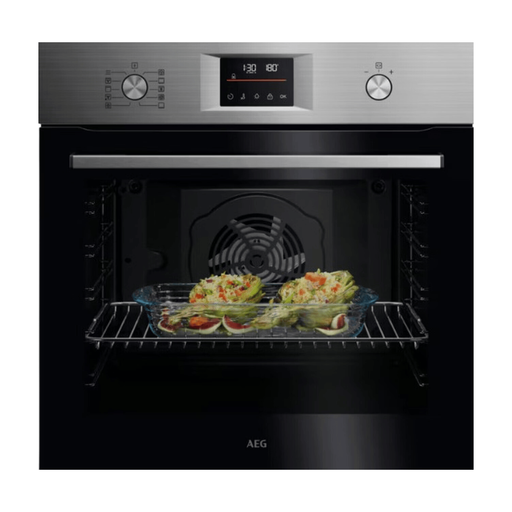 No image available
A built-in option to compare if you have a suitable housing unit and easy cleaning is important to you.
The product description lists a capacity of 72 litres, five shelf positions and fan heating. The title mentions pyrolytic cleaning and energy class A++; check the housing dimensions and the instructions for accessories.
 No image available
A built-in option for anyone wanting to compare baking space and cleaning features alongside the housing dimensions.
The product description lists a capacity of 71 litres, 3D fan heating and the ability to bake on up to three levels at once. EcoClean Direct and cleaning assistance are also mentioned; check the manual for instructions on use and cleaning.
 No image available
A built-in option to consider if the oven space and features suit your kitchen and cooking needs.
The product title lists a width of 60 cm and energy class A. The description mentions fan-assisted circulation, multi-level baking and AquaClean steam cleaning; check that the housing dimensions are suitable.
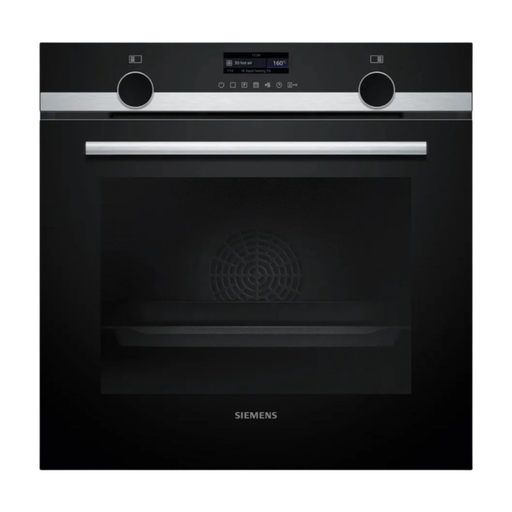 No image available
A built-in oven to compare if you have a suitable housing unit and want to factor in energy use when cooking regularly.
The product description lists a capacity of 71 litres, five shelf positions and a baking tray as an accessory. It also gives energy use per cycle for the fan setting; compare the stated figure with those of other models.
Not without checking the oven setting and instructions. The Albert Heijn Allerhande recipe specifies 225 °C, but doesn’t mention a fan setting. It gives a cooking time of 35 to 40 minutes, with the wedges turned partway through. Follow the instructions for your oven setting and check the result.
Before choosing, compare the dimensions and installation instructions for the exact model with your kitchen. A built-in oven needs to fit the housing unit; a freestanding model needs enough space outside it. Use oven-safe cookware and follow the model’s manual.
No, you can’t tell from the letter rating alone. Milieu Centraal notes that a small A+ oven may use less energy than a large A+++ oven; where possible, compare energy use per cycle on a like-for-like basis.
If a product is faulty, the seller is responsible for providing an appropriate solution under the legal guarantee; what you can reasonably expect depends, among other things, on normal use. For online purchases, you generally have a 14-day cancellation period from delivery, subject to legal conditions and exceptions for returns.
Not necessarily: the European Commission cites small ovens as an example of products outside the scope of the oven regulations described. Check which product category applies to the exact model; the absence of a label on a small oven doesn’t in itself prove a breach of the rules.