
The baker with a favourite tin
You want to know whether your mushroom tart tin, including its rim and handles, will fit in the oven. Compare the model’s internal dimensions and door opening with the tin you plan to use.


First, choose an oven that fits your tart tin and can be placed with the recommended clearance for ventilation. Capacity in litres alone won’t tell you that. A compact oven takes up less worktop space, while a larger one may accommodate bigger tins but will need more room. Only compare electricity use across similar baking cycles.
You want to know whether your mushroom tart tin, including its rim and handles, will fit in the oven. Compare the model’s internal dimensions and door opening with the tin you plan to use.
You’re looking for an oven that fits the available space, with enough clearance for heat to escape. The Netherlands Fire Service stresses that heat from electrical appliances needs room to disperse.
You’re considering a larger oven for bigger tins or shared meals, but you also want to factor in the space it needs and how often you’ll use it. Milieu Centraal recommends choosing an oven that’s no bigger than you need.
Best for: limited worktop space, provided you’ve confirmed that your tart tin fits in the oven.
Consider: a smaller oven cavity may limit your choice of tins. Check the door opening and ventilation clearance too.
Best for: a larger tart tin or more frequent baking for housemates, if you have enough safe space to position it.
Consider: a larger oven cavity usually needs more space. Capacity in litres or wattage alone won’t prove that a tin fits or tell you how much energy a baking cycle uses.
Best for: a small tart, provided the tin fits in the basket with room left for air to circulate.
Consider: the basket’s size and height may limit your choice of tin. Philips says the suitable dimensions vary between Airfryer models.
Measure your tin, including its rim and handles, then compare it with the internal dimensions, shelf position and door opening of the exact model. Also check the positioning instructions and required ventilation clearance: the Netherlands Fire Service notes that heat from appliances needs room to escape.
| What to consider | What should you check? | Who is this important for? |
|---|---|---|
| Will the tart tin fit? | Measure the tin and compare it with the usable internal space, shelf position and door opening of the specific model. | If you use a particular tart tin, you’ll want to make sure it fits before choosing an oven. Around 33% of consumers prioritise whether their own tin will fit. |
| Can you position the oven safely? | Measure the space, including the clearance specified in the manual. Check that the cable and socket are also suitable for the chosen location. | If you have limited or shared worktop space, the oven needs to fit without compromising the recommended clearance for heat to escape. Around 27% of consumers prioritise safe positioning space. |
| What will it take to run? | Where available, compare energy use per similar baking cycle; wattage alone doesn’t tell you how much energy is used. Choose an oven capacity that suits what you usually bake. | If you want to factor in running costs, you’ll need comparable energy-use figures rather than just the power rating. Around 20% of consumers put running costs first. |
| What controls do you need? | Compare the heating settings, timer, included baking tray and rack, and cleaning instructions for the exact model. | If you mainly bake tarts, look for controls that suit the task and avoid paying for features you won’t use. Around 20% of consumers prioritise ease of use and operation. |
The capacity in litres won’t tell you whether your tart tin will fit through the door or on the shelf.
Measure the tin, including any parts that stick out, and compare it with the internal space and door opening of the exact model.
Even a small appliance needs room for heat to escape. A compact exterior doesn’t mean ventilation clearance is unnecessary.
Follow the positioning and ventilation instructions for the model you choose, and allow for the required space when measuring.
Power rating isn’t the same as electricity use per baking cycle. What’s more, small and portable ovens are outside the scope of the relevant energy-labelling rules for household ovens, according to the European Commission.
Where available, compare energy use for similar cooking tasks, and first check whether the labelling rules apply to the specific type of oven.
Inventum’s OV307B is an example of a freestanding fan oven with a 30-litre capacity.
Tristar’s 20-litre OV-3652 and 60-litre OV-3640 represent different oven sizes.
Severin describes the TO 2058 as a baking and toast oven with a 42-litre capacity.
Depending on the model, an Airfryer can be an alternative for baking a small tart in an ovenproof tin.
These Joybuy products are freestanding fan ovens for baking, with both compact and larger models to choose from.
 Image unavailable
A larger fan oven to consider if you need a bigger tin or more than one shelf position. Check the internal dimensions and the space needed for positioning.
35-litre capacity, according to the product title. The title also mentions a thermometer, a four-level rack and an LED display.
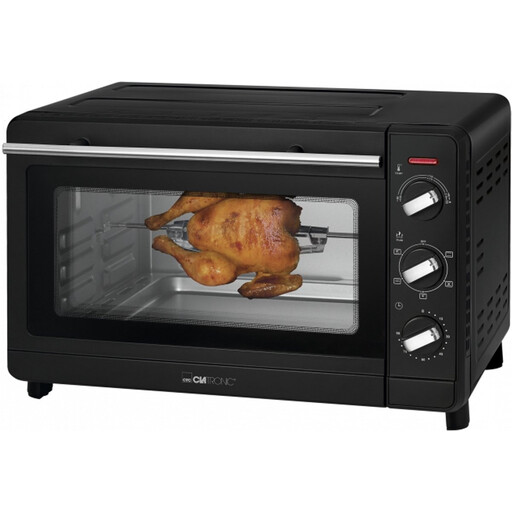 Image unavailable
An option to consider if you’re looking for a freestanding oven for fan-assisted baking. Check that your tart tin will fit.
The product description lists a 30-litre capacity, 1500 W, a fan function, adjustable top and bottom heat, a timer, a baking tray and a rack. Keep an eye on the oven while it’s in use and keep it away from flammable materials.
 Image unavailable
A larger freestanding oven to compare if you bake more often. First, measure the space and the tin you plan to use.
The product title lists a 45-litre capacity and 2000 W. The product description mentions convection, a 90-minute timer, a baking tray and a rack. It also states that at least 10 cm of clearance is needed on all sides and 30 cm above the oven.
 Image unavailable
A compact option to consider if your tart tin fits within the stated size. Check the clearance needed for positioning too.
The product description lists a 22-litre capacity and baking tins up to 25 cm in diameter. It also mentions five heating settings, a 60-minute timer, a baking tray and a rack. According to the description, place the oven on a flat, heat-resistant surface with sufficient ventilation.
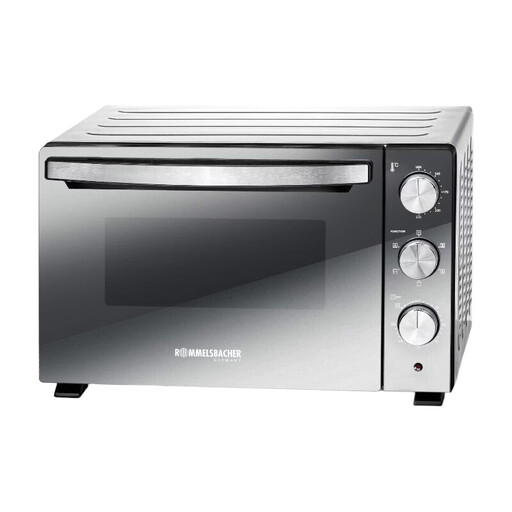 Image unavailable
A larger oven to compare if your tin and available space are a good match. Check the safety instructions for positioning too.
The product description lists a 30-litre capacity, a fan function and a maximum temperature of 250 °C. It says top and bottom heat can be used separately or together. The oven is intended for domestic use and must be kept away from flammable materials.
No, capacity in litres alone isn’t enough. Measure your tin, including any parts that stick out, and check the usable internal dimensions, shelf position and door opening of the specific model. With an air fryer, you’ll also need to leave room around the tin for air to circulate.
Follow the positioning instructions for the exact model and leave the recommended ventilation clearance. Heat from an oven needs room to escape; limited worktop space isn’t a reason to leave out that clearance.
Not all small ovens are covered by the same labelling rules. According to the European Commission, small and portable ovens are outside the scope of the relevant energy-labelling rules for household ovens. First check how the specific model is classified, and only compare energy use on a suitable, like-for-like basis.
In the Netherlands, there’s no fixed statutory guarantee period for all products; you’re entitled to a product that’s of satisfactory quality. If a fault is covered by that right, repair, replacement or a refund may be appropriate. For distance purchases, you’re also generally entitled to a 14-day cooling-off period, with some exceptions.