
Host with a large oven dish
Wants to bake macaroni cheese for everyone in one dish and needs to check that the dish will actually fit in the oven.


First, measure your largest oven dish and compare it with the usable internal dimensions and shelf positions. The Consumentenbond points out that a stated capacity doesn’t prove that a dish will fit. Then choose a fan setting for baking the dish, and a grill or top-heat setting if you want to brown the cheese topping, as described by the Voedingscentrum. A built-in oven needs a suitable housing space, a freestanding model takes up worktop space, and a combination microwave may have more limited oven functions. Milieu Centraal notes that a larger oven generally uses more energy.
Wants to bake macaroni cheese for everyone in one dish and needs to check that the dish will actually fit in the oven.
Wants to prepare dishes or side dishes at around the same time, and compares usable shelf levels and oven settings to do so.
Is looking for a freestanding option and needs to consider the available space and ventilation clearance.
A good fit if: you have a suitable housing space and want to place one or more dishes on the usable shelves.
Trade-off: the installation dimensions and connection must be right; a larger model may use more energy.
A good fit if: you don’t want a built-in oven and have a suitable, safe place for it.
Trade-off: the model takes up worktop space; check the manufacturer’s ventilation guidance.
A good fit if: you often want to reheat food as well as bake, and can find a model that fits your oven dish.
Trade-off: oven functions may be more limited and shelf positions may be unavailable, according to the Consumentenbond. So check the exact model.
| What to consider | What to look for | Who should pay particular attention? |
|---|---|---|
| Room for the dish | Measure the dish, including its handles, and compare it with the internal dimensions and shelf position. | I want to use one large oven dish for my guests and be sure it will fit; around 36% of consumers prioritise space for the dish. |
| Heating and browning | Check the fan setting and whether the model has a grill or top heat. | I want to cook the dish and choose whether to brown the cheese topping; around 29% of consumers give cooking and the crust top priority. |
| Installation | Compare the built-in dimensions with the housing space, or check the available space and ventilation guidance for a freestanding model. | If the space available in my kitchen determines my choice, I want to know which type will fit; around 21% of consumers prioritise installation. |
| Energy use and cleaning | For ovens with an energy label, compare the energy use in kWh per cycle for the setting you’ll use, and check how the oven is cleaned. | I want to base my choice mainly on energy use and maintenance; around 14% of consumers give these factors top priority. |
The usable internal space may differ from the stated net capacity, and components inside the oven can limit the room available for your dish.
Measure the dish, including its handles, and check the internal dimensions and shelf position before choosing a model.
If the dish doesn’t fit, you may need a different one or have to bake in batches.
The Consumentenbond points out that oven functions may be more limited and that shelf positions may be unavailable.
Check whether your dish will fit in the exact model and whether it has the fan and top-heat settings you want.
Milieu Centraal notes that larger ovens generally use more energy, so the energy label alone won’t tell you what size is right for your needs.
Choose a suitable size first, then compare the energy use in kWh per cycle for the setting you’ll use on ovens with an energy label, as advised by Energielabel.nl.
An oven that’s larger than you need may use more electricity when in use.
Built-in ovens such as the HBA534BS3 are worth considering if you want to compare cooking settings and shelf positions.
The HB457G0B3F built-in oven is worth comparing if shelf positions and extendable rails are important to you.
The freestanding OV607B is an example to consider if you don’t want a built-in oven.
The KOFGH40BK built-in oven is an example to compare for oven settings and cooking on multiple shelf levels.
The OU5PB40WSM built-in oven is worth considering if you’re weighing up pyrolytic cleaning.
This selection focuses on built-in ovens to compare for cooking a dish using hot air. Check that each model has the features you want and that your dish will fit.
 No image available
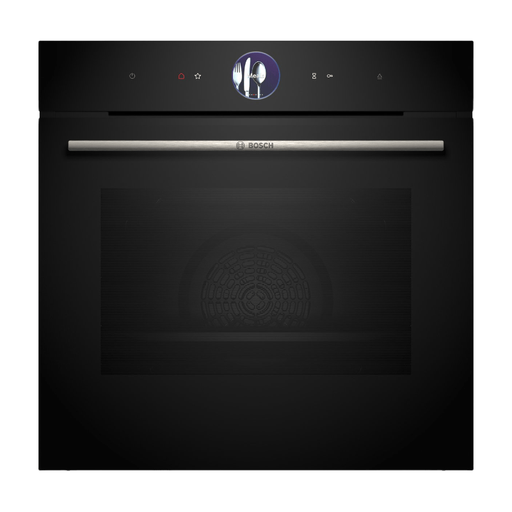
Worth comparing if you’re looking for a built-in oven with a fan setting and grill; measure the housing space and oven dish.
The product name lists 70 L, 3 kW, 60 cm, a grill and AquaClean steam cleaning.
 No image available
A built-in steam oven to compare; check that this version has the oven settings you want to use for your dish.
The product name lists a width of 60 cm, an air-fry function and PerfectBake Plus.
 No image available
Worth comparing if you’re looking for a built-in fan oven; check that there’s enough room inside for your dish.
The product name lists 71 L, 3D Hot Air, Easy Cleaning and a stainless steel finish.
 No image available
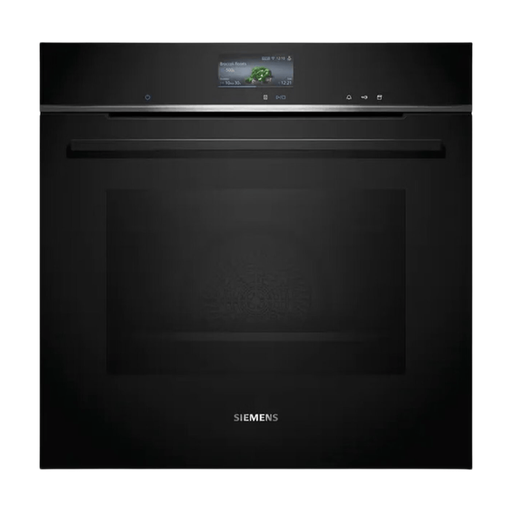
Worth comparing if you’re looking for a built-in fan oven; check the dimensions and settings you want before buying.
The product name lists 60 L, 4D hot air, pyrolytic self-cleaning and Home Connect.
 No image available
Worth comparing if you’re looking for a built-in oven for oven dishes; check that this exact version has the settings you want.
The product name lists 71 L, an air-fry function, a steam function and pyrolytic cleaning.
Not necessarily. Measure the dish, including its handles, and compare its dimensions with the usable internal space and shelf position; net capacity and usable capacity can differ.
No. The fan setting is one option for cooking the dish; the grill adds heat from above if you want to brown the cheese topping. Follow the recipe and keep an eye on the top.
The Voedingscentrum advises cooling cooked food within two hours, storing it covered at 4 °C and eating leftovers from the fridge within two days. Reheat leftovers until piping hot throughout, and don’t reheat them for a third time.
No. According to Dutch energy-label guidance, ovens are also compared within size classes. For ovens with an energy label, check the energy use in kWh per cycle for the setting you’ll use.
When you buy as a consumer, you’re entitled to a product that is fit for purpose. The Rijksoverheid states that there is no fixed statutory warranty period in the Netherlands: what you can expect depends, among other things, on the product and the purchase information. If something goes wrong, contact the retailer; the manufacturer’s warranty is in addition to your statutory rights.