Start by checking the internal dimensions and how many dishes you need to bake: the capacity in litres doesn’t tell you whether your oven dish will fit. A freestanding oven is an option if there’s no suitable built-in space; if you want to bake several dishes at once, check the usable shelf positions in a built-in oven. Also check where it will go, how it connects and the product documentation for the model you’re considering.
Who is this buying guide for?
Workshop cook with a large oven dish
You’re making one pie for several people and want to check first that your dish will fit. The Consumers’ Association recommends comparing the internal dimensions rather than looking only at the capacity in litres.
Workshop cook planning several batches
You’re dividing the pie between dishes and want to know how many shelf positions you can use at once. Check what the exact model can do, rather than relying on claims about results.
Organiser with a temporary kitchen
You’re choosing between a freestanding oven and an existing built-in space. Compare the space available, ventilation and connection requirements with the model’s instructions.
What should you consider when choosing?
Freestanding fan oven
Choose this when: there’s no suitable built-in space and you have a suitable spot for a freestanding oven.
Keep in mind: the oven takes up worktop space; measure the space and the dish separately.
Built-in fan oven
Choose this when: you have a suitable built-in space and want to plan for several dishes or batches.
Keep in mind: check the built-in space, internal dimensions, shelf positions and connection requirements for the exact model.
Combination oven or microwave with fan oven
Choose this when: you also need a microwave function in the same kitchen.
Keep in mind: check the internal space and oven settings available; you don’t need extra functions just to bake this pie.
| What to consider |
What should you check? |
Who should weigh this more heavily? |
| Will the oven dish fit? |
Measure the dish, including the handles, and compare it with the internal dimensions and shelf space. |
If I’m using one large dish, I want to know whether it will fit without relying on the capacity in litres alone. Around 36% of consumers put dish fit first. |
| Several dishes or batches |
Check how many dishes will fit on the available shelf positions with enough space between them. |
If I want to bake portions at the same time, usable shelf positions matter when I’m planning. Around 29% of consumers prioritise baking capacity at the same time. |
| Positioning and connection |
Compare the built-in space or external dimensions, ventilation requirements and connection with your kitchen. |
In a temporary kitchen, I want to know first whether the oven will fit in the available space and can be connected according to the instructions. Around 21% of consumers start by checking positioning and connection. |
| Size and energy use |
Compare the energy use per cycle of ovens that fit your dish, and consider which functions you’ll use. |
If I usually cook smaller dishes, I don’t want to choose an unnecessarily large appliance. Around 14% of consumers prioritise a suitable size and energy use. Milieu Centraal notes that a larger oven generally uses more energy than a smaller one. |
Common buying pitfalls
-
Comparing only the stated capacity in litres
The capacity in litres alone won’t tell you whether your dish will fit. The Consumers’ Association recommends checking the internal dimensions.
Measure the dish, including the handles, and compare it with the internal dimensions and shelf positions.
You may need to adapt the space or installation.
-
Treating a claim about several shelf positions as a test with your pie
A stated fan function or manufacturer’s claim doesn’t prove that full dishes of your recipe will cook to the same standard.
If needed, plan a trial bake using your own dishes and assess the space and the result.
Brands to compare as model references
Inventum
The freestanding OV607B is a model to compare if you don’t have a suitable built-in space.
- Inventum lists a 60-litre capacity, fan function, top and bottom heat, and a timer for the OV607B.
- The capacity doesn’t confirm that your oven dish will fit; according to Inventum, this model doesn’t have a defrost function.
Bosch
The HBA534BB3 built-in oven is an option to compare if you have a suitable built-in space and want to assess the shelf positions.
- Bosch specifies a 71-litre capacity, 3D Hotair on up to three shelf levels, and top and bottom heat.
- The claim about even results comes from the manufacturer; it isn’t an independent test for lentil cottage pie.
AEG
The BS7700B built-in oven is an option to compare if you’d also use its extra functions for other dishes.
- AEG specifies a 72-litre capacity, fan function, grill and steam support for this model.
- Steam support isn’t needed to bake this pie on its own; compare the functions and built-in dimensions with your kitchen.
NEFF
NEFF is worth considering when comparing built-in models with a multi-shelf fan setting.
- NEFF describes CircoTherm as suitable for cooking on three levels.
- Check that the exact model has this function; claims about results and the transfer of odours or flavours come from the manufacturer.
Ovens at Joybuy
This selection of Joybuy products includes built-in and freestanding ovens, as well as microwave combi ovens with an oven function. Compare the models based on space for your dish, the room available and the functions you need for your workshop.
 No image available
Comfee built-in oven, 60 cm, 70 L
Suitable for a workshop kitchen with a fitted built-in space and a need for a fan function.
Listed features: 3 kW, grill, pizza function and timer.
View at Joybuy
 No image available
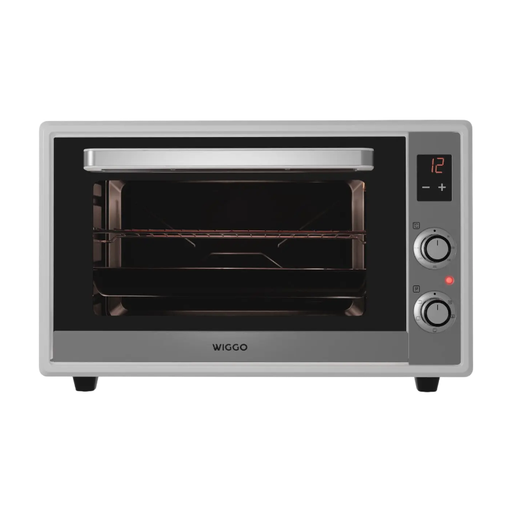
Wiggo WMO-E657(X), 65 L, stainless steel
A freestanding model to compare if the workshop kitchen doesn’t have a built-in space.
Listed features: 65 L and 2000 W. Check the space needed for positioning and ventilation.
View at Joybuy
 No image available
Wiggo WMO-E657(B), 65 L, black
A freestanding option for a kitchen without a built-in space, provided there’s enough room and ventilation.
Listed features: 65 L and 2000 W. Check which shelf positions are suitable for your dishes.
View at Joybuy
 No image available
Siemens FF023LMB2, 20 L, black
A microwave combi oven to compare if you need a microwave function as well as an oven function.
Listed features: 20 L, grill and convection. Check whether your oven dish will fit on the turntable.
View at Joybuy
 No image available
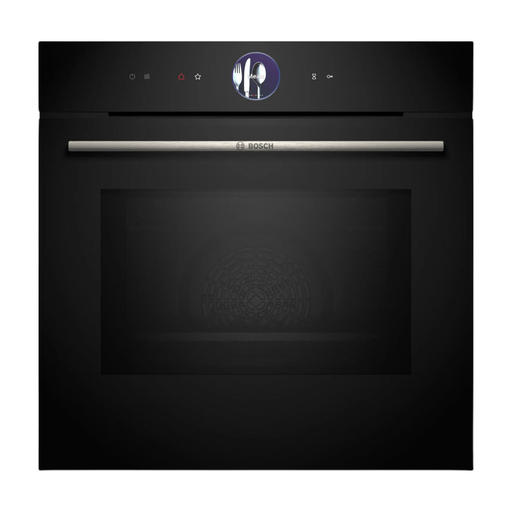
Bosch HMG7361B1 built-in oven with microwave, 71 L
A built-in option to compare if you also want an integrated microwave function.
The product name lists a 71 L capacity, 3D Hotair, pyrolytic cleaning and Home Connect. Check your kitchen’s built-in space and connection requirements.
View at Joybuy
Frequently asked questions
Which oven setting should you use for lentil cottage pie?
Start by following the recipe and your oven’s instructions: the fan setting and top and bottom heat are different settings. Lentils.org describes baking the pie uncovered until the filling bubbles and the potato topping is lightly golden; this isn’t a universal cooking time or temperature for every oven and dish.
How can you tell whether a large oven dish will fit?
Measure the dish, including the handles, and compare its dimensions with the internal space and shelf height. The Consumers’ Association recommends checking the internal dimensions; the capacity in litres alone won’t confirm whether a particular dish will fit.
What should you consider when positioning an oven in a workshop kitchen?
Compare the dimensions, connection and positioning requirements for the exact model with the kitchen space available. The Fire Service recommends making sure heat can escape; also follow the instructions for ventilation and connection.
What should you do with leftover pie?
The Netherlands Nutrition Centre recommends cooling cooked leftovers within two hours, covering and refrigerating them, eating them within two days and reheating them until piping hot all the way through.
What product rules apply to an electric oven in the Netherlands?
Electrical appliances placed on the market in the Netherlands must meet the applicable European requirements. According to Dutch government guidance, for appliances covered by these requirements, the manufacturer applies a CE mark after carrying out a conformity assessment and draws up an EU Declaration of Conformity. This general rule doesn’t confirm that an individual model or appliance is compliant.


