Start by checking whether your cake tin will fit in the oven and whether it has the setting you need. A freestanding oven is a good choice for a kitchen without a suitable built-in space; a combination microwave is worth considering if you also want a microwave function. Check the installation instructions and applicable product safety information for your chosen model.
Which oven is right for you?
Home baker with a cake tin
Wants to bake a cake for guests and should start by checking the usable interior dimensions and oven settings, rather than looking only at the stated capacity in litres. The Consumentenbond recommends comparing the internal dimensions with the dish or tin you want to use.
Baker without a built-in space
Is looking for a freestanding oven and needs to check the available space as well as whether the cake tin will fit. The Consumentenbond highlights the importance of usable interior dimensions; Inventum describes the OV457B as a freestanding oven.
Cook with limited kitchen space
Wants to combine baking and reheating, but needs to check whether the oven function and space for the cake tin suit the intended use. The Consumentenbond covers baking with the oven function of a combination microwave.
What should you look for when choosing?
Freestanding oven
Best for: a kitchen without a suitable built-in space, provided the cake tin fits within the usable dimensions.
Bear in mind: the space it needs and the installation instructions. The stated capacity alone won’t tell you whether your tin will fit.
Built-in oven
Best for: a kitchen with a suitable built-in space and a need for several oven settings.
Bear in mind: the dimensions of the built-in space and the installation instructions. Compare energy consumption on a like-for-like basis. Milieu Centraal points out that a smaller oven with a lower energy rating may use less energy than a larger oven with a higher rating.
Combination microwave with oven function
Best for: anyone who also wants to reheat food in the same appliance, provided the oven function and space for the tin are suitable.
Bear in mind: the layout may differ from a conventional oven. The Consumentenbond notes that combination microwaves often have fewer oven settings or shelf positions than combination ovens designed primarily for baking.
| What to consider |
What should you check? |
Who should pay particular attention? |
| Suitable baking space |
Measure your cake tin and compare it with the internal dimensions and shelf position; the capacity in litres alone won’t tell you whether it fits. |
I want to be sure my cake tin will fit, even if the stated capacity seems generous. Around 33% of consumers put fit first. |
| Oven settings |
Check that the setting you need is available and consult the manual for the settings recommended for your recipe. |
If I want to bake the cake according to the recipe, the available settings need to be suitable. Around 25% of consumers prioritise having the right baking settings. |
| Installation and functions |
Check the built-in dimensions or available space, the installation instructions and whether you also need a microwave function. |
With limited kitchen space, I want to know where the appliance can go and whether I can use it for reheating too. Around 25% of consumers prioritise installation and versatility. |
| Energy use and service |
Compare energy consumption for similar use and read the service and warranty terms. |
I want an oven that suits the way I bake and clear information about service before I buy. Around 17% of consumers focus most on energy use and service. |
How to avoid common buying mistakes
-
Looking only at the capacity in litres
Shelves and accessories can reduce the space available for a cake tin. So even an oven with a generous capacity may not be suitable for your tin.
Measure your tin and check the internal dimensions and shelf position before choosing a model.
-
Assuming a combination microwave is the same as a baking oven
The oven settings and shelf positions may differ. According to the Consumentenbond, combination microwaves often have fewer oven settings or shelf positions than combination ovens designed primarily for baking.
Check the features of the exact appliance and make sure you can put your cake tin in the position you want.
-
Considering the energy rating without taking size into account
The rating alone won’t tell you what size is right for your needs. Milieu Centraal notes that a small oven with an A+ rating may use less energy than a large oven with an A+++ rating.
Compare energy consumption on a like-for-like basis and choose a size that suits what you actually bake.
Brands to consider
Inventum
Freestanding baking oven, illustrated here by the OV457B.
- Inventum lists a stated net capacity of 45 litres for the OV457B, along with fan-assisted cooking, top and bottom heat, a timer and a wire rack included.
- The stated capacity doesn’t prove that every cake tin will fit; remember to allow for the space the appliance needs too.
Bosch
Built-in oven, illustrated here by the Serie 4 HBA534BS3.
- Bosch lists 3D Hotair and top and bottom heat for this model.
- The manufacturer’s claim of even results on several shelf levels isn’t an independent test of cake-baking performance. Check that the built-in space is suitable.
ETNA
Built-in oven, illustrated here by the multifunctional OM670Ti, designed for a 60 cm-high built-in space.
- ETNA lists a net capacity of 72.12 litres and a temperature range of 30–250 °C for this model.
- Check the internal dimensions against your cake tin; the stated capacity alone won’t tell you whether it fits.
Severin
Freestanding baking and toast oven, illustrated here by the TO 2058.
- Severin lists fan-assisted cooking, separately operated top and bottom heat, and a capacity of 42 litres for the TO 2058.
- The product specifications state ‘Safe touch: no’; take care around hot surfaces.
Products available on Joybuy
This selection includes freestanding ovens, a combination microwave and a built-in oven. For lemon cake, pay particular attention to the space for your tin and the available oven functions.
 No image available
Wiggo WMO-E657(B) freestanding oven, 65 litres
A freestanding model for anyone without a built-in space; the product description mentions baking with a turbo fan.
The product information lists a capacity of 65 litres, six cooking functions and a timer.
View on Joybuy
 No image available
Siemens FF023LMB2 combination microwave, 20 litres
A combination appliance for anyone who wants a microwave function as well as an oven function; check that the interior is suitable for your cake tin.
The product information lists a capacity of 20 litres, convection, a grill and a glass turntable. If you install it in a cupboard, it needs adequate ventilation.
View on Joybuy
 No image available
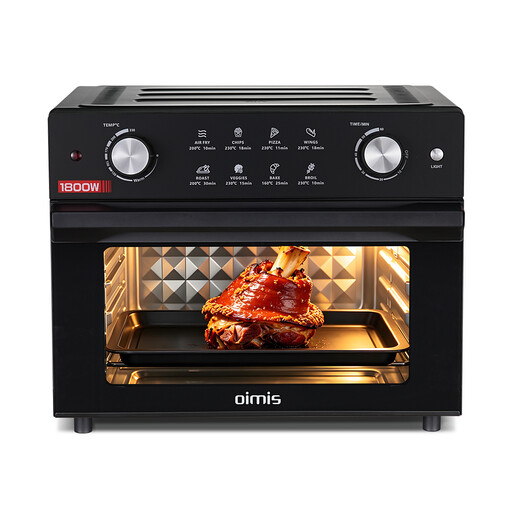
OIMIS Air Fryer Toaster Oven Combo
A freestanding oven appliance for baking; check that its interior and settings suit your recipe.
The product information lists a capacity of 30 litres, 1800 W and manual temperature and time controls. Keep the appliance away from flammable materials.
View on Joybuy
 No image available
ROUNY 6,5 L Air Fryer Oven
A compact freestanding appliance for anyone looking for a small oven; check in advance whether your cake tin will fit inside.
The product information lists a capacity of 6,5 litres, 360° hot air, a viewing window and knob controls.
View on Joybuy
 No image available
Bosch HBF133BR0 built-in oven, 66 litres
A built-in oven for a kitchen with a suitable built-in space; check the installation instructions and make sure there’s room for your cake tin.
The product information lists a capacity of 66 litres, 3D hot air, top and bottom heat, and a temperature range of 50–275 °C. The description says you can bake on up to three levels at once.
View on Joybuy
Frequently asked questions
Do I have to use the fan setting for lemon cake?
No. Follow the setting and instructions recommended by your recipe and oven manual. Don’t automatically use a temperature from a recipe as the setting for every fan oven.
How do I check whether a built-in oven will fit?
Compare the required built-in dimensions and ventilation instructions for the exact model with your kitchen. Also measure your cake tin: the Consumentenbond recommends checking the internal dimensions rather than relying on the stated capacity alone.
What should I do if my new oven isn’t working properly?
Contact the seller. The Dutch government states that there is no fixed statutory guarantee period in the Netherlands; your statutory rights if a product doesn’t meet expectations are separate from any manufacturer’s warranty.
Is a CE logo on a product page enough to establish that an oven complies with regulations?
No. A product description alone doesn’t establish whether a specific appliance complies with regulations. Ondernemersplein and the Netherlands Food and Consumer Product Safety Authority explain the requirements that apply to electrical appliances, including CE marking and, where the rules apply, the EU declaration of conformity.
Can I use a solo microwave instead of an oven?
Not for a standard cake recipe that requires an oven function. Milieu Centraal distinguishes between reheating with a microwave and baking in an oven or combination microwave.


